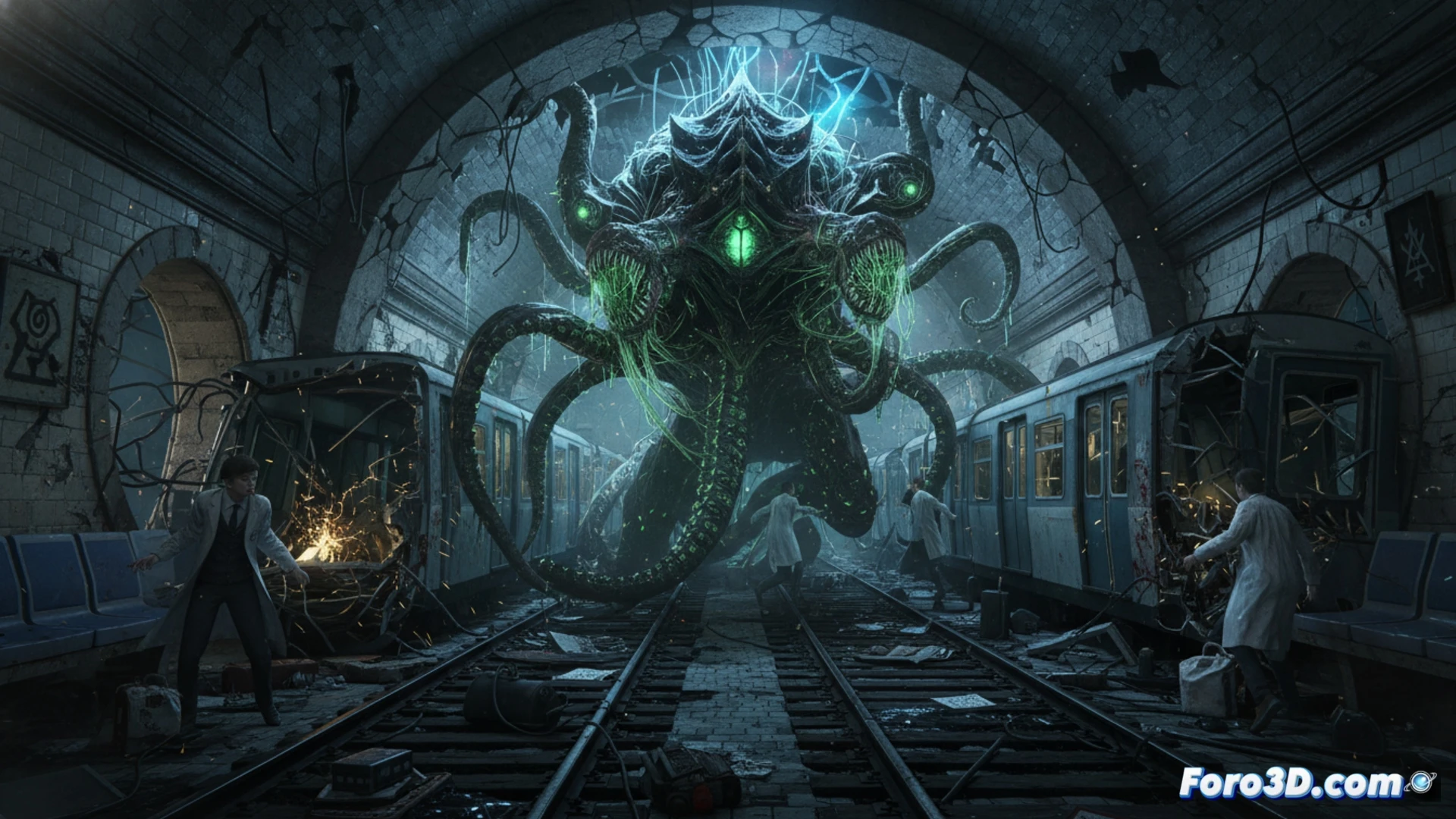
The 3D animated short film Underground Invaders, a final project from the Méliès School, marks a turning point in academic production. Delving into horror and gore, it narrates the nightmare of three young people trapped in the labyrinthine Paris metro. This work demonstrates an uncommon narrative audacity, challenging traditional self-censorship and exploring a cosmic horror that culminates in a purely Lovecraftian ending, signaling a new direction for future animators.
Technique in Service of the Gothic Atmosphere 🎨
The visual impact of the short is achieved through conscious technical mastery. 3D animation is employed not for polished realism, but to build an oppressive and claustrophobic atmosphere in the Châtelet-Les Halles tunnels. Rendering and lighting work to create deep shadows and wet textures, while creature design and body transformations leverage digital tools to delve into body horror. This integration of technique and narrative shows how the 3D pipeline can be shaped for specific genres, prioritizing emotion over empty technical virtuosity.
Breaking Molds in Audiovisual Training 🚧
Underground Invaders is symptomatic of a generational shift. Its existence questions conservative advice and demonstrates that student animation cinema can and should explore all genres, including extreme horror. This project not only enriches its creators' portfolio but also brings diversity and risk to the industry, proving that 3D animation is the ideal medium to materialize unimaginable horrors. The school, by endorsing this approach, validates the evolution of the medium.
How does the short film Underground Invaders manage to transfer the essence of Lovecraftian horror to academic 3D animation, and what visual narrative techniques does it employ to evoke cosmic horror?
(P.S.: Previz in cinema is like the storyboard, but with more chances for the director to change their mind.)