In the fiercely competitive category of animated short films at the Oscars, Papillon by Florence Miailhe stands out for its technical innovation. This short film forgoes the digital in favor of direct under-camera pictorial animation. Miailhe paints and manipulates physical materials frame by frame, making the technique the heart of the storytelling. Her artisanal approach demonstrates how traditional methods continue to offer a unique and personal expressiveness in contemporary animation.
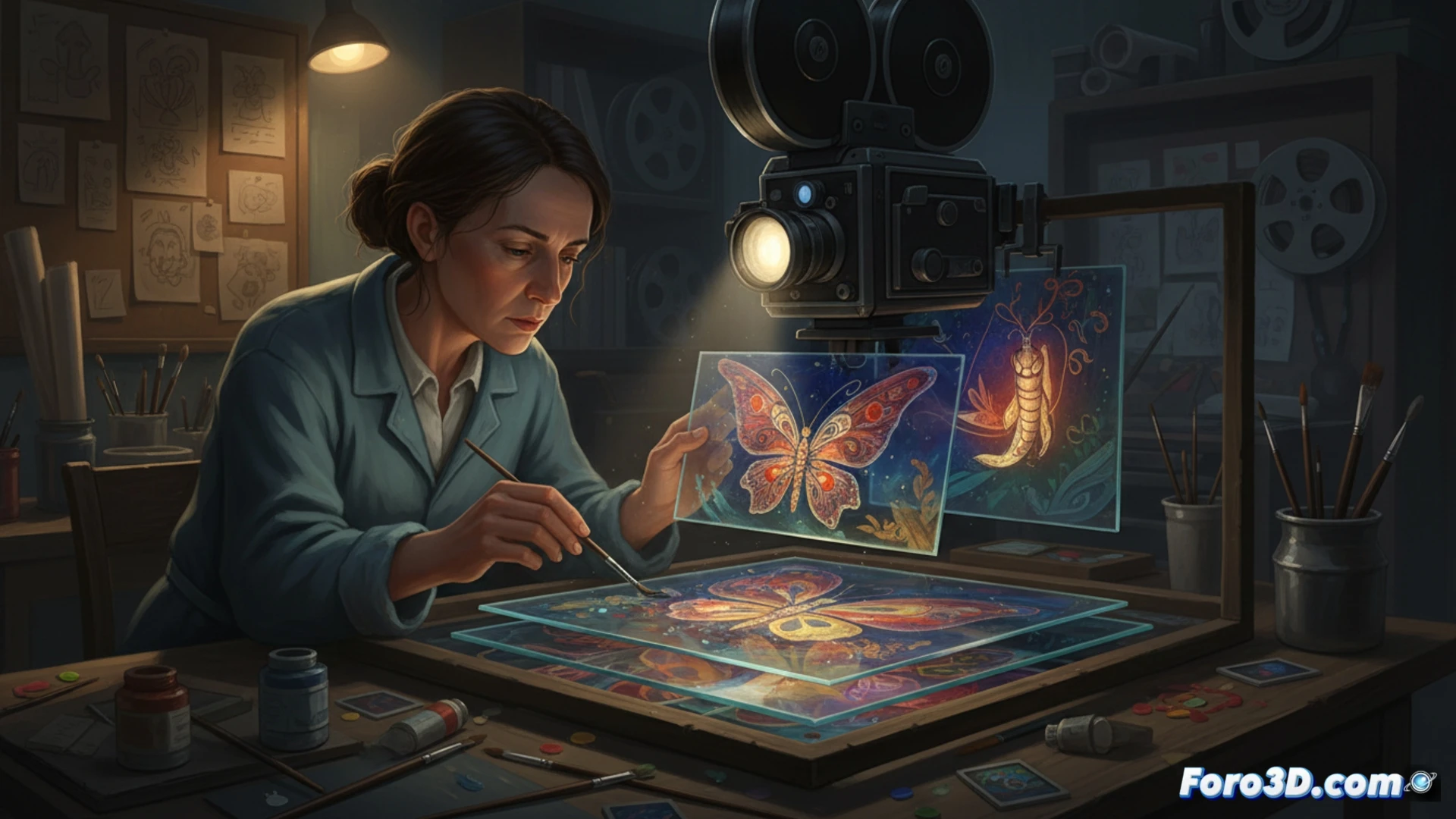
Water as a character: technique and narrative in symbiosis 💧
Miailhe's mastery lies in adapting her technique to the personality of each aquatic scene. To achieve transparency and fluidity, she paints with oils on glass, scraping and adding pigment to create organic movement. In contrast, for sequences where the water requires more textured and chaotic color mixtures, she uses canvas. This decision is not merely aesthetic; it defines the emotionality of the water, which is a central character. The technique thus dictates the visual narrative, where the materiality of the painting—its thickness, transparency, and mixture—directly expresses moods and transformations in the story.
Animated craftsmanship in the digital era ✨
The nomination of Papillon validates the relevance of artisanal techniques in the current industry. In an environment dominated by the digital, this work reminds us that animation is, at its essence, art in motion. Miailhe prioritizes tangible expression and controlled accident, where the artist's mark is visible in every frame. For animators, it is an inspiring reminder: innovation does not only advance toward the new, but can also delve into the manual, finding in ancestral methods a fresh and powerful language to bring characters and stories to life.
How does the under-camera painting technique of Papillon influence the expressiveness and emotional texture of character animation?
(P.S.: Animating characters is easy: you just have to move 10,000 controls to make them blink.)