Inaugurated in 1973, the Montparnasse Tower rose as a symbol of modernity that fractured the Paris skyline. Its massive silhouette of steel and dark glass, unique in the historic center, generated such unanimous rejection that in 1977 new skyscrapers were banned in the area. Unable to be demolished, the solution has been to transform it. This case is a paradigmatic example for analyzing the integration of large buildings into sensitive environments, a field where BIM is crucial today. 🏗️
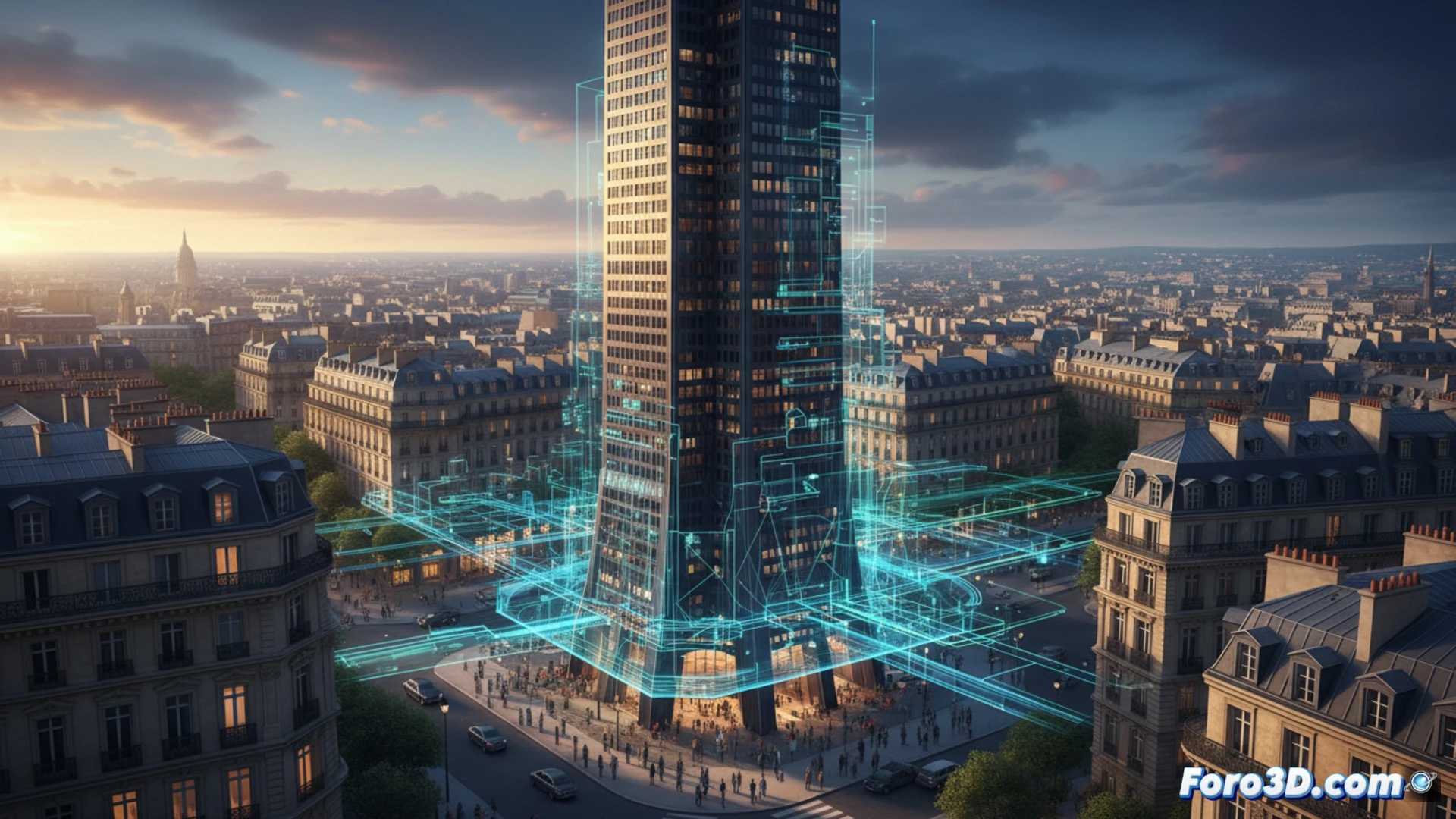
Lessons for planning: visual impact simulation 👁️
The Montparnasse Tower mistake underscores the importance of prior visual impact analysis. Today, BIM methodologies and 3D visualization tools allow precise simulation of how a project will alter the skyline from multiple critical points. Existing environment models can be integrated, studying reflections, shadows, and volumes in the historic context before raising a single wall. This would have foreseen the visual clash of Montparnasse. Currently, these same techniques are used to project and communicate its transformation, using renders and virtual reality to validate camouflage or integration solutions with stakeholders and citizens.
Beyond geometry: regulatory and social management ⚖️
The tower demonstrates that a project goes beyond its geometry. An integral BIM approach also manages regulations, such as the 1977 ban, and the social factor. The information embedded in the model can alert about height restrictions or visual protection. Thus, BIM becomes a tool for preventing urban conflicts, ensuring that new developments do not repeat the history of this Parisian anomaly, but integrate consciously and respectfully.
How can current BIM analysis revalue the Montparnasse Tower, transforming its perception from urban error to a model of efficiency and sustainability for the renovation of historic skyscrapers?
(PS: BIM is like having a building in Excel, but with pretty windows.)