Japan's National Film Archive is preparing an exceptional event for this summer: a Toei Animation retrospective featuring 50 feature films projected in 35mm. This cycle, running from late July to September, is a rare opportunity to experience these works as they were originally conceived. The selection spans from The Legend of the White Serpent (1958), Japan's first color animated feature film, to global hits like Dragon Ball Z or One Piece, offering a unique journey through the studio's history.
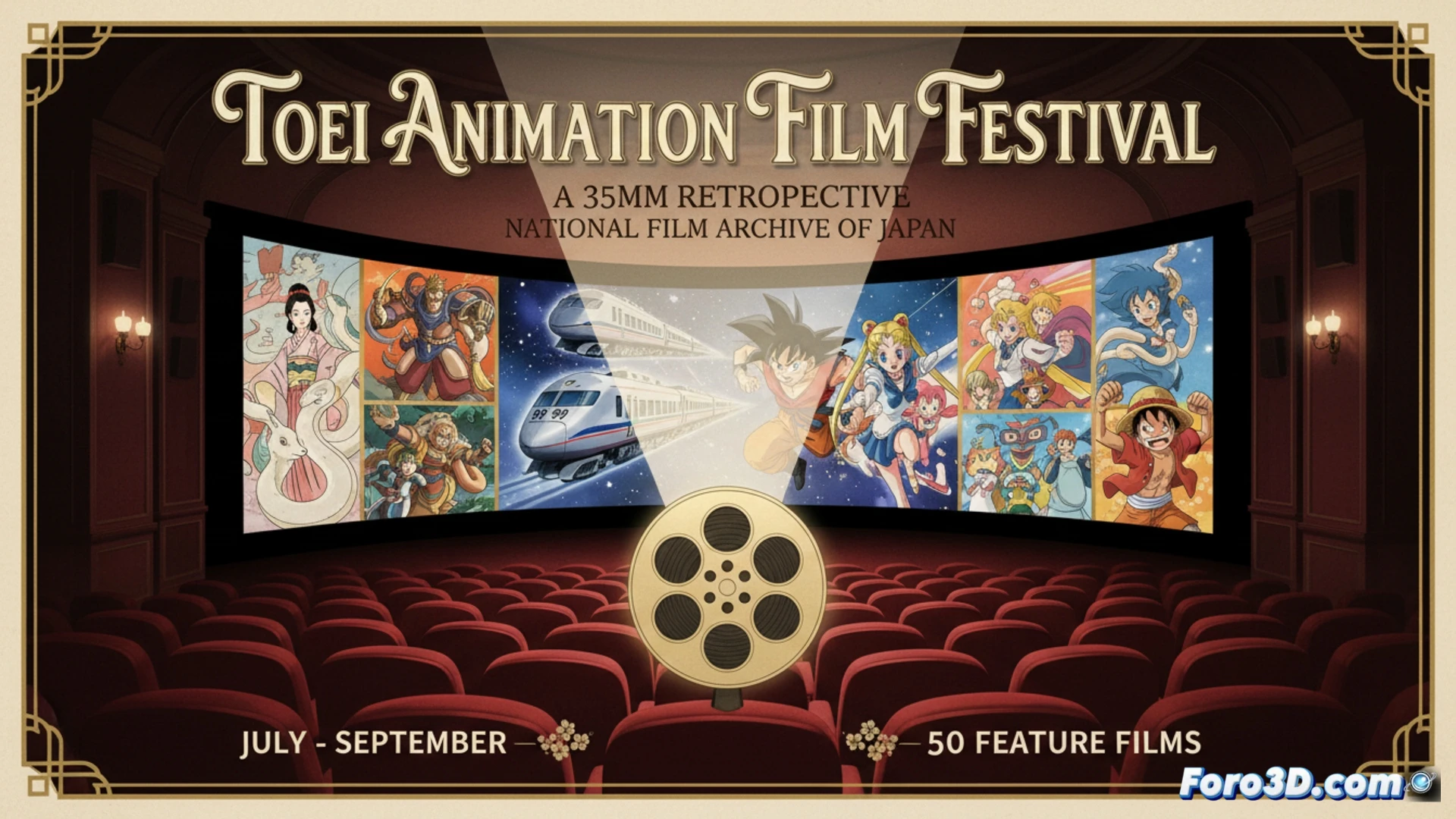
The technical and sensory value of original celluloid 🎞️
In the digital era, projecting in 35mm is a fundamental act of technical preservation. The grain, color depth, and luminous texture of the physical frame contain artistic information that is often homogenized in digital files. For 3D professionals and visual storytelling experts, understanding these origins is crucial. Traditional cel animation, with its layers of paint and hand-painted backgrounds, established principles of composition, depth, and motion management that form the basis of current software. This retrospective is not just nostalgia; it is a lesson in technical history. Digitization helps preserve, but 35mm projection keeps the creators' material intent alive.
Analog roots in a digital world 📽️
Events like this emphasize that heritage preservation is not just archiving, but also enabling authentic experiences. Contemporary animation, dominated by 3D pipelines and VFX, draws directly from the visual experimentation of these classics. Viewing them in their original format connects current creators with the craftsmanship that shaped the industry. It is a reminder that, beyond pixels, cinema is, at its essence, light projecting history through a frame.
How did the 35mm format and Toei Animation's celluloid production process influence the distinctive aesthetics and visual narrative of classic Japanese anime?
(P.S.: Previz in film is like the storyboard, but with more chances for the director to change their mind.)