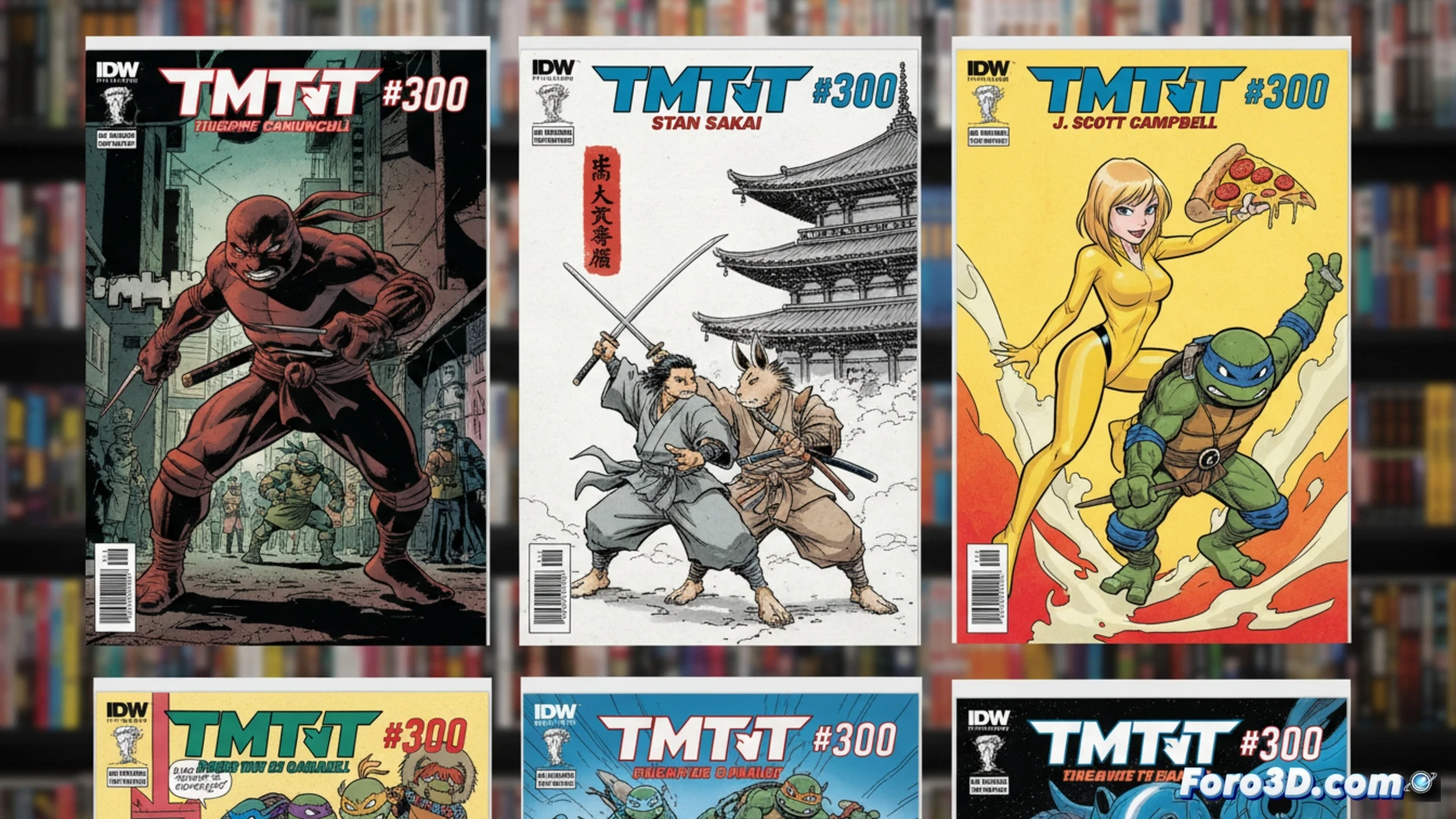
The announcement of the multiple variant covers for TMNT 300, with art by legends like Stan Sakai and J. Scott Campbell, is more than just news for collectors. For video game developers, this display is a masterclass in concept art and character design. Each cover functions as a unique 2D asset, showcasing distinct interpretations of the same base models, a practice directly transferable to creating skins, menu illustrations, or promotional art for a Teenage Mutant Ninja Turtles video game.
From paper to pixel: transferring concept art to playable assets 🎨
The work of these artists establishes a clear inspiration pipeline. Giuseppe Camuncoli's cover, for example, with its dynamism and composition, could serve as a storyboard for a cinematic or the basis for an in-game poster. Sakai's aesthetic would inform the design of a cel-shaded skin or a themed event. This process is identical to that of an art director commissioning pieces from different concept artists to explore visions of the same character. The variant covers are, in essence, a high-quality set of concept arts ready to be analyzed, broken down, and adapted to 3D models, textures, and interface elements, enriching the project's visual palette.
Transmedia franchises and the synergy between comics and video games 🔄
Releases like this strengthen the transmedia ecosystem. A fan who acquires a Campbell cover will feel more drawn to an upcoming video game that captures that visual essence, and vice versa. This synergy feeds the fan base and justifies investment in high-end art, which can then be digitally repurposed. For a developer, studying these covers is understanding how to maintain the essence of an IP while allowing individual artistic expression, a crucial balance when adapting comics to video games.
How can the narrative and aesthetic techniques of variant comic art, like that of TMNT 300, be translated into game mechanics and art direction to create more immersive and stylized video game experiences?
(P.S.: shaders are like mayonnaise: if they curdle, you start all over again)