TP Vision announces that its Philips 2026 televisions will adopt Titan OS, a European Linux system that replaces Google TV. This web-based platform promises higher performance by freeing up memory and gives the manufacturer total control over development. For the 3D professional, the question arises: can this television function as a reliable secondary monitor for project review, presentations, or render visualization? We analyze its specifications from this technical perspective.
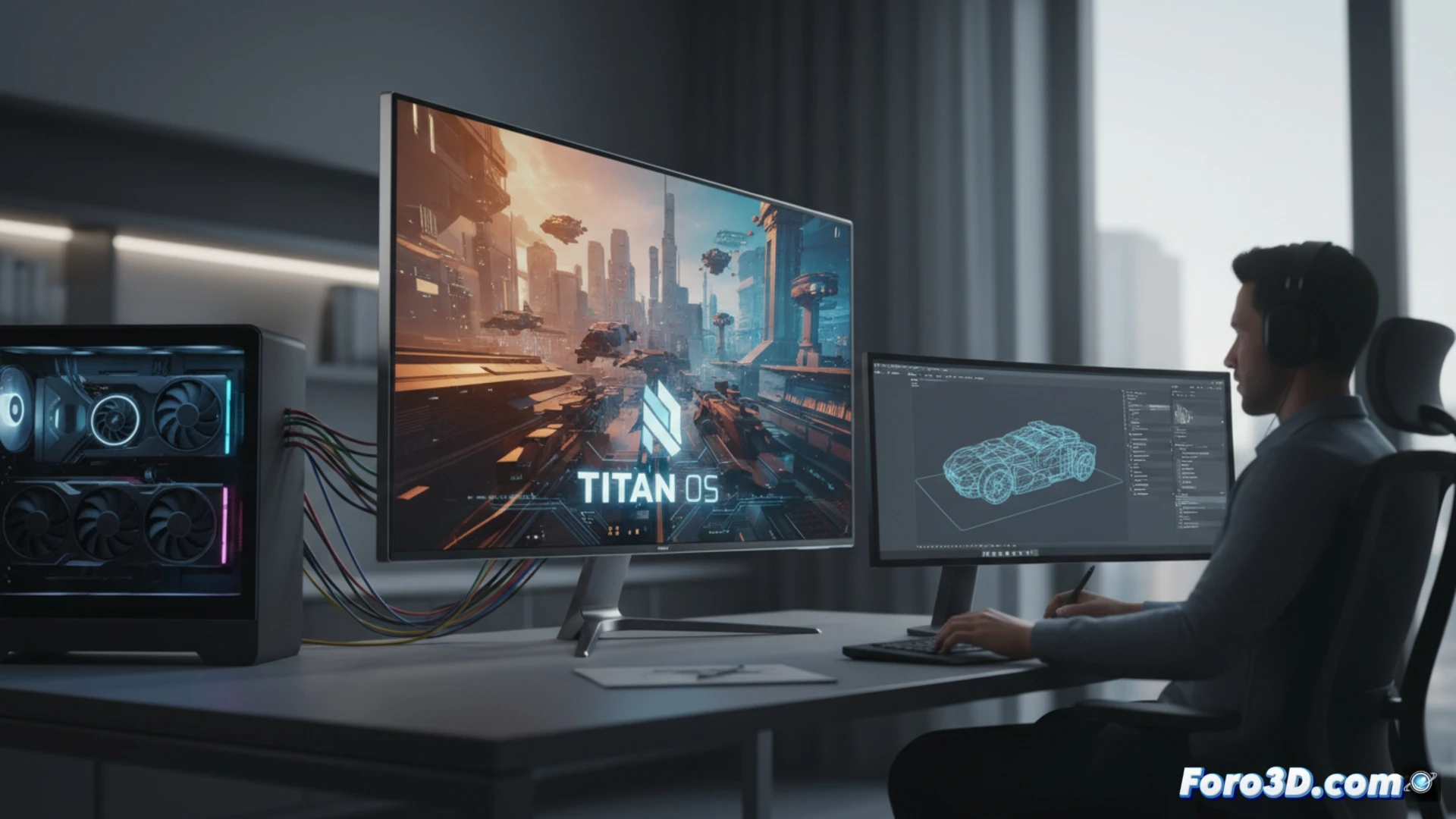
Technical evaluation for 3D workflows 🧐
Viability as a secondary monitor depends on key factors. The performance promise due to being a web solution is ambiguous; although the interface may be agile, visualization of local or network files will depend on natively supported codecs and input latency. The absence of Google Cast hinders direct streaming from mobile devices or browsers, a common method for sharing previews. Physical connectivity (HDMI) will be crucial, requiring support for high resolutions and HDR without intrusive post-processing. Support for apps like VLC or Plex would be decisive for handling professional codecs.
Long-term updates and practical conclusion ⏳
The commitment to security updates for ten years is noteworthy, ensuring stability, but it does not guarantee new features relevant to 3D. In conclusion, while Titan OS could offer a clean experience for streaming consumption, its utility in a professional 3D environment is currently limited. The lack of Cast and uncertainty about advanced codec compatibility make it a secondary option. Its true potential will depend on Philips enabling monitor mode features with low latency and support for specialized playback applications.
Can the adoption of Titan OS in Philips 2026 televisions improve their utility as a reliable secondary monitor for 3D visualization and review tasks? 📺
(PS: RAM is never enough, like coffees on a Monday morning)