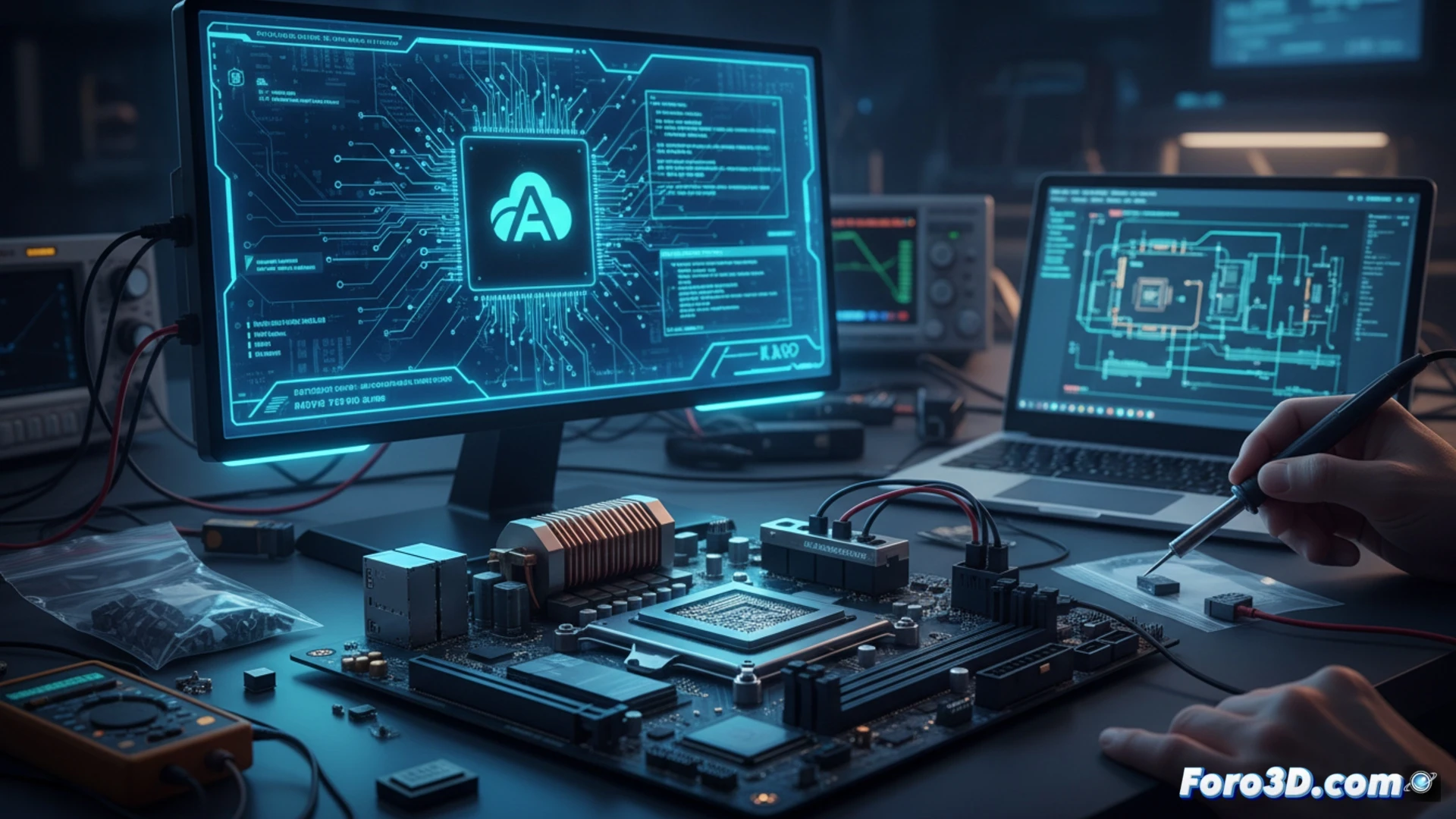
An enthusiast has achieved a compatibility milestone by getting an Intel Bartlett Lake processor, designed for the demanding embedded and industrial segment, to work on a consumer Asus Z790-AYW motherboard. The LGA 1700 socket is physically compatible, but the original BIOS blocked booting. The solution was ingenious: use artificial intelligence, specifically Anthropic's Claude chatbot, to analyze, rewrite, and modify the firmware, allowing the system to recognize the Core 9 273QPE. This achievement highlights the blurred lines between professional and consumer hardware, although it is a temporary solution that an official BIOS update would erase.
Potential and risks of industrial CPUs in 3D workstations 🛠️
Processors from the embedded and industrial line, like Bartlett Lake, offer attractive features for professional rendering and 3D simulation workloads. They usually guarantee long-term availability, extended support, and possibly superior quality bins for greater stability under continuous load. However, forcing their compatibility on consumer motherboards carries significant risks. Modifying the BIOS is a delicate operation that can brick the board, void warranties, and create critical system instabilities. Additionally, these industrial CPUs may have different power configurations, thermal management, or memory support compared to consumer versions, limiting their performance or functionality in an environment not designed for them.
Reverse engineering versus stable solutions ⚖️
This experiment demonstrates the deep knowledge and technical curiosity of the community, exploring hardware beyond its official specifications. For a 3D professional whose productivity depends on absolute stability, these reverse engineering solutions are impractical. The temporality of the modification, reversible with a simple update, makes it a proof of concept, not a reliable base for a workstation. The stable alternative remains investing in certified professional platforms, such as the Xeon W or Threadripper PRO series, where the higher cost includes driver support, optimized BIOS, and guaranteed compatibility for intensive and critical workflows.
Is it possible that future consumer motherboards will offer native support for Intel's industrial CPUs, or will this hack remain exclusive to enthusiasts?
(PS: RAM is never enough, just like coffees on a Monday morning)