The final stage of the Volta a Catalunya 2026 promises a pure spectacle on the streets of Barcelona. An urban circuit, short and technical, will be the stage for a tactical battle between pure sprinters and bold riders seeking to break the race. Beyond the traditional broadcast by RTVE, this type of route is the perfect candidate for an analysis enriched with 3D technology, allowing to break down every tactical and architectural detail of the scenario.
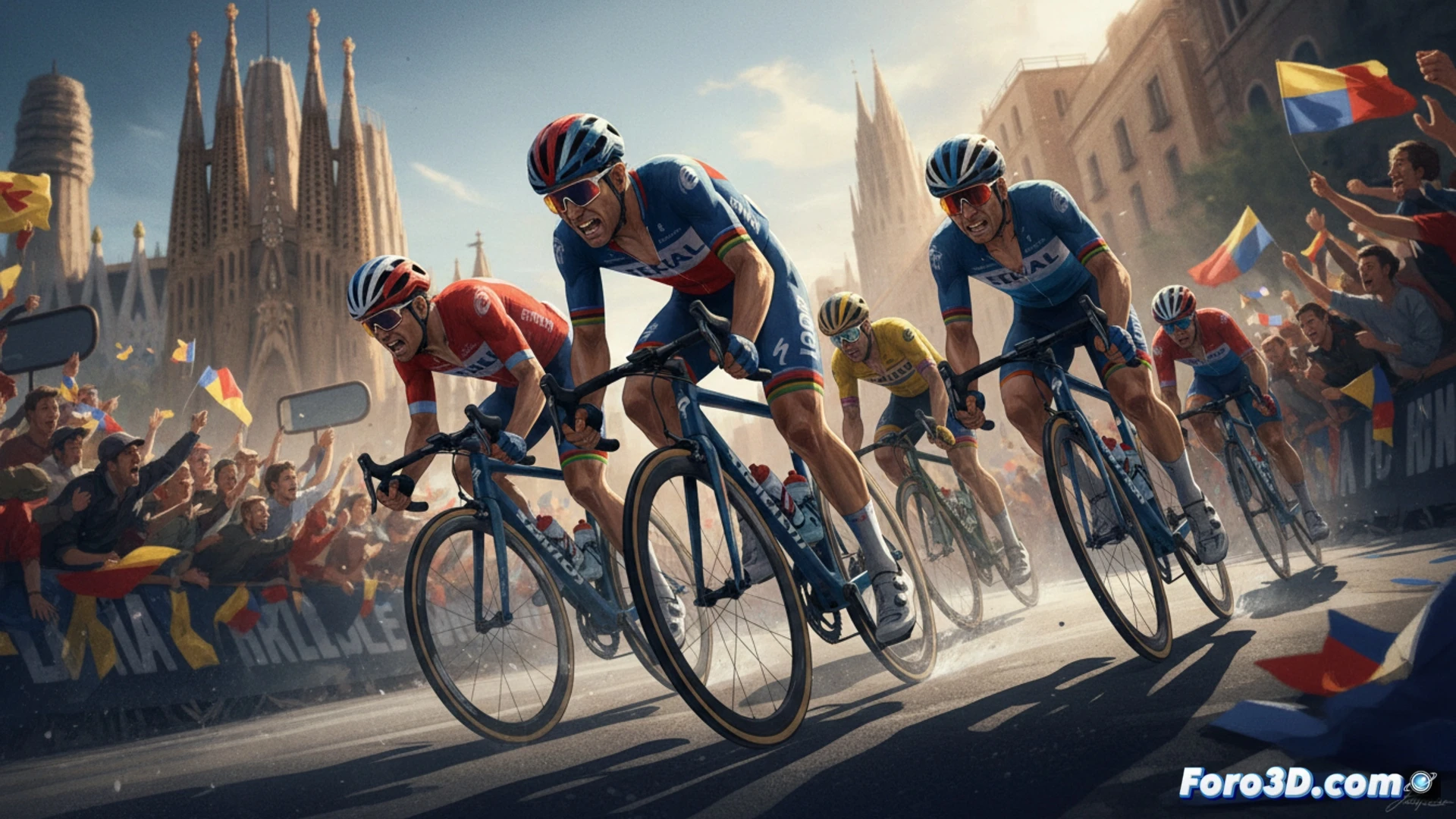
3D Tools to Dissect the Queen Stage 🛠️
The creation of a geo-referenced 3D model of the circuit would allow for an unprecedented analysis. We could visualize and measure precisely the radius of the tight curves, the slope of the pavements, and the exact location of the urban elements that define the critical points. Through simulations, attack strategies could be tested, calculating the advantage needed to maintain a breakaway on such a fast layout. In addition, virtual replays of the sprints, generated from telemetry data and 360 cameras, would offer perspectives impossible for conventional cameras, showing the positioning of each rider in the peloton.
Beyond Visualization: A New Layer of Narrative 🎙️
This technological approach does not seek to replace the live excitement, but to add a layer of analytical depth and accessibility. For fans, an interactive model makes it easier to understand the unique challenges of the stage. For teams, simulations are a valuable planning tool. Integrating these visualizations into RTVE Play coverage would transform the experience, bringing the tactical complexity of professional cycling in an intuitive and visually impactful way.
How can 3D modeling and fluid dynamics simulation optimize the design of an urban circuit like that of the Volta 2026 to maximize peloton safety and television spectacle?
(PS: 3D tactical simulation never fails, the riders on the ground do)