At the recent WonderCon 26, the fruitful bidirectional relationship between David Lynch's cinema and the language of comics was explored. The talk revealed how the imagery of comic books, especially that of Jack Kirby, nourished Lynch's surrealism and pop iconography. Conversely, his dreamlike and mysterious style has inspired numerous artists of the ninth art. This exchange goes beyond adaptations, expanding the narrative and visual possibilities of both mediums.
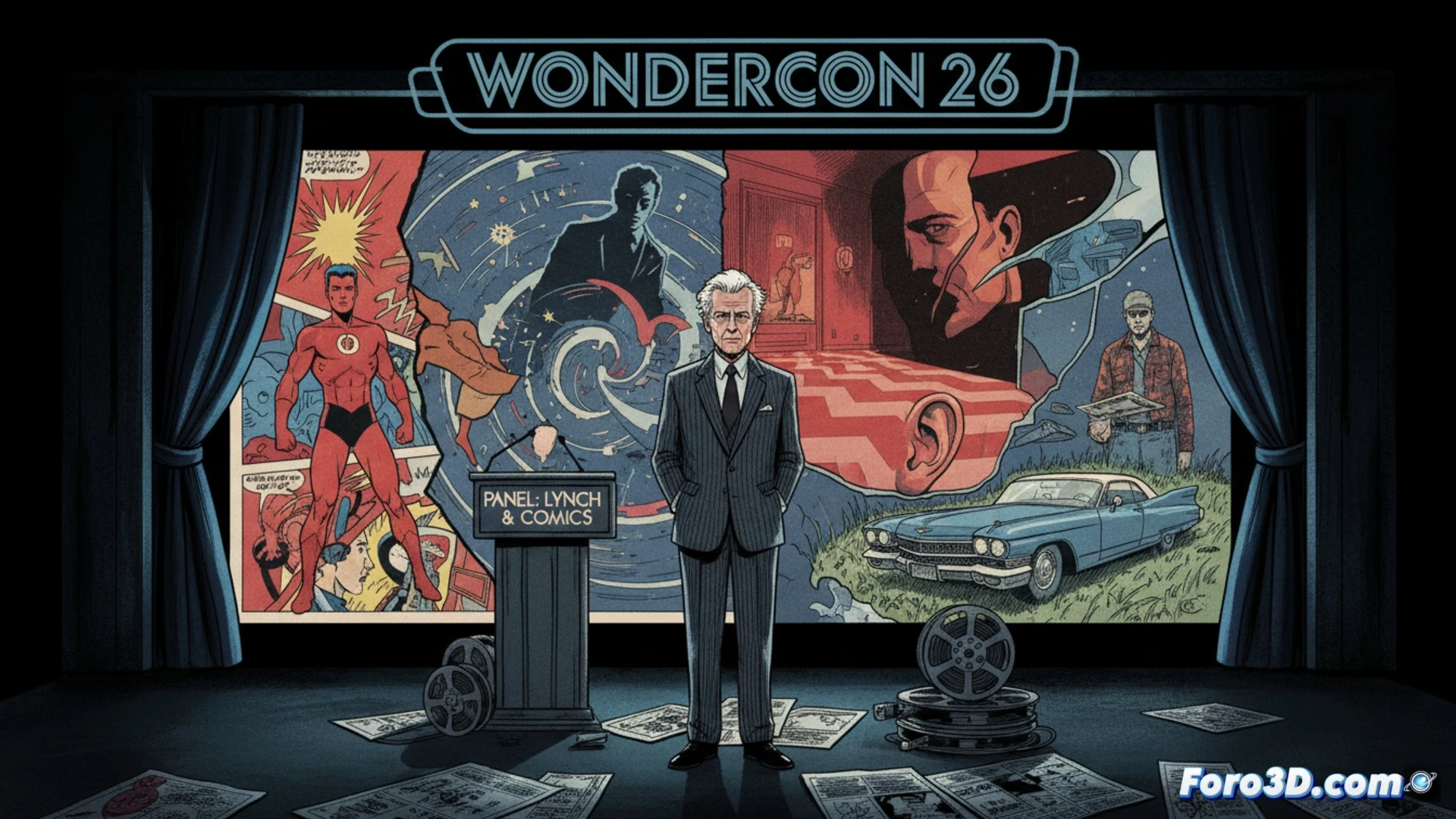
From Panel to Frame: Visual Techniques in Dialogue 🎬
The technical analysis focuses on how Lynch's tools translate to comics. His composition, similar to a dense storyboard full of symbolism, finds a parallel in page and panel planning. Theatrical lighting and the use of color as a direct emotional element are principles shared with graphic storytelling. Concepts like 3D previsualization or storyboarding serve as a bridge: they are the stage where the mental image, abstract and laden with atmosphere, begins to take structure. Lynch fragments the narrative as a page is fragmented into sequences, using unsettling close-ups that equate to emphatic panels, creating visual rhythm and mystery.
Legacy: The Expansion of Abstract Language 🌀
Lynch's deepest legacy in comics is not thematic, but one of linguistic openness. He demonstrated that visual narrative can operate from pure subjectivity, ambiguity, and sensation—principles that comic artists have adopted to explore territories beyond linear logic. This dialogue confirms that cinema and comics are sibling mediums in the construction of dreamlike realities, where the image, not the dialogue, carries the weight of the story and meaning.
How have David Lynch's narrative and visual techniques influenced the evolution of graphic language and page structure in contemporary comics?
(P.S.: Previz in cinema is like the storyboard, but with more possibilities for the director to change their mind.)