The second season of Fallout has raised the bar of its retrofuturistic aesthetic thanks to the work of the RISE teams in Berlin and Stuttgart. Their work was not limited to creating isolated elements, but to coherently and spectacularly expanding the visual universe of the series. From complex aerial choreographies with vertibirds to the procedural destruction of cities and large-scale simulation effects, each contribution was a technical and artistic challenge designed to immerse the viewer in a credible and detailed post-apocalyptic world.
Technical coordination and proceduralism in destructive environments 🧩
Two of the biggest technical challenges lay in synchronization and the creation of environments. Sequences like the in-flight docking of vertibirds required millimeter coordination between animation and effects teams so that the movement of the aircraft and the particle trails, smoke, and turbulence formed a credible whole. On the other hand, the construction of scenarios like the destroyed Los Angeles was approached with procedural techniques. This allowed for the efficient generation of a vast expanse of rubble and damaged structures, maintaining artistic control over the density and type of destruction, resulting in a massive environment full of narrative details.
Simulation as visual narrative 💥
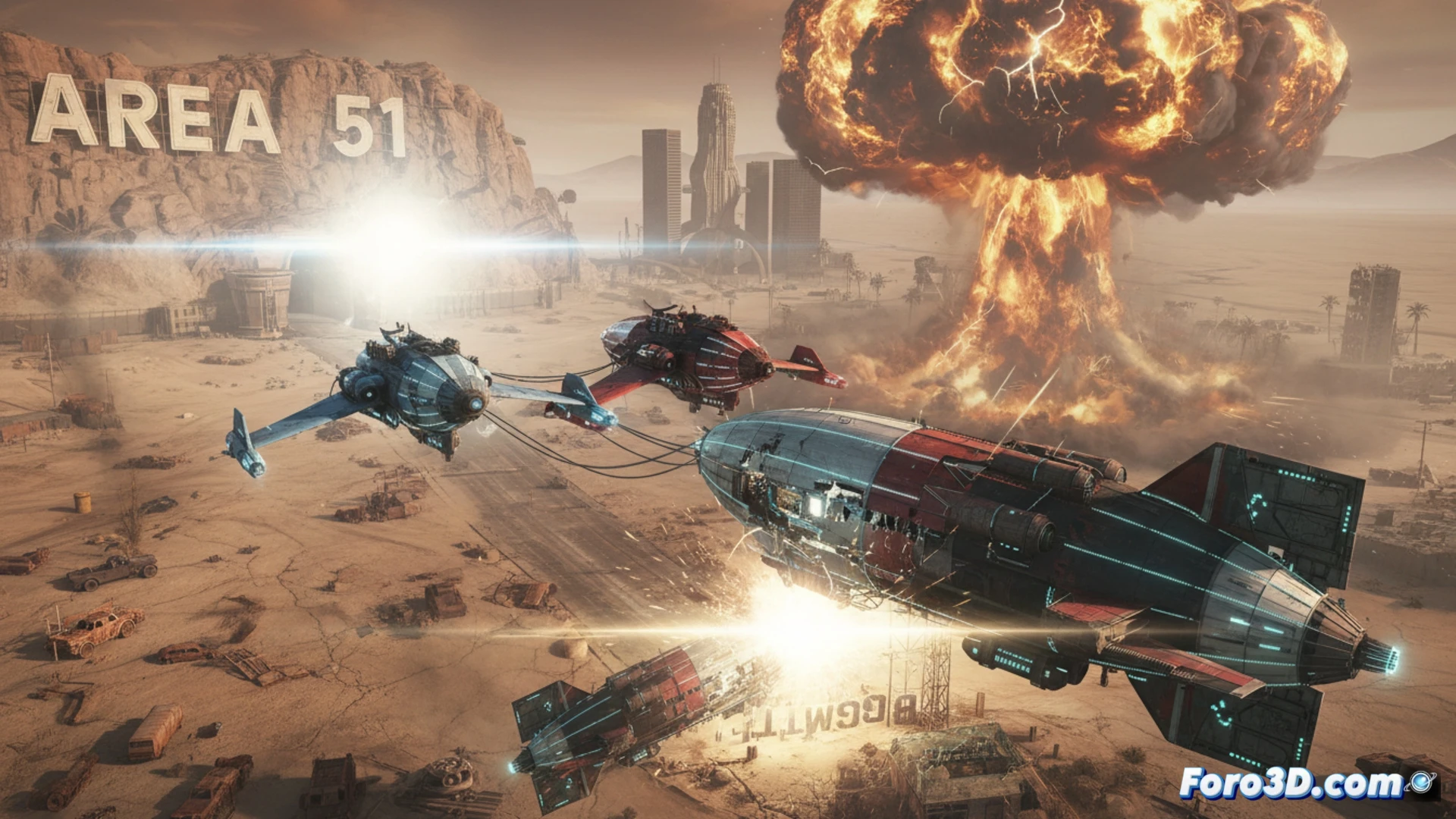
The culminating effects, such as the atomic explosion and the spectacular crash of the Caswennan airship, transcend the merely visual to become key narrative points. These simulations sought not only impact, but to tell a physical story: the shockwave, the rain of debris, the cold glow of the diodes as they fracture, and the structural collapse of the airship. Every technical decision, from the behavior of the fire to the density of the smoke, served to reinforce the credibility of the world and the dramatic intensity, demonstrating that quality VFX is, in essence, pure narrative.
What do you think about this advancement?