The sinking of the USS Indianapolis in July 1945 is one of the most tragic episodes in naval history. After being torpedoed, the heavy cruiser sank in minutes, leaving about 900 men adrift in the Pacific. For nearly five days, the survivors faced dehydration, hypothermia, and continuous shark attacks. Only 316 people were rescued. This catastrophe, beyond its historical dimension, is presented today as an ideal case study for analysis using 3D visualization technologies.
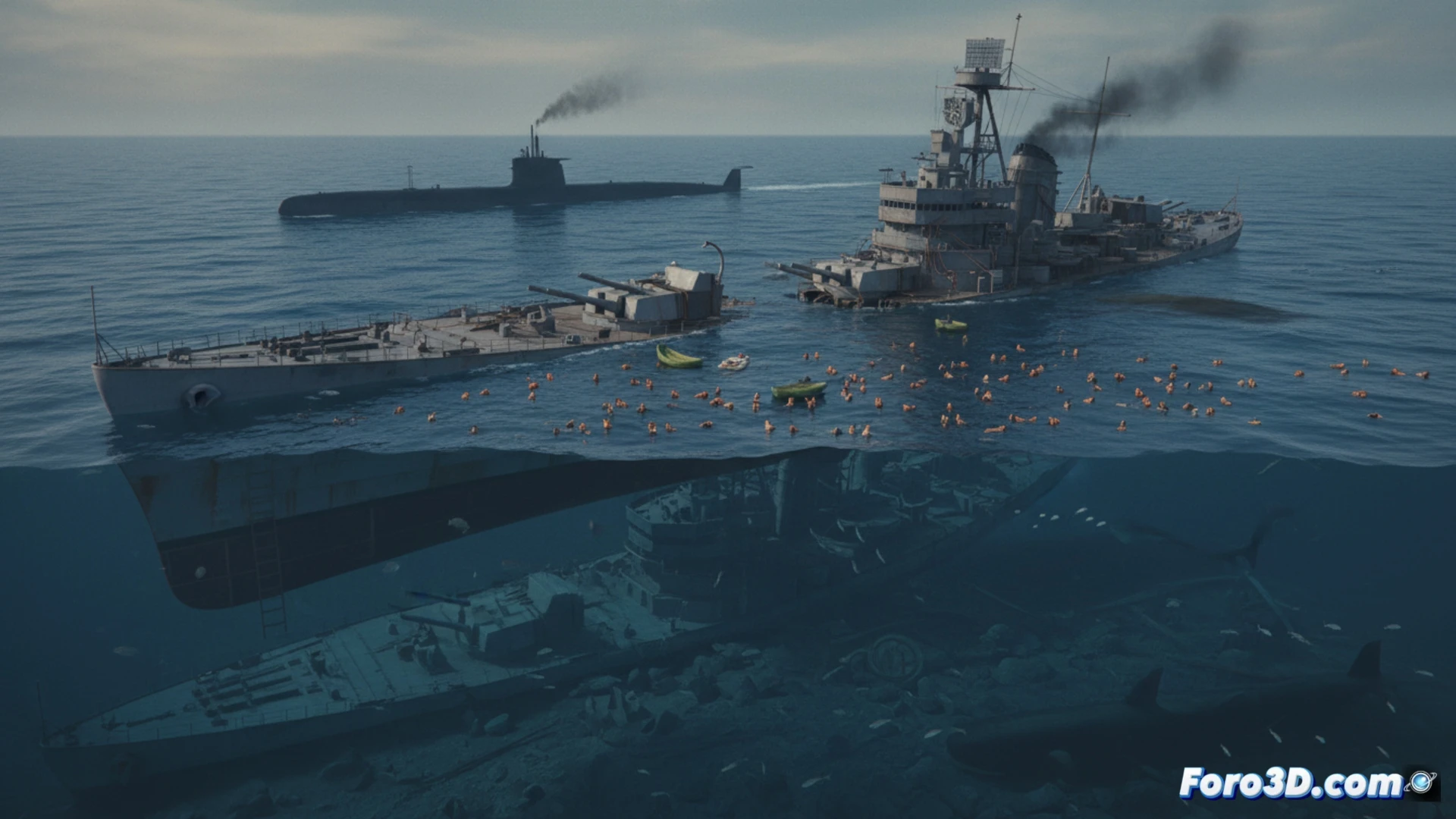
3D Simulation: A Forensic Analysis of the Disaster 🕵️
3D technology allows an unprecedented technical dissection of this tragedy. Through CAD modeling, we can reconstruct the ship and accurately simulate the torpedo damage, the sinking angle, and the evacuation time. On the other hand, oceanographic simulation can recreate the currents, water temperature, and drift patterns of the castaways, explaining why they dispersed so much. It is even possible to visualize data on shark presence in the area, cross-referencing historical information with animal behavior models, to understand the patterns of the attacks. These tools turn narratives into analyzable data.
Visualize to Understand and Honor 🎗️
Beyond forensic analysis, 3D reconstruction has profound educational and human value. It allows new generations to understand the real scale of the event in an immersive way, transcending cold figures. Visualizing the immensity of the ocean and the vulnerability of the small groups of survivors generates empathy and understanding that text alone cannot achieve. Thus, technology becomes a bridge to honor the memory of the victims, ensuring that the lessons of this catastrophe are not forgotten.
How can 3D modeling and simulation be used to accurately analyze and visualize the sinking sequence of the USS Indianapolis and the survival dynamics at sea? 🚢
(P.S.: Simulating catastrophes is fun until the computer melts down and you become the catastrophe.)