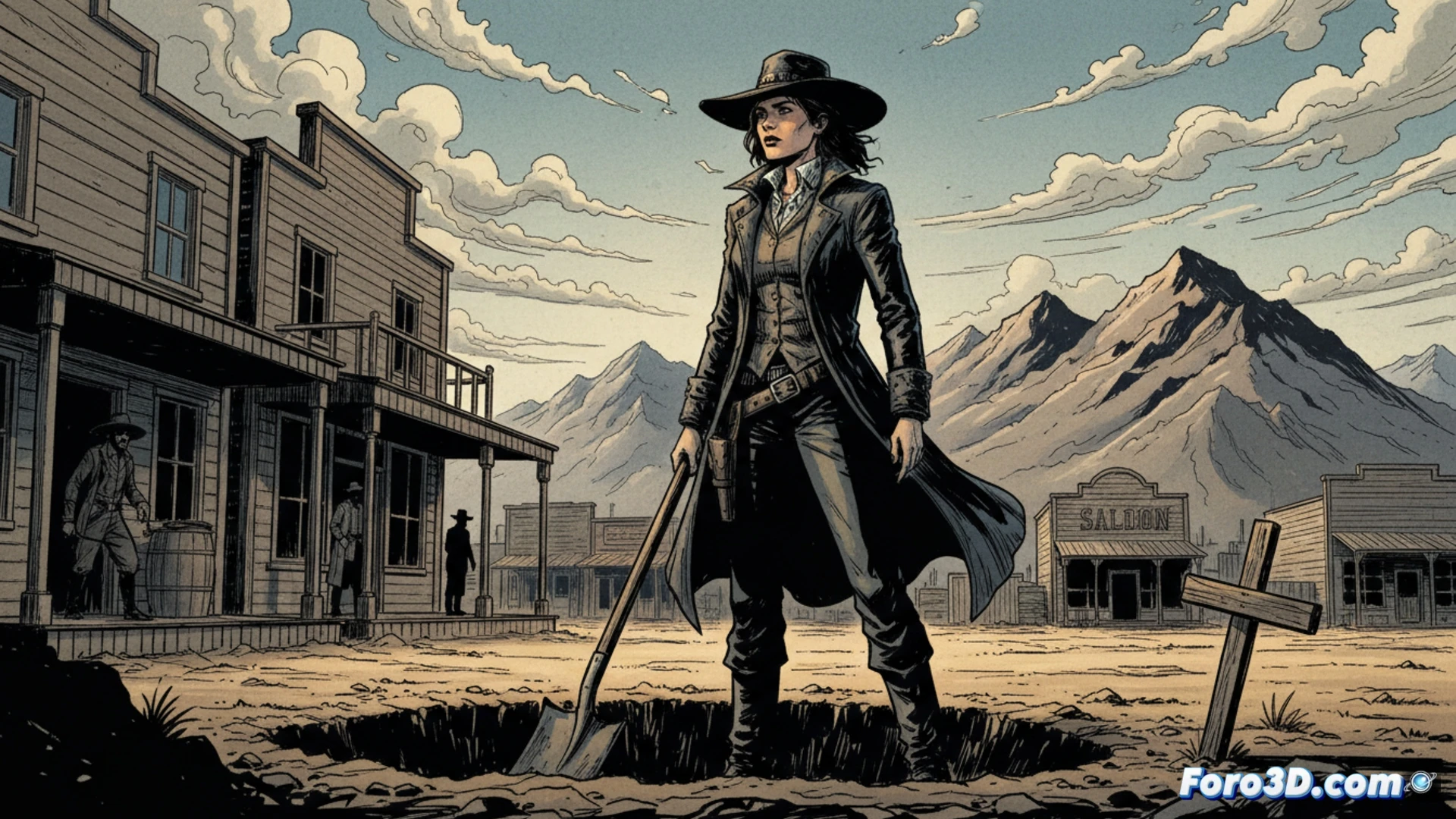
The western graphic novel The Undertaker bursts onto the scene with force, standing out for its powerful visual narrative. Its story, about a gravedigger who unearths secrets in a border town, is told with a cinematic pace and expressive art that captures the essence of the genre. This debut not only promises a fascinating series, but also presents itself as a perfect case study for analyzing the bridges between comics and audiovisual preproduction, where 3D software is fundamental.
3D Previsualization: Bringing the Graphic Western to the Screen 🎬
The adaptation of The Undertaker to an animated or live-action medium would find in 3D tools an ideal ally. Its detailed and atmospheric art would serve as a direct reference for modeling scenarios, vehicles, and costumes, ensuring fidelity to its aesthetic. Techniques such as animated storyboarding and 3D previsualization would allow planning high-paced action sequences, testing camera angles and compositions that reflect the visual strength of the original panels. The construction of 3D layouts would facilitate the planning of shots and dramatic lighting, key in the genre.
Graphic Narrative as an Audiovisual Blueprint 📐
This work reinforces that a solid visual narrative is the master plan for any production. The comic demonstrates mastery of pacing and composition that preproduction and layout artists constantly seek. Analyzing works like this, where every image is loaded with intention and advances the plot, is an invaluable exercise for any 3D and animation professional, reminding us that technology must serve a well-told and visually coherent story from its origin.
How can the graphic aesthetic and narrative rhythm of a graphic novel like The Undertaker be translated into the three-dimensional language of a storyboard for film or animation?
(P.S.: Previz in film is like the storyboard, but with more chances for the director to change their mind.)