The return of The Trigan Empire is not a simple re-edition. In a recent interview, its new creative team addresses the delicate balance between respect for the legacy and the necessary innovation. They acknowledge the skepticism it may generate among purists, but defend narrative and aesthetic evolution as the only way to keep this classic science fiction and adventure series relevant, attracting a new generation of readers.
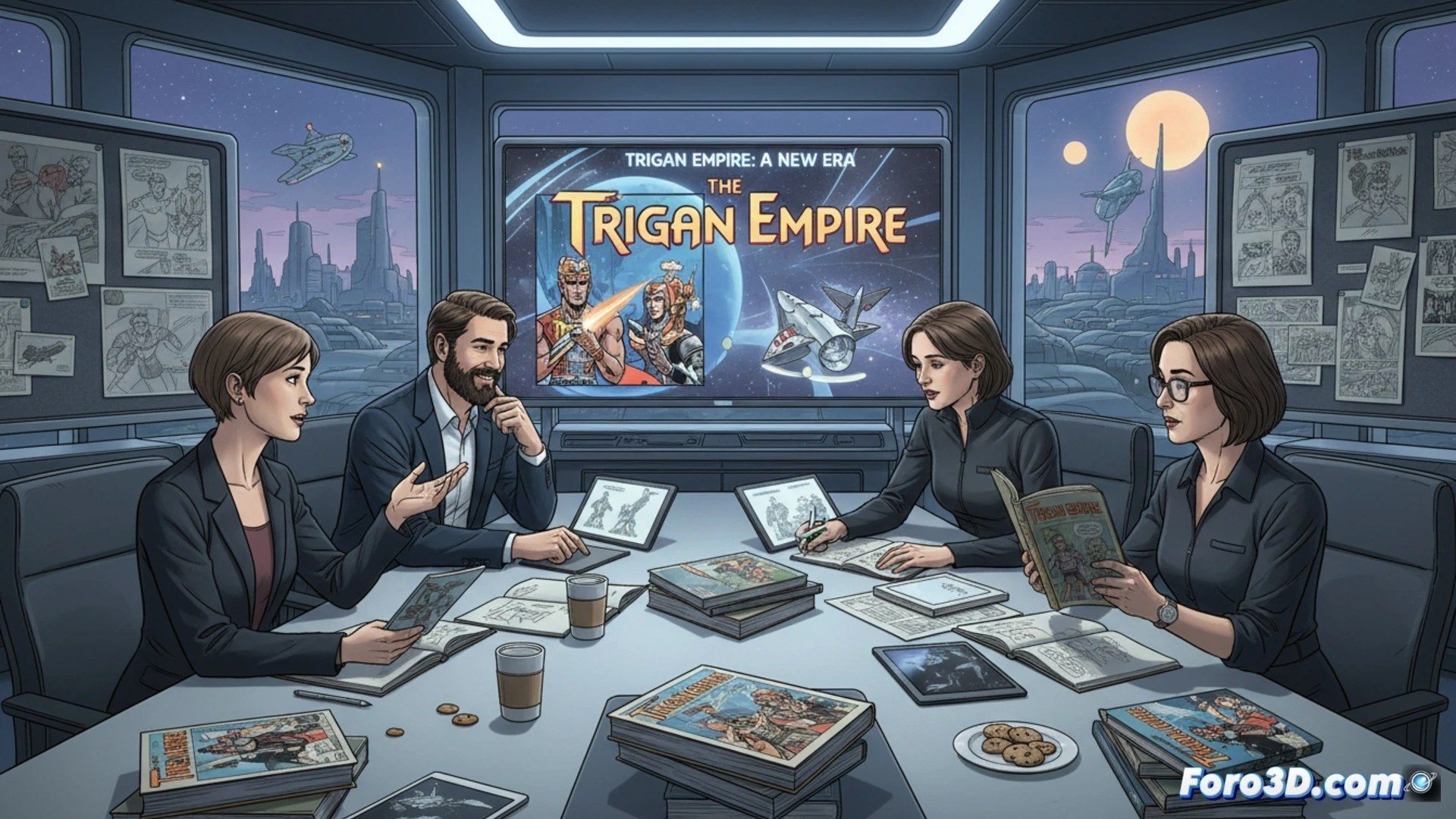
Narrative preproduction: legacy versus innovation 🧩
This rebirth can be analyzed as a rigorous narrative preproduction process. The team does not start from scratch, but from an extensive visual archive and established mythology. Their work resembles conceptual design for a new season of a series: they decide which elements of the original world are untouchable pillars and which territories allow for fresh exploration. This phase is crucial for mapping the new story arcs, ensuring that, although the story advances, the essence and visual identity of the work are preserved. It is an exercise in continuity and reinvention.
Aesthetic evolution as a creative obligation 🎨
Finally, the case underscores an uncomfortable truth: exact replication is a creative dead end. Honoring a classic does not mean mummifying it, but understanding its spirit to translate it into a contemporary visual and narrative language. The success of this new stage will not be measured only by fidelity, but by its ability to generate the same sense of wonder and adventure as the original, demonstrating that great visual narratives are destined to be reinterpreted.
How can the visual aesthetic of a classic like The Trigan Empire be updated for a contemporary audience without betraying its essence and original artistic legacy?
(P.S.: Previz in cinema is like the storyboard, but with more chances for the director to change their mind.)