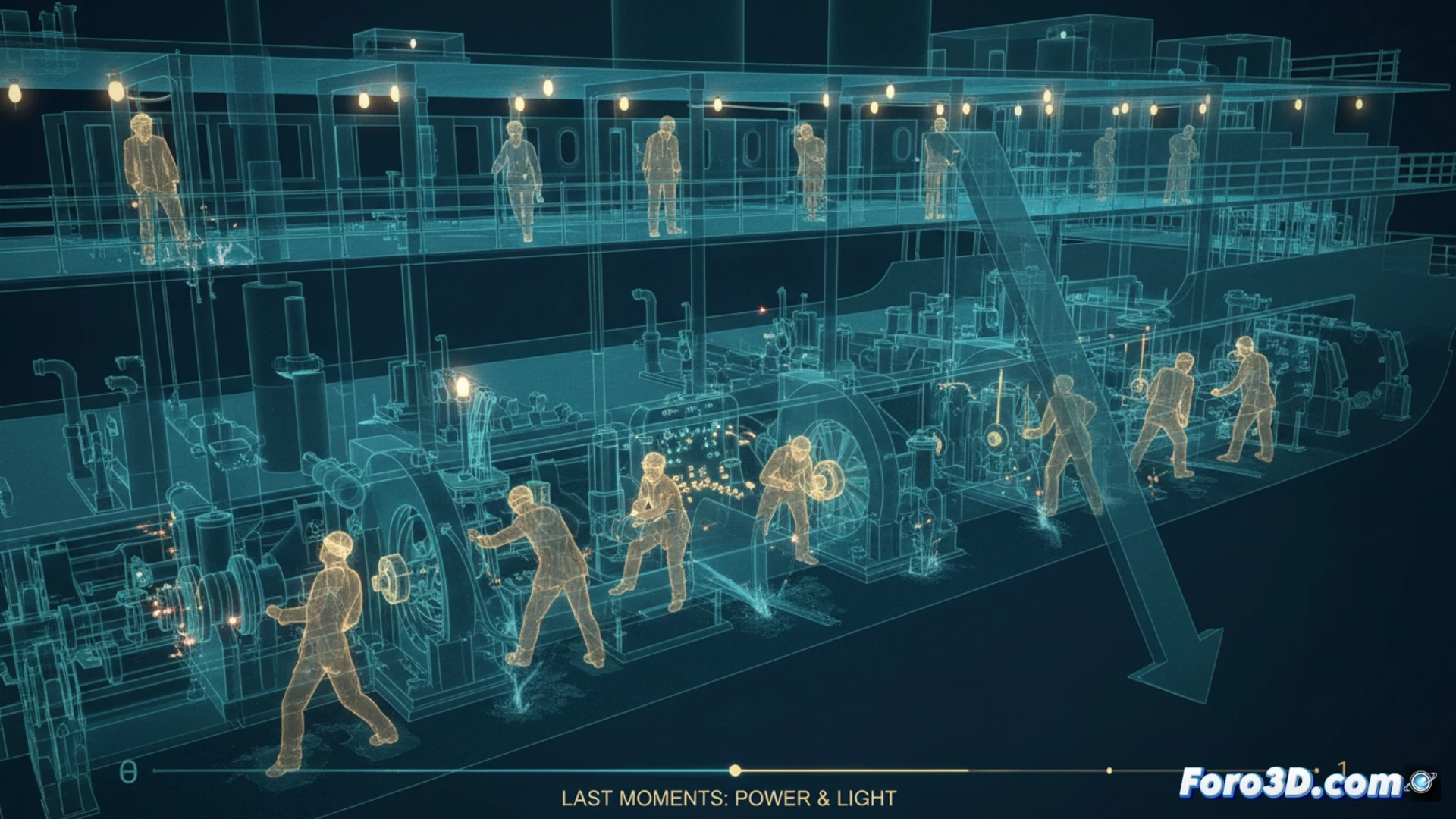
A digital forensic analysis using 3D scanning of the Titanic wreck has rewritten a crucial chapter of its sinking. The technology reveals that, beyond the iceberg impact, the heroic effort of the engineering and electrical crew was decisive. Their struggle to keep the power and lighting systems operational until the last minute prevented greater panic and allowed for a more orderly evacuation, saving countless lives.
Digital forensics: reconstructing the critical last minutes 🕵️♂️
The 3D scan, with its millimeter precision, has allowed analysis of the state and distribution of electrical and flooding systems. The data show that the initial damage doomed the ship, but the human response altered the disaster's timeline. By keeping generators and key circuits operational, the crew delayed the fatal bow tilt and maintained communications and lighting. This technical effort prolonged the ship's relative stability, gaining vital minutes for launching lifeboats and organizing the response.
Technical and human lessons for crisis management 📚
This study transcends mere archaeology. It underscores how 3D technology serves as a tool to extract eternal lessons from past catastrophes. The narrative is no longer just one of fatality, but of operational resilience. Discipline and professionalism in the engine room mitigated the tragedy, offering a model of how technical preparation and organized human conduct are the last line of defense in any disaster, even when the final outcome seems inevitable.
What variables would you consider to model this disaster?