The recent announcement of the iPhone 17e, Apple's entry-level model, seems like a reverse marketing ploy. Instead of attracting buyers with its $600 price, its deliberately limited specifications, such as a 60Hz screen in 2026, make the standard iPhone 17 shine with exceptional value for just $200 more. This phenomenon is no coincidence, but a masterful study in product design and consumer psychology, where the budget option primarily serves to enhance the appeal of the higher-end range.
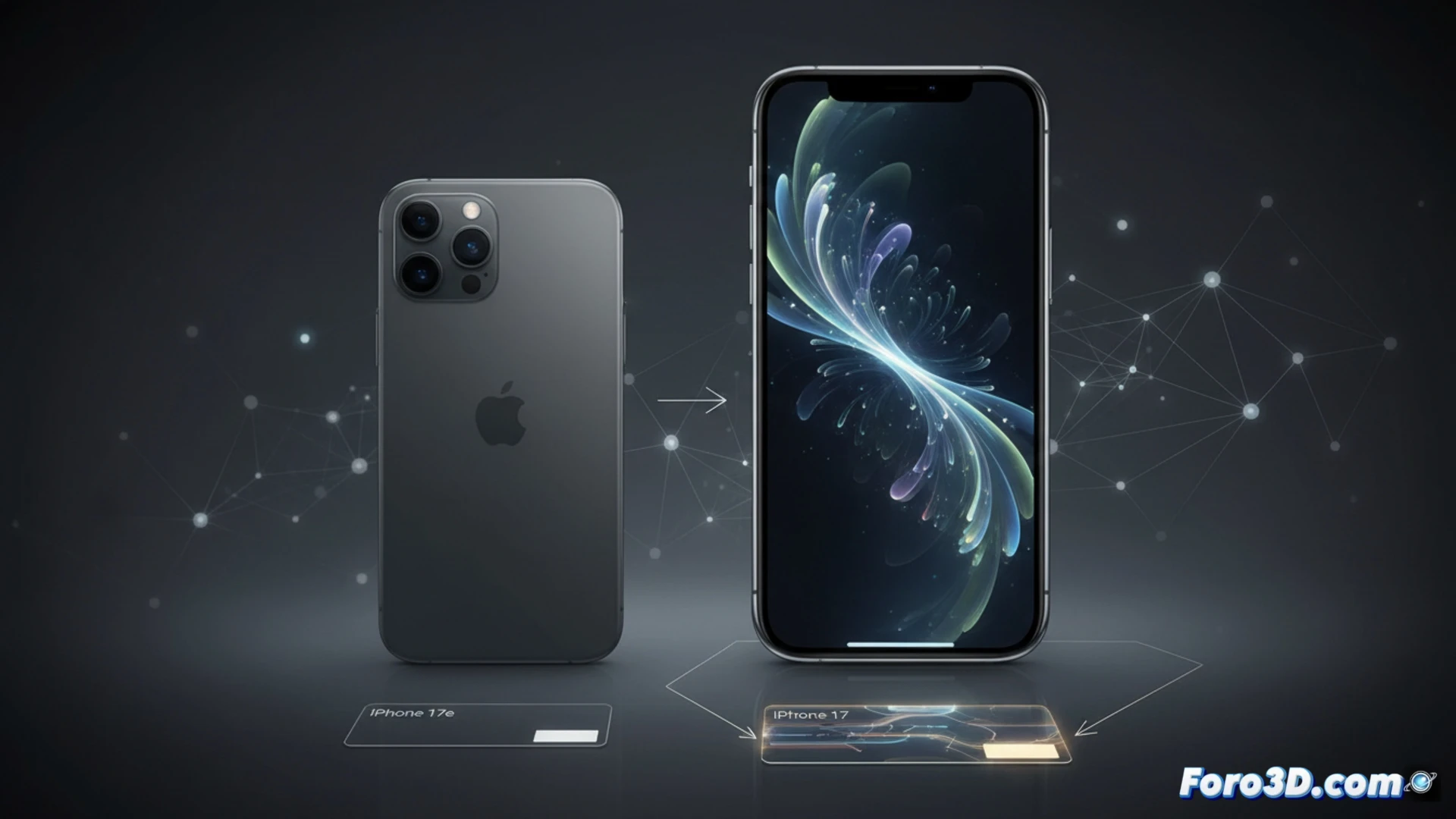
The engineering of perceived value: specifications as a positioning tool 🤔
Apple designs not just products, but hierarchies of desire. The strategic omission of technologies like ProMotion, the Dynamic Island, or a dual-camera system in the iPhone 17e is not just a cost-cutting measure. It is a calculated definition of the boundaries of sufficiency. These design decisions create perceptual friction points that the consumer evaluates. When comparing, the advantages of the standard model are magnified, justifying the price jump. This comparison process, facilitated by precise tiered pricing, guides the user toward the product Apple really wants to sell in volume, the standard, which offers a higher margin and consolidates its core value proposition.
From the 3D model to the purchase decision: visualizing the strategy 🎨
Before a single physical component exists, this strategy is validated through 3D modeling and photorealistic rendering. These tools allow designers and marketers to visualize and contrast the proposal of both models, fine-tuning details that accentuate perceived differences. The render does not just show a product; it communicates positioning. Thus, 3D design becomes the first testing ground where consumer choice is simulated, demonstrating that the smartest product strategy begins long before the assembly line.
How does Apple use the strategic design of the iPhone 17e to create a perception anchor that reinforces the perceived value and demand of the standard model?
(P.S.: Designing a product in 3D is like being an architect, but without having to worry about the bricks.)