Tension in the Strait of Hormuz defines a new type of naval conflict. Against the conventional power deployed by the United States and its allies, Iran has opted for an asymmetric denial strategy. Its ability to disrupt maritime traffic with relatively simple but effective means creates an unstable balance. Control of the strait, vital for global oil, is no longer decided solely by the tonnage of ships, but by disruption capacity.
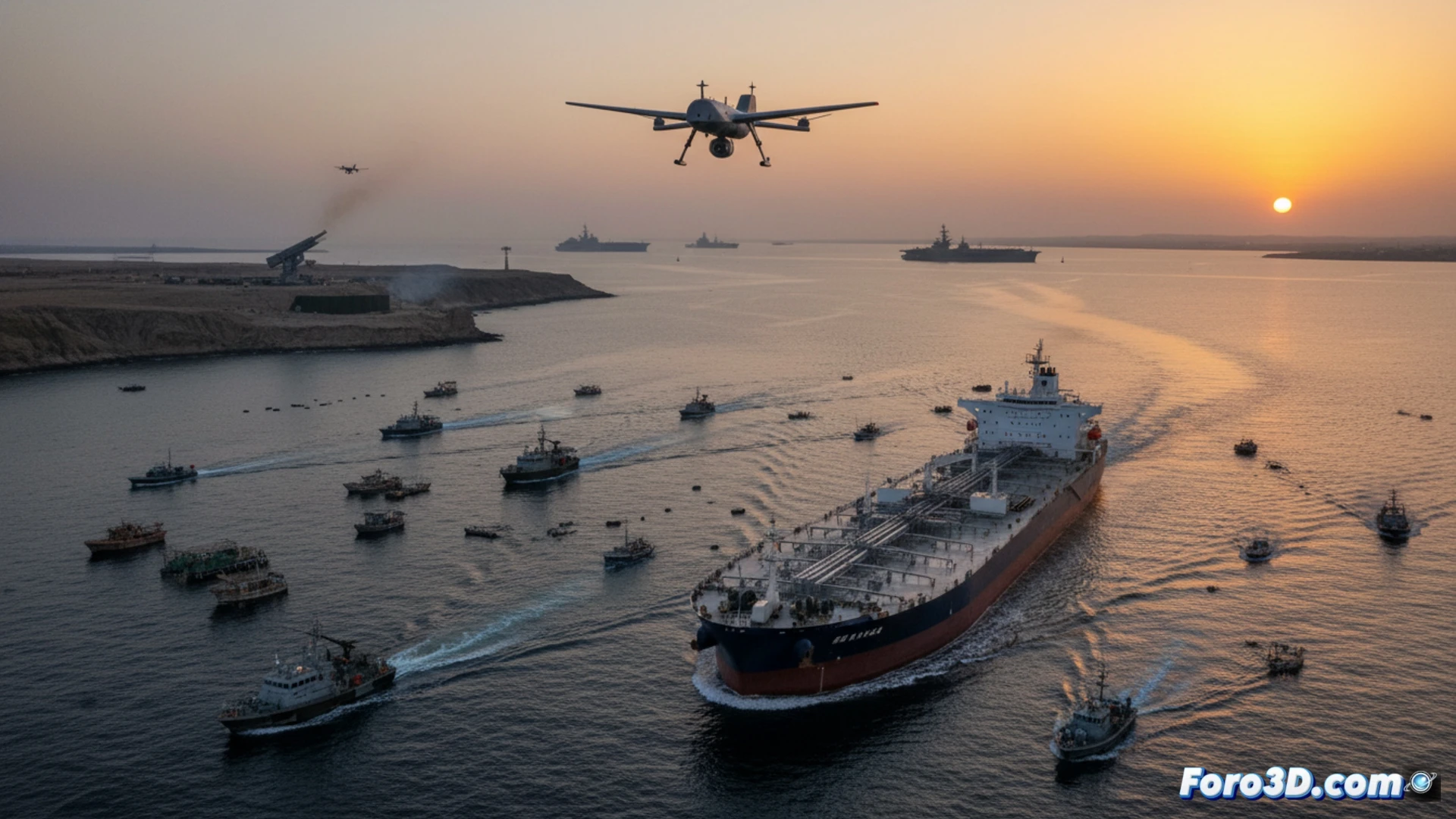
Technological disruption: drones and mines against aircraft carriers 🛰️
Technological advantage here is not synonymous with larger platforms, but with systems that are harder to detect and counter. Iran has developed a wide range of maritime and aerial drones, some with kamikaze capability, that can saturate defenses. Naval mines, an ancient artifact, remain a formidable threat due to their low cost and complexity to clear. This combination forces conventional forces to allocate enormous resources in surveillance and countermeasures to protect a highly congested space.
Operation Traffic Jam on the Crude Highway 🚧
The situation has a point of absurd humor. Imagine that the world's main supply highway has a toll managed by someone with an arsenal of nails and remote-controlled drones to puncture tires. No matter how much the police set up an operation with armored trucks, the guy with the nail can always cause a costly delay. That's how the game works in Hormuz: there's no need to sink the enemy fleet, just sow the doubt that the next tanker might encounter a floating gift. It's the world's most expensive transport strike, where the threat is more effective than the attack.