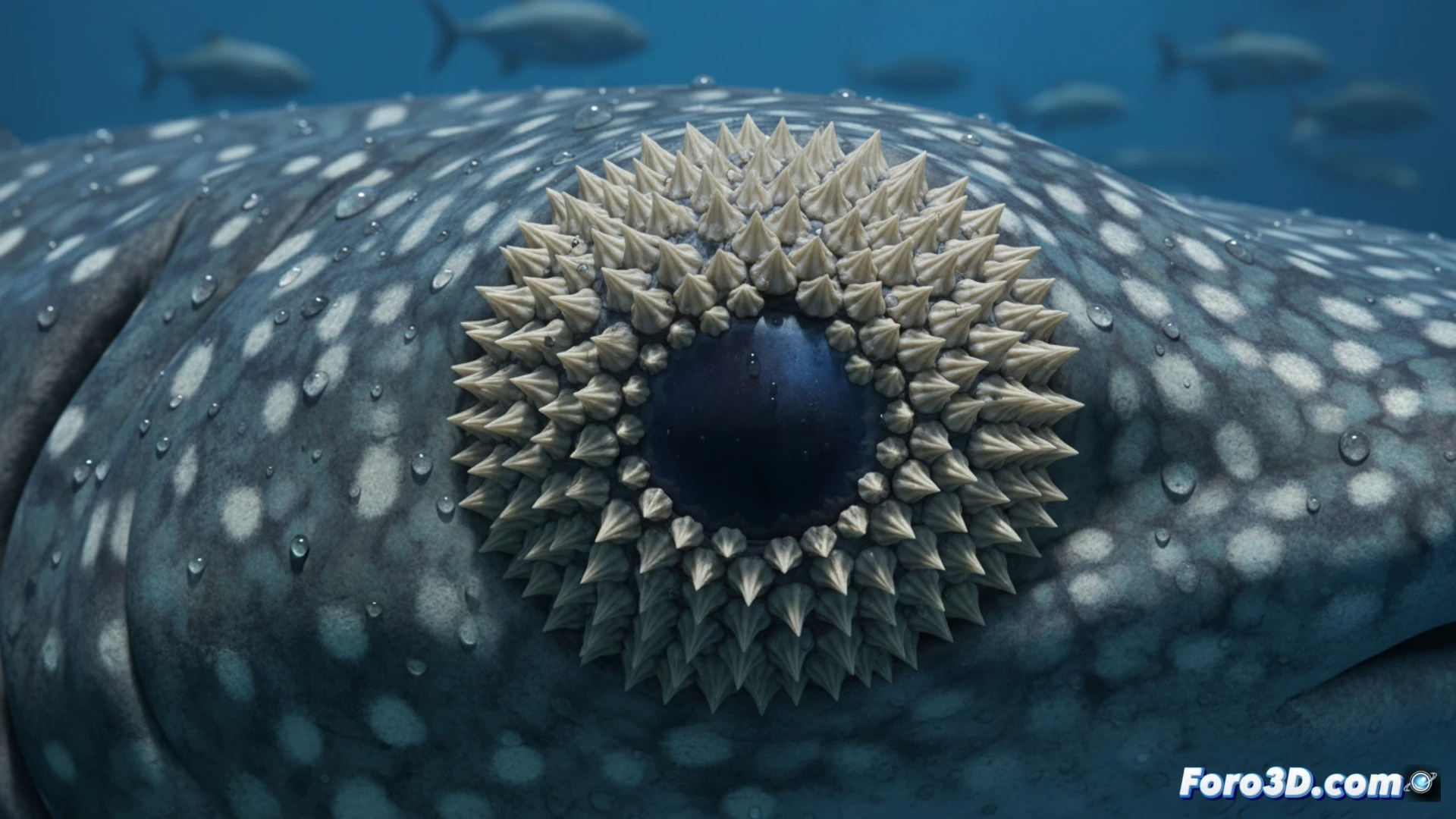
A recent study revealed a morphological adaptation in the whale shark. Its eyeballs are covered by thousands of structures called dermal denticles. These modified scales, similar to tiny teeth, form a rough surface. This feature acts as armor, protecting the eye in the absence of functional eyelids.
Biomimetics and surface protection: from dermis to materials 🧠
The arrangement and morphology of these dermal denticles offer a model for the development of materials. Their design could inspire self-cleaning coatings or those with high abrasion resistance. In engineering, similar patterns are studied to protect optical sensors in hostile environments, such as seabeds or space. The key lies in replicating the microstructure that dissipates the energy of an impact and minimizes parasite adhesion.
The first case of eyes that bite in nature? 😲
Evolution gave the whale shark a practical solution: if you can't blink, cover your eyes with a layer of teeth. Imagine the scene: a parasite approaches with bad intentions and, instead of a soft eyeball, encounters living sandpaper. It's the biological equivalent of lining your smartphone with sandpaper. Maybe not elegant, but it avoids having to go to the underwater ophthalmologist.