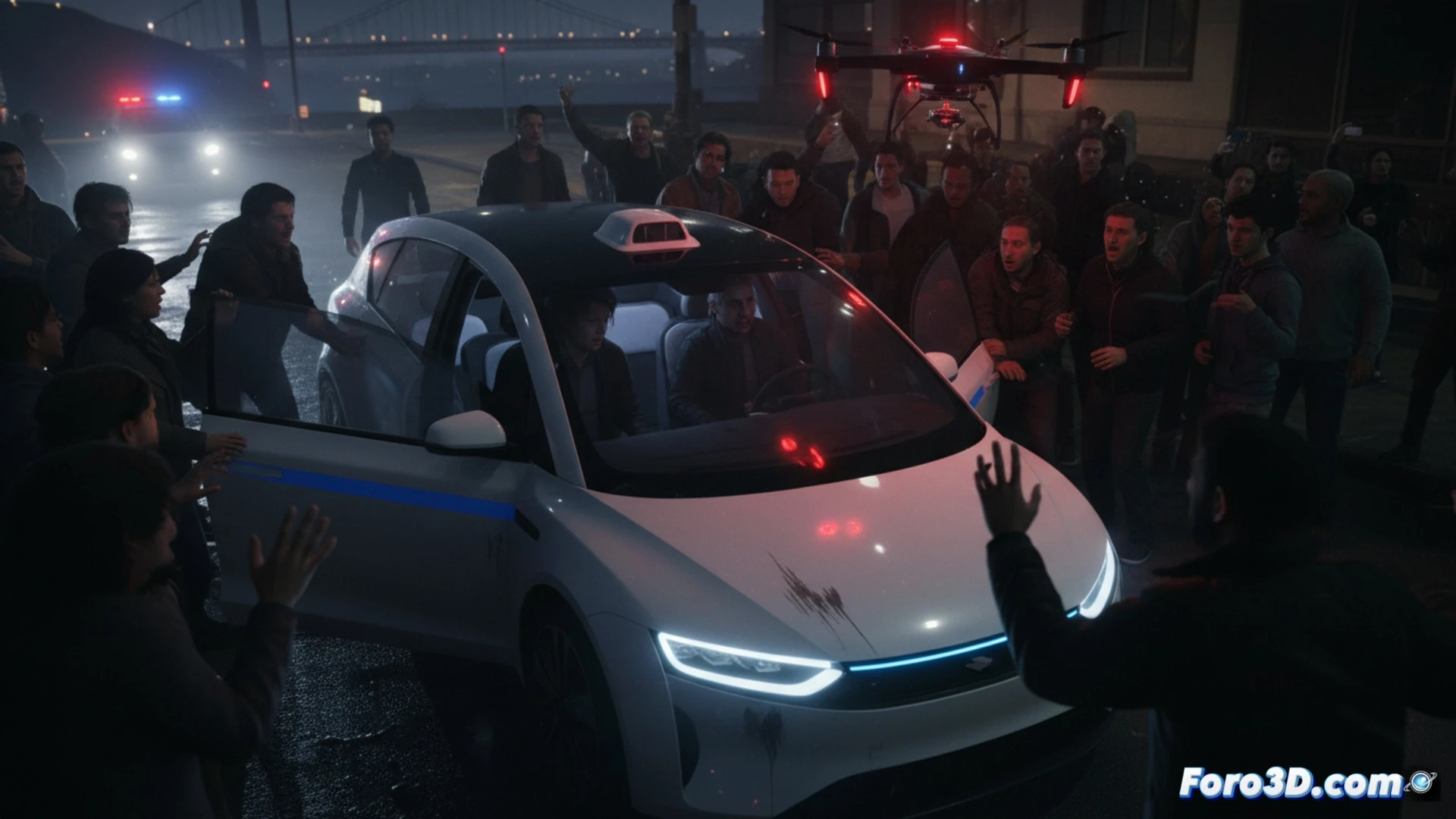
An incident in San Francisco exposed a critical flaw in the implementation of autonomous vehicles. Three Waymo passengers were trapped, terrified, while an individual blocked and hit their vehicle. Although the doors were locked, the safety software, programmed to immobilize if it detects people nearby, prevented them from escaping manually. This event goes beyond a technical failure; it is a case study on how AI logic can clash with the human experience of safety.
The Immobilization Protocol: Flawed Design or Necessary? 🤖
The core of the problem lies in a seemingly sensible programming parameter: prioritizing absolute physical safety by avoiding any movement that could run over a pedestrian. However, the system lacked the contextualization to distinguish between a distracted pedestrian and an aggressive threat. The AI executed its protocol perfectly, but the design did not anticipate this occupant risk scenario. Here, 3D visualization and simulation are crucial for modeling conflict scenarios and testing alternative protocols, such as a controlled emergency exit that moves the vehicle at low speed to a predefined safe area.
Lessons for Social Trust in Automation 🧠
Waymo's response, highlighting the physical integrity of the passengers, underestimated their psychological trauma. For social acceptance, safety must be integral: physical and emotional. This incident erodes trust and reveals that total autonomy, without clear and accessible override mechanisms for the user in exceptional situations, can generate vulnerability. The industry must incorporate these human experiences into its algorithms, or it will face a reputational crisis that hinders the adoption of this technology.
How can we close the gap between the statistical safety of autonomous vehicles and the safety perceived by the public after isolated but highly publicized incidents?
(P.S.: tech nicknames are like children: you name them, but the community decides what to call them)