At the recent G7 summit, the US Secretary of State, Marco Rubio, tried to project a narrative of control, assuring his allies that the war in the Middle East would not be indefinite. However, that same night, a drone attack in Saudi Arabia, attributed to pro-Iranian forces, injured twelve US soldiers. This instant contrast between the political statement and the violent fact evidences a fundamental rhetorical gap, where the official discourse seeks to create a parallel reality of dominance that the events on the ground take care of disproving.
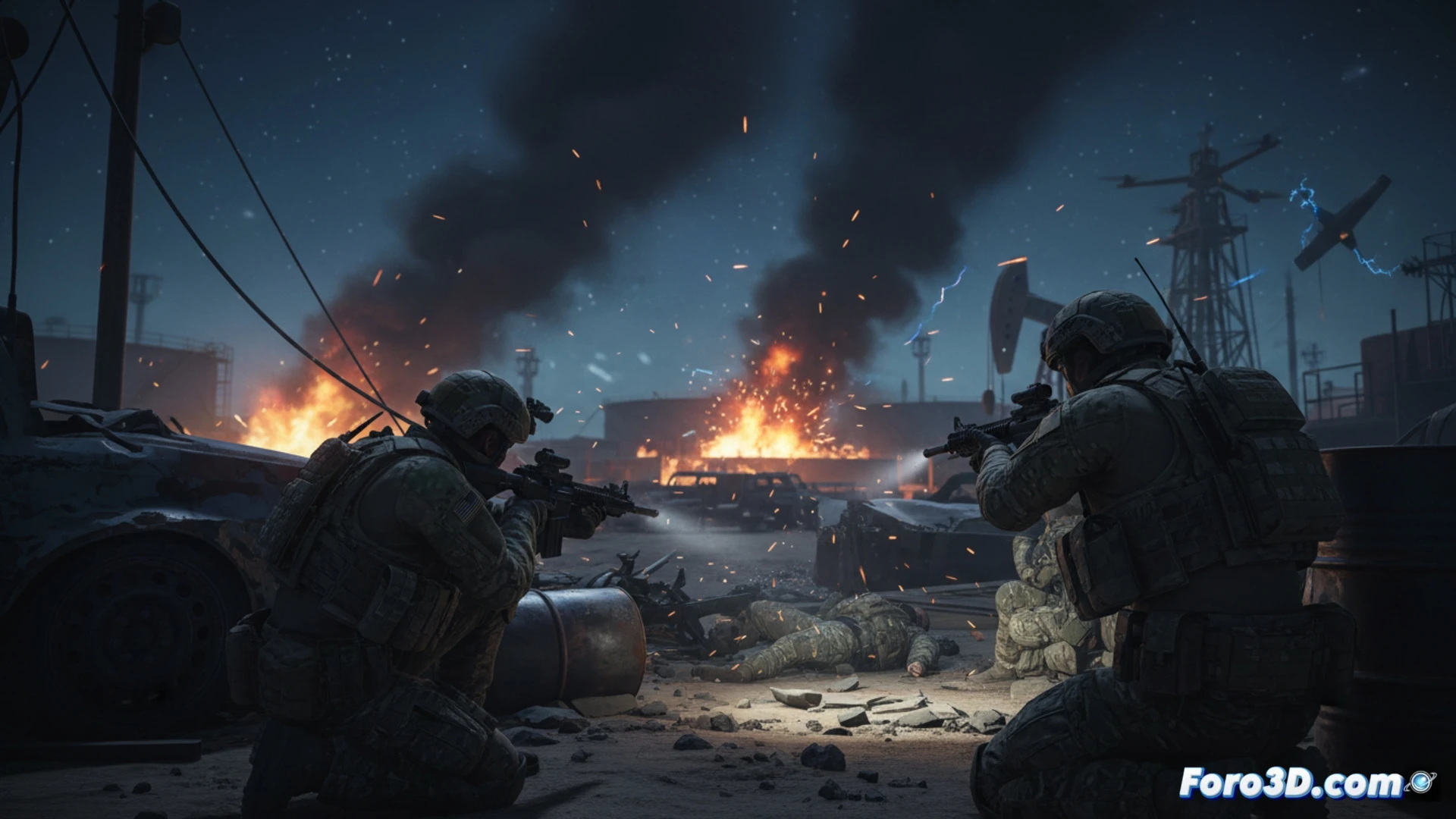
3D Visualization of the Disconnect: Interactive Maps and Timelines 🗺️
To analyze this discrepancy, 3D technology and computer vision offer powerful tools. An interactive geopolitical model of the region can be built. Over this map, a timeline would overlay layers of information: on one hand, the official statements from key actors like Rubio, with their geographic location and exact date. On the other, reported incidents such as the drone attack would be graphed, with their coordinates and consequences. This dual visualization would make the disconnect tangible, showing how peaks of reassuring rhetoric often coincide with or are followed by events of violent escalation, creating a narrative infographic of the gap.
Non-Verbal Language and the Shadow of Uncertainty 🎭
Beyond words, technical analysis can scrutinize body language in such statements. Through video analysis and computer vision algorithms, microexpressions, pauses, or changes in posture could be quantified when spokespeople talk about control or end of the conflict. This scrutiny seeks the shadows of uncertainty or dissonance in the one issuing a message of absolute firmness. In such a volatile context, technology not only exposes the contradiction between what is said and what happens, but also questions the degree of conviction behind the constructed discourse.
What visual metrics would you use to represent the credibility of government sources?