With the upcoming release of The Mandalorian & Grogu, it is crucial to review the episode that serves as its direct prequel: The Return of the Mandalorian, from chapter 5 of The Book of Boba Fett. Directed by Bryce Dallas Howard, this chapter stands out for its visual narrative power, focusing on the emotional story of Din Djarin after separating from Grogu. The construction of the bond between the characters, without superfluous dialogue, relies on precise cinematic language where framing, lighting, and character design convey the protagonist's loneliness and purpose.
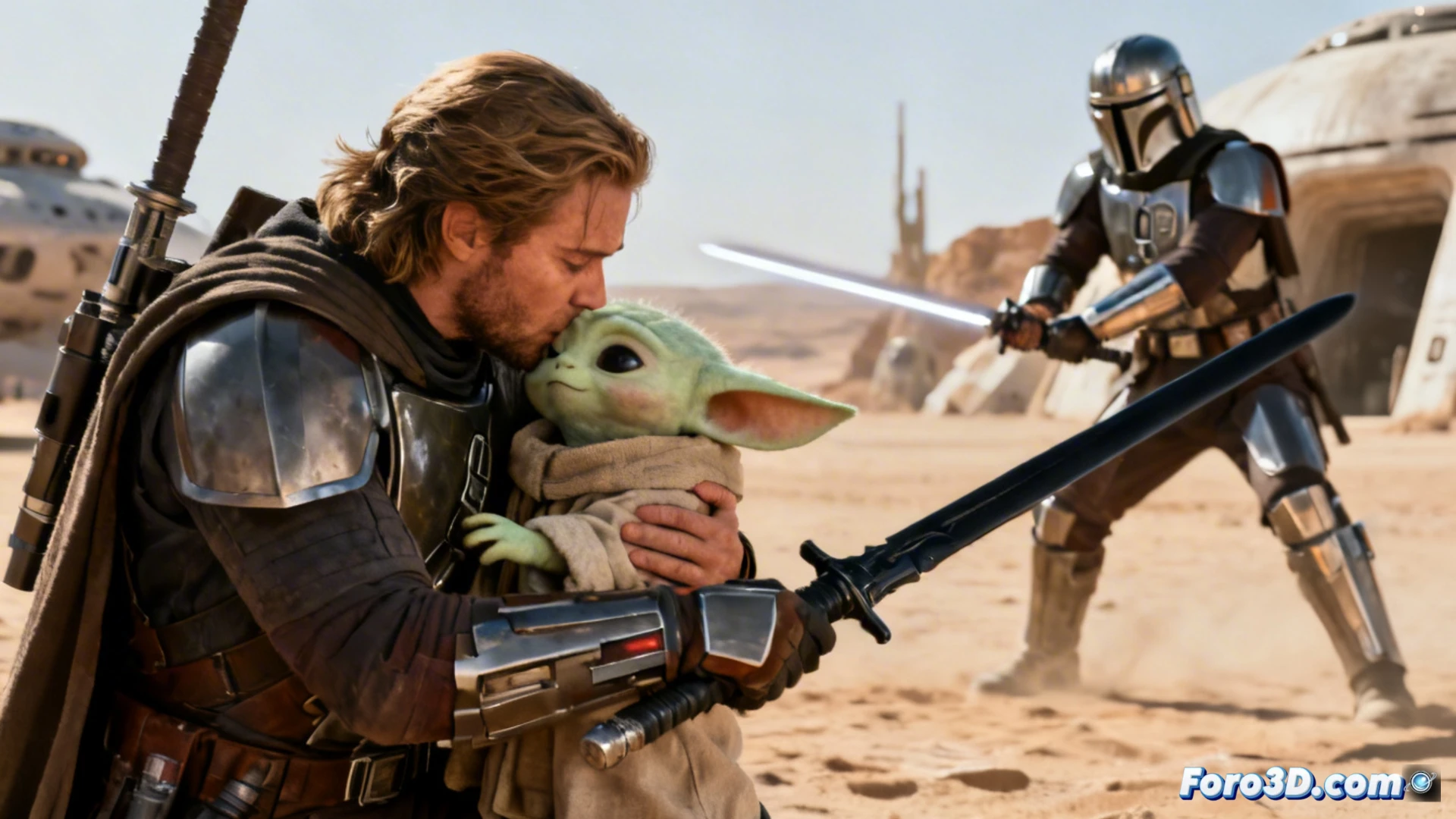
Previsualization and Planning: The Key to Believable Action 🎬
A standout technical aspect is the fight with the darksaber. The sequence is realistic and tangible because Djarin is not a Force user, and every movement has weight. This credibility is not accidental; it is the result of meticulous 3D previsualization (previz) and storyboarding. In productions of this level, complex action sequences are planned digitally in advance, defining camera angles, choreographies, and rhythm. This process, essential in cinema and 3D animation, allows the direction to optimize resources and ensure that the action serves the narrative, emphasizing the character's physical and emotional struggle rather than mere empty spectacle.
The Heart of the Saga: Technique in Service of the Story ❤️
This episode exemplifies the best of Star Wars when it prioritizes the heart of the story. Visual narrative is not an adornment, but the main vehicle for character development. Technical decisions, from the desaturated color palette that reflects Djarin's emotional state to the pre-planning of sequences, are subordinated to emotion. It demonstrates that, whether in a blockbuster or a series, the storyboard and previz are fundamental narrative tools for building authentic moments and well-developed characters that resonate with the audience.
How does the visual narrative of The Return of the Mandalorian use to establish the emotional tone and the foundations of the heroic journey in the upcoming movie The Mandalorian & Grogu?
(P.S.: Previz in cinema is like the storyboard, but with more possibilities for the director to change their mind.)