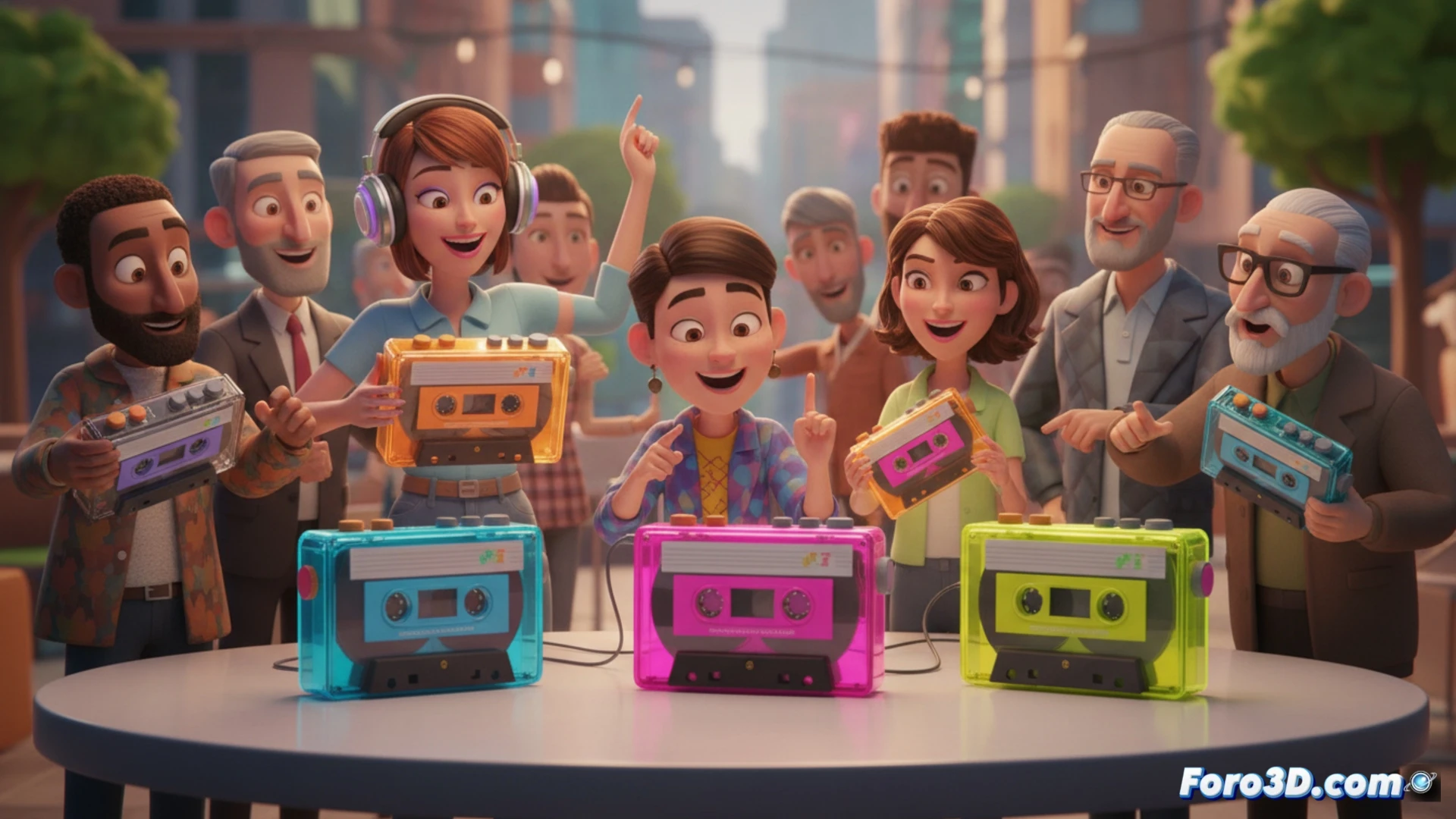
In 2026, audio hardware takes an unexpected turn. Far from mere nostalgia, redesigned cassette players, like those from We Are Rewind, burst onto the scene as a statement of principles. They reject the dominant minimalist and anonymous aesthetic to reclaim transparent casings, physical tactile buttons, and vibrant colors. This movement is not just a vintage whim, but a conscious search for personality and a richer, more tangible user experience against the coldness of streaming.🎧
Analog hardware with a digital heart: a technical fusion 🔧
The engineering behind these devices is key. It's not about pure recreations, but intelligent hybridization. They retain the physical DNA: visible loading mechanisms, read heads, and the ritual of inserting the cassette. However, they integrate essential modern hardware: USB-C rechargeable lithium batteries and Bluetooth modules for connecting wireless headphones. This fusion resolves the historical disadvantages of the format while maintaining its tactile essence. The industrial design prioritizes deliberate interaction, with large buttons and clear tactile feedback, opposing flat, characterless touch interfaces.
Beyond function: design as experience ✨
This phenomenon transcends technical specifications. It represents a deep debate about form and function in the digital era. Hardware with character claims an emotional space. The transparent casing is not just aesthetic, it's constructive honesty, showing its interior. The physical act of manipulating the tape slows down consumption, creating a ritual that returns presence to the musical object. In a world of homogeneous devices, this retro-tech hardware demonstrates that personality and tangible experience are design values as valid as pure efficiency.
Can the analog fidelity of the cassette inspire a new generation of immersive 3D audio hardware?
(P.S.: remember that a powerful GPU won't make you a better modeler, but at least you'll render your mistakes faster)