The promise of AI is to eliminate obstacles, but at what psychological cost? Researcher Emily Zohar warns that a frictionless digital world, where artificial intelligence solves everything instantly, could erode fundamental pillars of our humanity. The absence of effort and challenge is not a luxury without consequences: it threatens to diminish our sense of competence, reduce deep learning, and limit the genuine satisfaction that comes from overcoming difficulties.
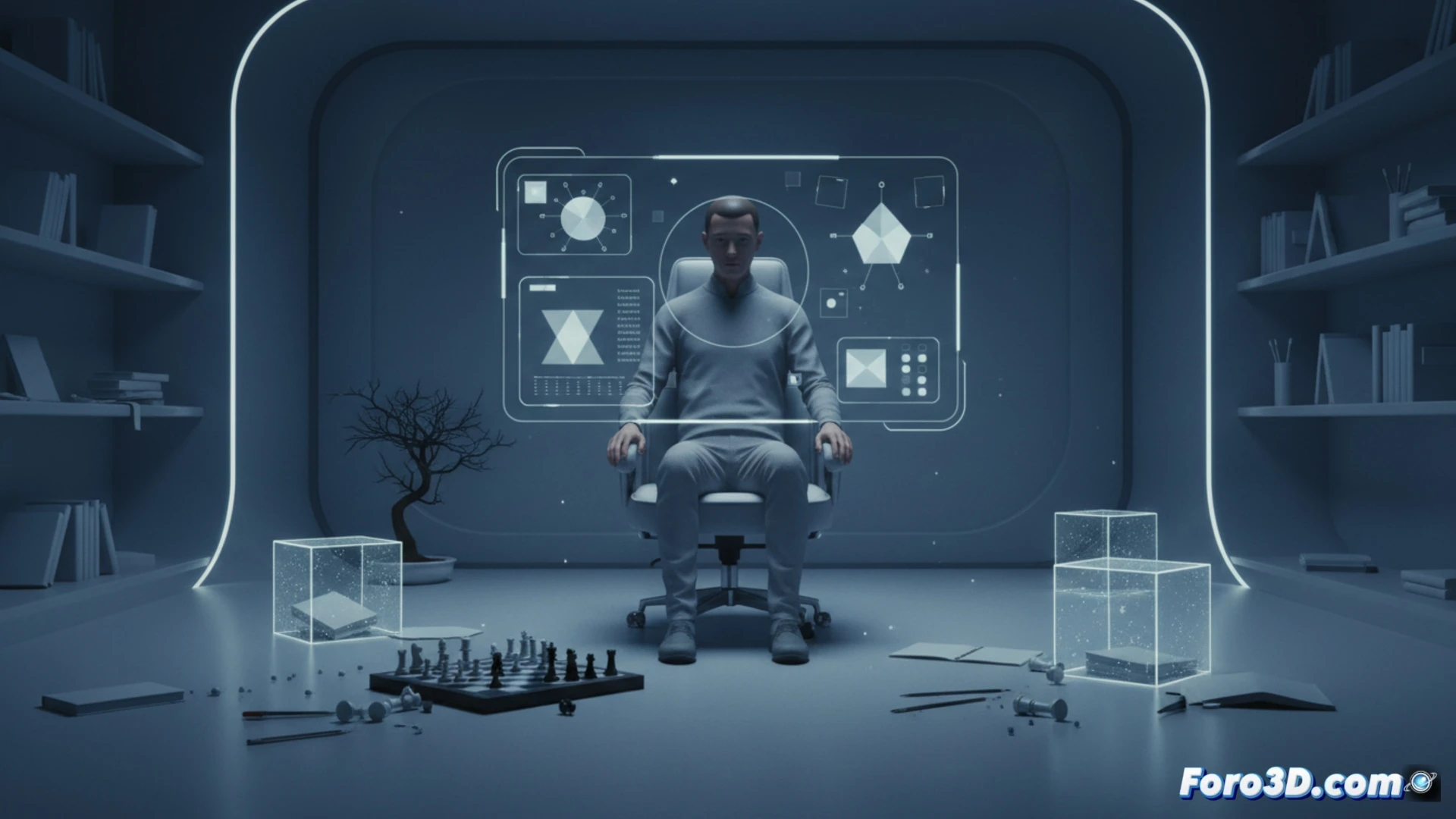
3D Automation: Assistance or Creative Atrophy? 🤔
In our field, this translates to modeling, rendering, or simulation tools that automate complex processes with a single click. While they democratize advanced techniques, excessive assistance can truncate the essential learning curve. The artist who never struggles with topology, lighting, or simulation parameters does not internalize the underlying principles. They become an operator of black boxes, losing granular control and the ability to solve problems autonomously. The deep satisfaction of mastering a complex technique is replaced by the empty gratification of an immediate result.
Towards an AI Design with Room for Effort ⚖️
The path is not to reject AI, but to design it consciously. We need tools that strike a balance, offering assistance without eliminating agency. Interfaces that allow both quick workflows and manual immersion in advanced parameters, tutorials that guide rather than supplant, and systems that collaborate with the user rather than acting autonomously. Preserving some deliberate friction is key to maintaining cognitive growth, creative satisfaction, and the social connection that arises from solving challenges, even in the 3D world.
Are we sacrificing our capacity for cognitive resilience and deep satisfaction by designing artificial intelligences that eliminate all friction, all effort, and all waiting intervals from our digital interactions?
(P.S.: tech nicknames are like children: you name them, but the community decides what to call them)