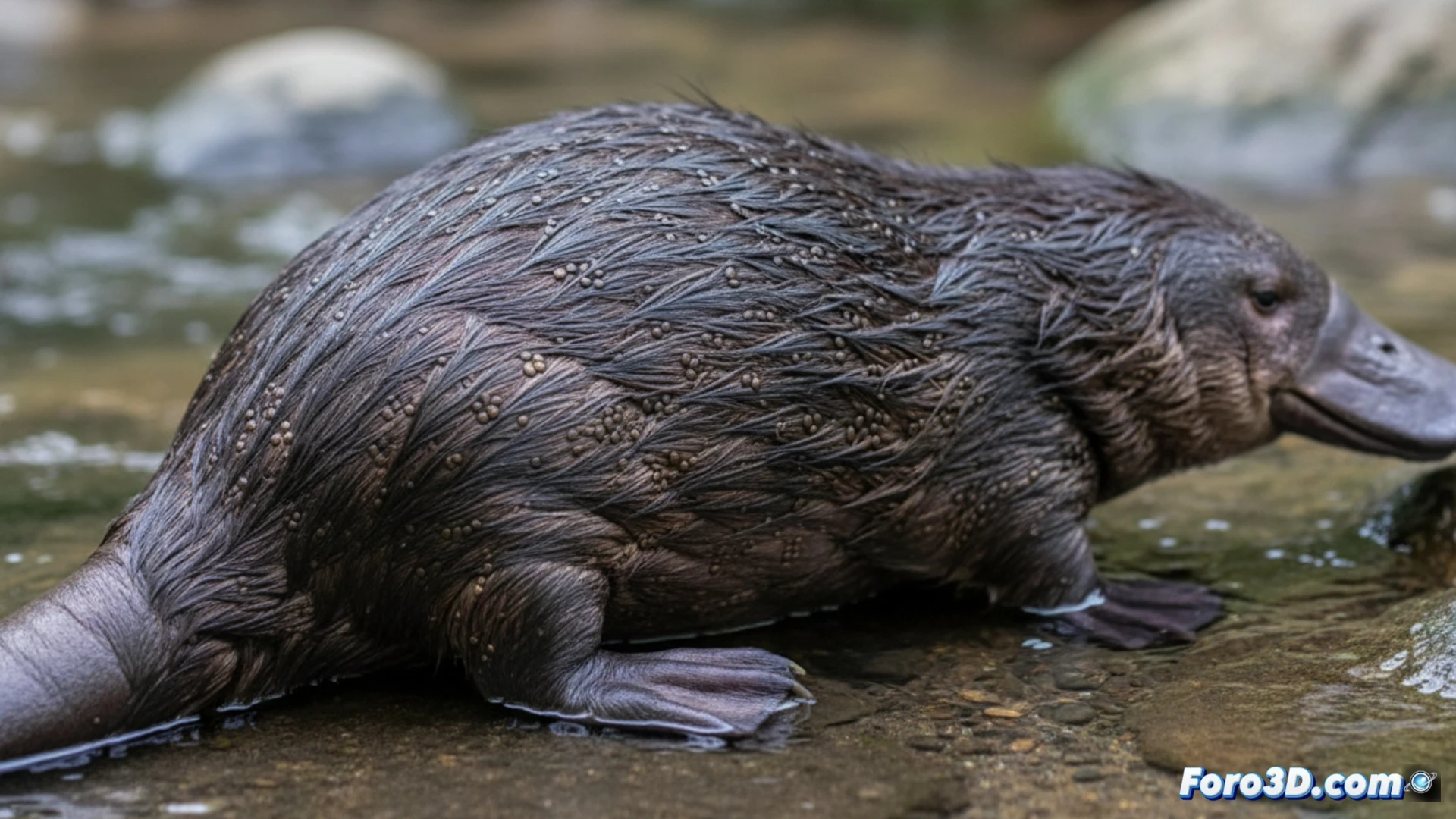
The list of platypus oddities adds a new element. A recent study confirms that the structures that give color to its fur, the melanosomes, are hollow. This feature had only been documented in bird feathers. Additionally, in the platypus they are spherical in shape and contain a pigment associated with dark colors, a combination that challenges the known rules about color in nature.
A biological design that challenges known technical specifications 🧩
From a technical perspective, this finding is like discovering a component with an unexpected architecture. The platypus's hollow and spherical melanosomes break with the established standard. In birds, hollow melanosomes are elongated and their nanometric structure produces iridescence through light interference. In the platypus, the spherical and hollow geometry does not generate these optical effects, raising a question about its function. It is a design that fulfills an unknown specification, without the optical advantages that its structure suggests.
The platypus, an animal that doesn't read the design manuals 🤪
It seems the platypus decided to assemble its fur with spare parts from other evolutionary projects. It took hollow melanosomes, like those in birds, but instead of the elongated and functional shape, it opted for the spherical version. Then it filled them with the wrong pigment for that model, obtaining a brown that doesn't shine. It is the biological equivalent of building a PC with cutting-edge hardware... but so that it only runs a 90s word processor. A clear case of if it works, don't touch it.