Recent studies indicate that how we perceive our rest influences daily tiredness more than actual sleep time. This psychological effect, similar to the placebo, has direct implications for tasks requiring sustained concentration. For 3D artists and technicians, understanding this mechanism can be a tool during crunch times or long render sessions, where mental fatigue impacts productivity and technical decision-making.
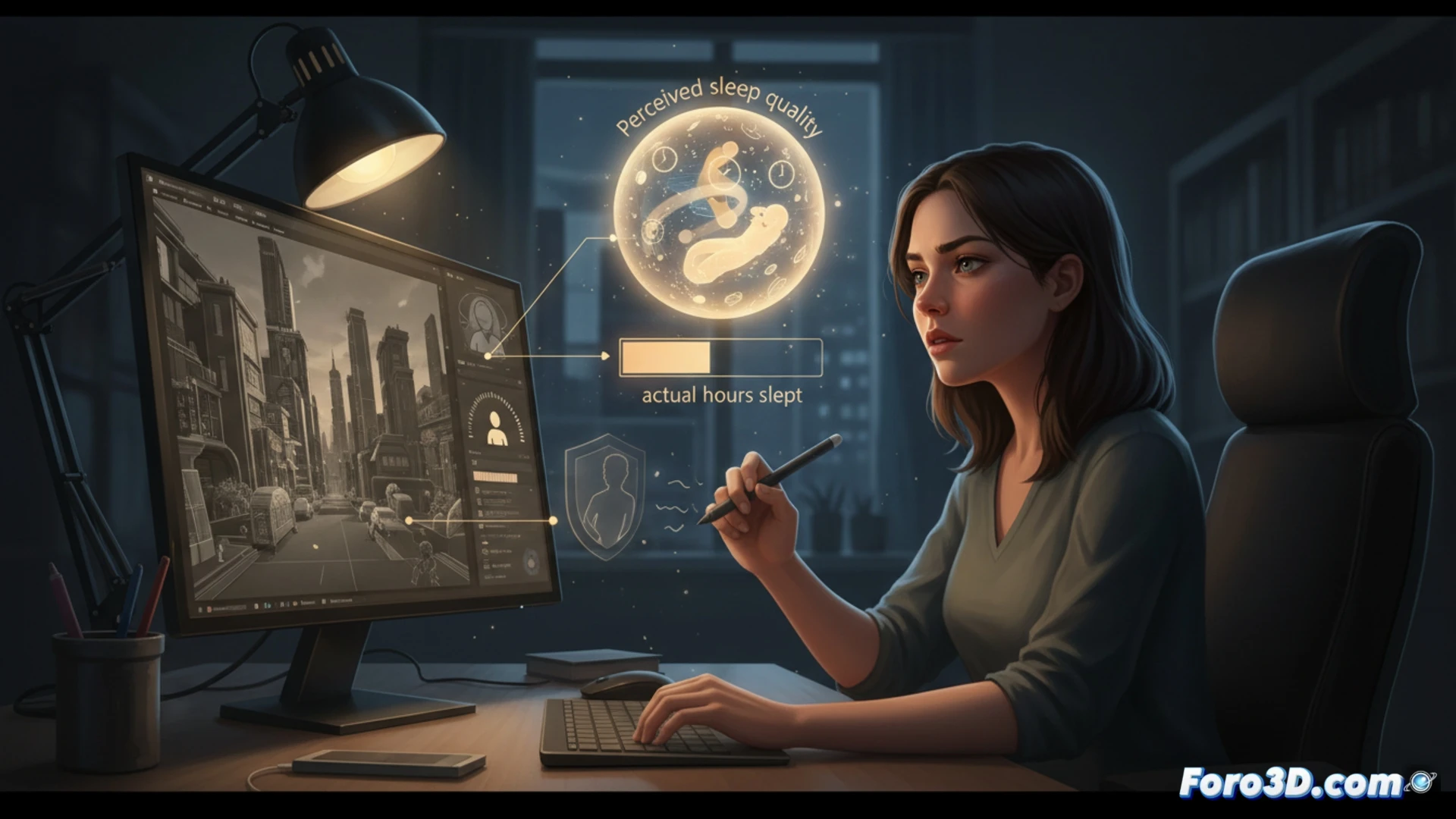
Workflow optimization through perception management 🧠
In projects with tight deadlines, the feeling of fatigue can slow down critical processes like lighting adjustments in a render engine or modeling complex geometry. Applying this principle involves structuring work sessions with brief mental breaks that reinforce the idea of effective rest. This can maintain visual acuity to detect artifacts in compositions and patience to solve topology issues, without needing to radically alter actual sleep schedules.
Rendering dreams: the rest placebo for the 3D artist 😴
So, the next time your 8-hour render fails halfway, instead of cursing, try convincing yourself that you've slept like a log. While the CPU sweats, you might feel refreshed just by believing your rest was optimal. It's a free mental hack, much cheaper than buying another RAM module. That said, don't confuse the perception of having slept well with the reality of only closing your eyes because of the screen's glow.