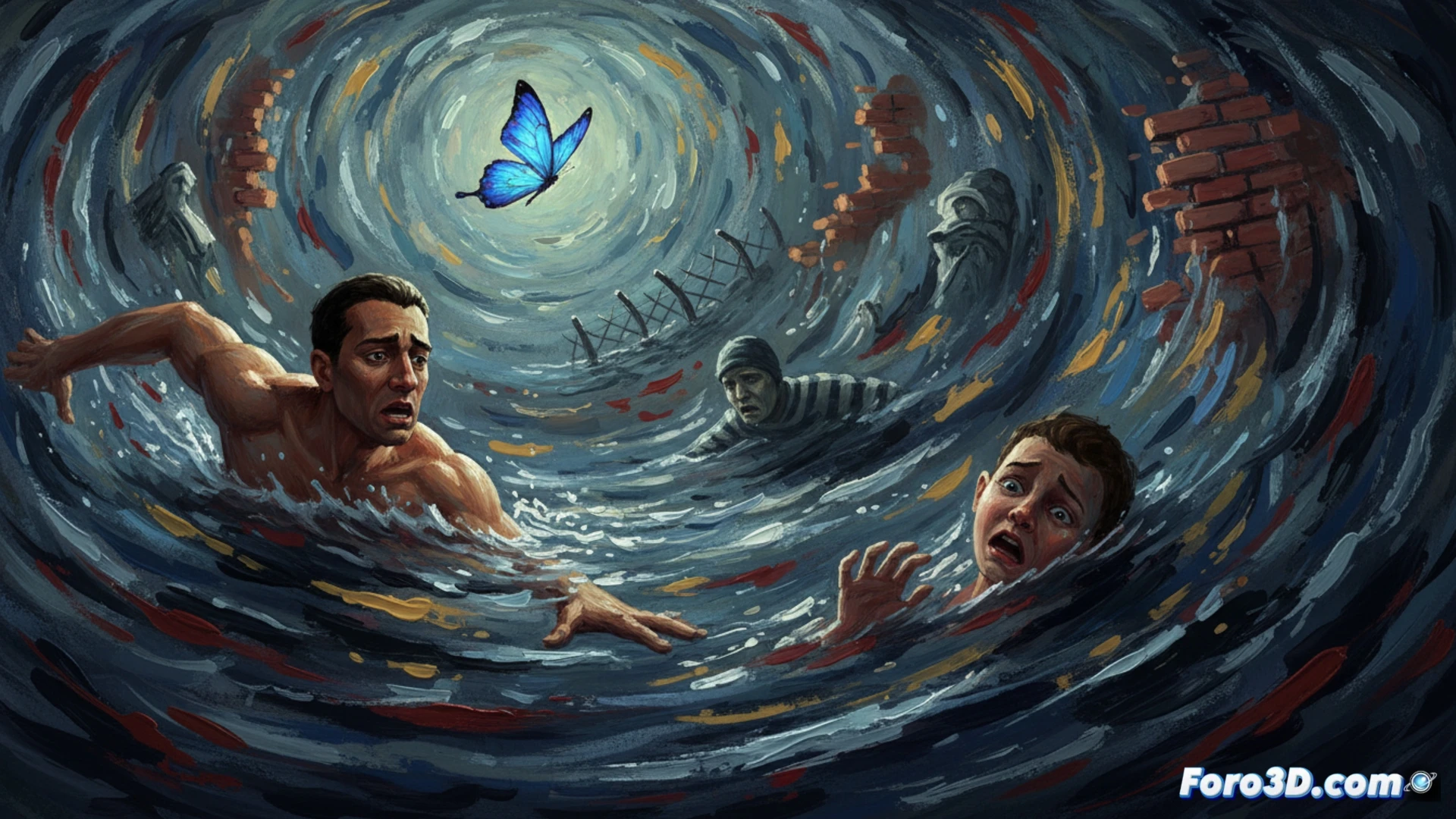
The Oscar-nominated animated short Butterfly transcends biography to become an exercise in visual memory. It tells the life of swimmer Alfred Nakache, from his sports successes to his deportation to Auschwitz. The key narrative choice is the use of animated oil paintings, a technique that not only illustrates but personifies the process of remembering. Each brushstroke becomes a metaphor for the fragility and persistence of memories, especially those marked by trauma.
A hybrid pipeline to paint movement 🎨
Technically, this animation requires a hybrid process. Artists paint oil paintings on physical canvases, which are scanned in high resolution to become digital assets. Then, in 2D/3D software, these paintings are broken down into layers, allowing their elements to be animated separately and create a three-dimensional sensation. This meticulous pipeline imbues the film with an organic and imperfect texture. The fluidity of the water or the swimmer's movement emerge from static brushstrokes, creating a visual tension that reflects the struggle between frozen memory and its resurgence.
Oil as a vehicle for historical memory 🖌️
This aesthetic choice loads every shot with meaning. Oil, a traditional and enduring medium, acts as a counterpoint to the volatility of memory. Its textures and blends evoke the layers of time and pain superimposed in the protagonist's mind. The technique allies with the narrative to make a complex and painful story accessible, demonstrating that animation is a powerful medium for historical disclosure. Butterfly establishes that the visual form is as crucial as the script to honor and transmit profound human legacies.
What do you think about this advance?