Evolutionary biology faces a fascinating enigma: the Amazon molly fish, a species that reproduces by cloning, has survived for over 100,000 years, defying the theory that predicts its extinction due to the accumulation of mutations. A study in Nature reveals its secret: a genetic repair mechanism called gene conversion. For the scientific visualization community, this finding is an exceptional opportunity to create 3D models that make this microscopic and complex process tangible.
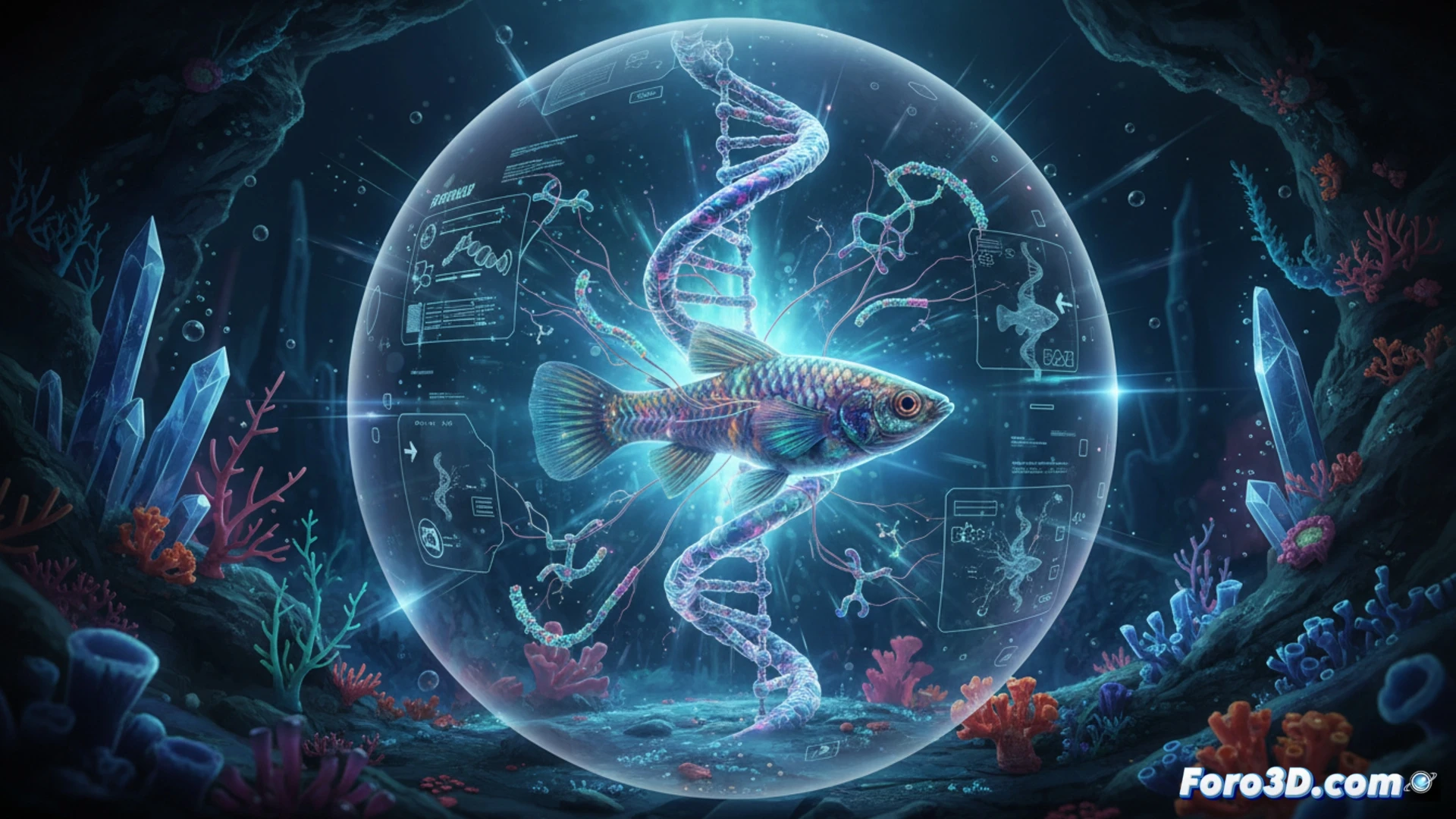
3D Modeling of Gene Conversion: From Data to Understanding 🧬
Gene conversion involves small fragments of DNA being copied between homologous chromosomes, correcting errors. Visualizing this requires going beyond 2D diagrams. We can propose an interactive 3D model of the Amazon molly's genome, where chromosomes appear as dynamic structures. Animations could show the flow of healthy DNA segments over mutations, and comparative representations would illustrate the accumulation of errors in a simple clonal model versus active correction in the molly. These tools would transform genomic data into a comprehensible visual narrative.
Visual Tools for Accessible Science 👁️
This case underscores the power of 3D visualization as a bridge between cutting-edge research and its dissemination. An animated model of the process would not only serve for papers but also as an educational resource to explain asexual evolution in forums and classrooms. The Foro3D community has the skills to prototype these visualizations, making a critical genetic mechanism, and the evolutionary story of the Amazon molly itself, accessible and inspiring for everyone.
How can 3D scientific visualization of the asexual Amazon molly's genome reveal the genetic footprints of its clonal evolution and its surprising stability over time? 🐠
(P.S.: fluid physics to simulate the ocean is like the sea: unpredictable and you always run out of RAM)