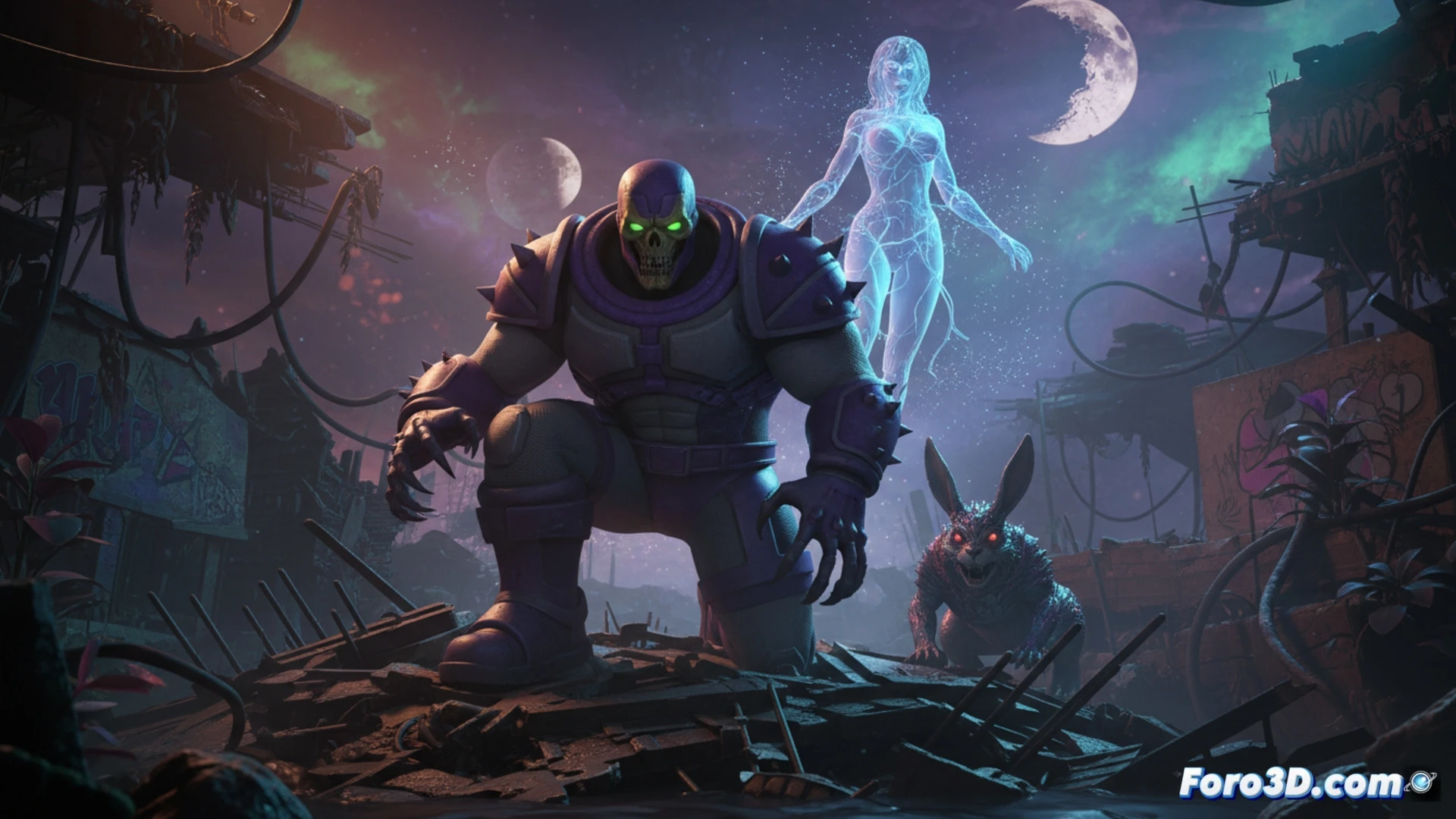
The Final Frontier study revives the psychological universe of The Maxx with a new short film directed by Tim Fox. This production is not a simple reboot, but a careful reinterpretation that pays homage to Sam Kieth's original 1993 comic and the MTV animated series. The project seeks to balance fidelity to the deep themes of identity and reality with a completely updated visual aesthetic, demonstrating how complex narratives can find new life for contemporary audiences.
3D Techniques and Art Direction: Modernizing an Iconic Aesthetic 🎨
The central technical and artistic challenge lay in translating Kieth's organic, expressionist, and almost grotesque drawing style into contemporary visual language. This is where 3D animation and digital techniques play a crucial role. Final Frontier did not seek a faithful 3D copy, but a translation of the essence. Hand-painted textures, dramatic lighting, and rigging that allows for exaggerated body proportions and characteristic elasticity were probably used, maintaining the emotional rawness but with the fluidity and dynamism of current production. This visual renewal is the bridge to connect with a new audience without alienating purists.
Adapting is More than Updating: Legacy and Psychology 🧠
This short film serves as a case study on responsible adaptation. Its success will not be measured solely by graphical fidelity, but by its ability to convey the disturbing psychology of the original work. The true update is not only in the software used, but in how modern tools amplify the timeless themes of trauma and duality. The project underscores the enduring value of good stories and how, with sensitivity, they can transcend their format and era to resonate again.
How can contemporary animation reinterpret the complex psychology and dark aesthetic of an underground comic classic like The Maxx for a current audience, without losing its visual narrative essence?
(P.S.: Previz in film is like the storyboard, but with more chances for the director to change their mind.)