The war in Ukraine has brought back the M113 armored transport, a 1950s design. In a conflict defined by drones and artillery, its value lies not in power, but in its mechanical simplicity, ease of repair, and logistical versatility. This phenomenon is ideal for analysis using 3D technologies, which allow visually breaking down the reasons for its persistence and adaptations in the modern battlefield.
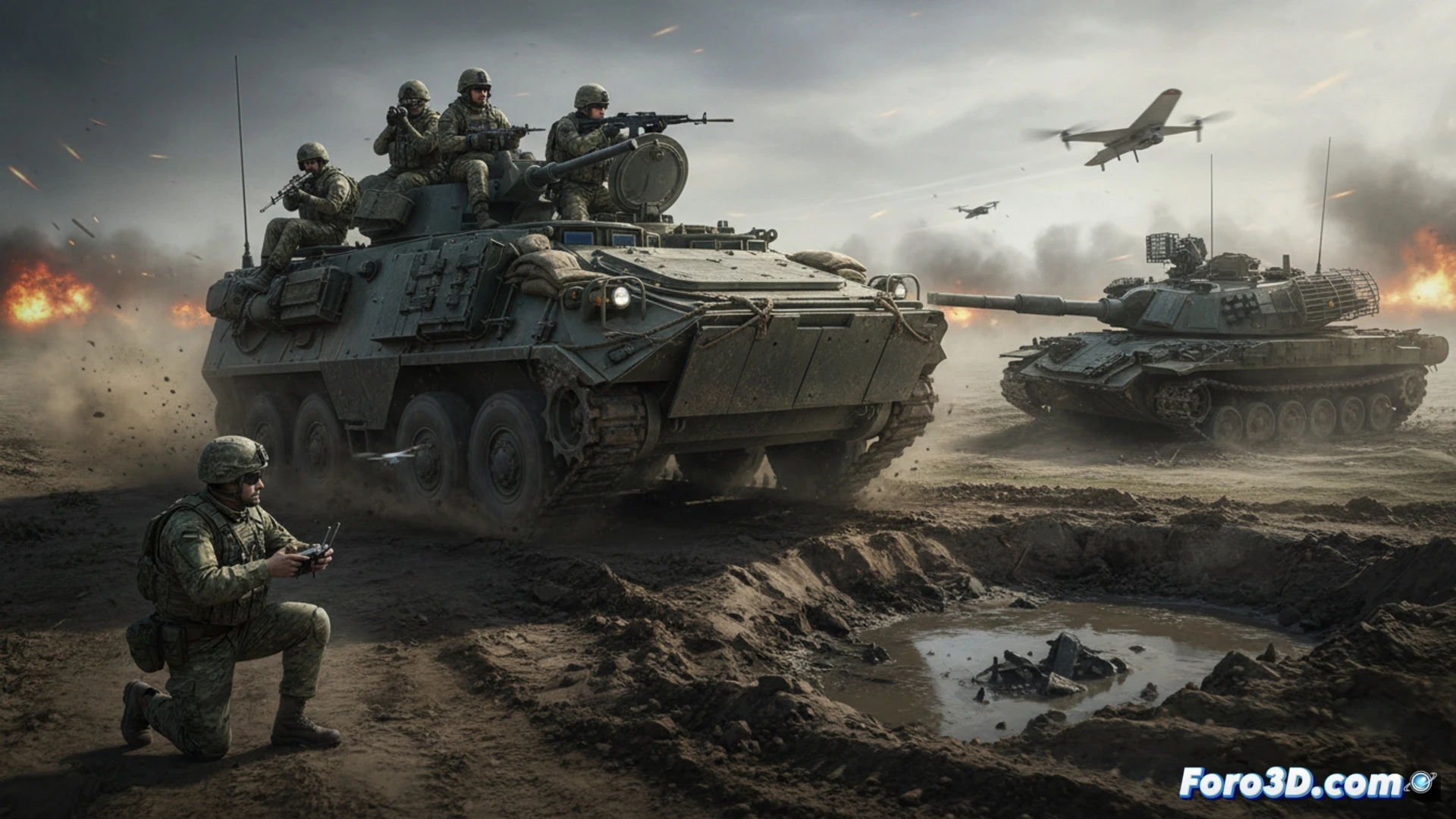
3D Modeling to Break Down Tactical Adaptability 🎯
An interactive 3D model of the M113 would be a powerful analytical tool. It would allow visualizing and modifying its documented adaptations in Ukraine, such as improvised armor with grilles or plates, or the configuration for transporting and launching drones. Through simulation, its performance in swampy or urban terrains could be evaluated, contrasting its agile mobility with that of over-armored vehicles that sacrifice it. Simulation of air threat scenarios would help understand its logistical niche: moving resources discreetly and recoverably under drone surveillance.
Virtual Lessons for Real Doctrines 💡
This 3D analysis transcends the M113 case. It illustrates how simulation allows testing concepts like the mobility-protection relationship or logistics under fire in a controlled virtual environment. The key lesson it models is that, sometimes, optimal sophistication lies in robustness, reparability, and on-the-fly adaptation, principles that 3D modeling can quantify and visualize to inform future developments and tactics.
How would you reconstruct in 3D a destroyed historic building to document the damage?