Storm Therese left a spectacular phenomenon in La Palma: the rain evaporated upon contact with the flows of the Tajogaite volcano, inactive since 2021. This steam iron effect reveals that the subsoil still stores extreme heat, over 150 degrees just a few meters deep. The explanation lies in the basaltic lava, a poor thermal conductor that acts as an insulator. This post-eruptive process, linked to pockets of residual magma, is an ideal natural laboratory to be analyzed with 3D simulation tools.
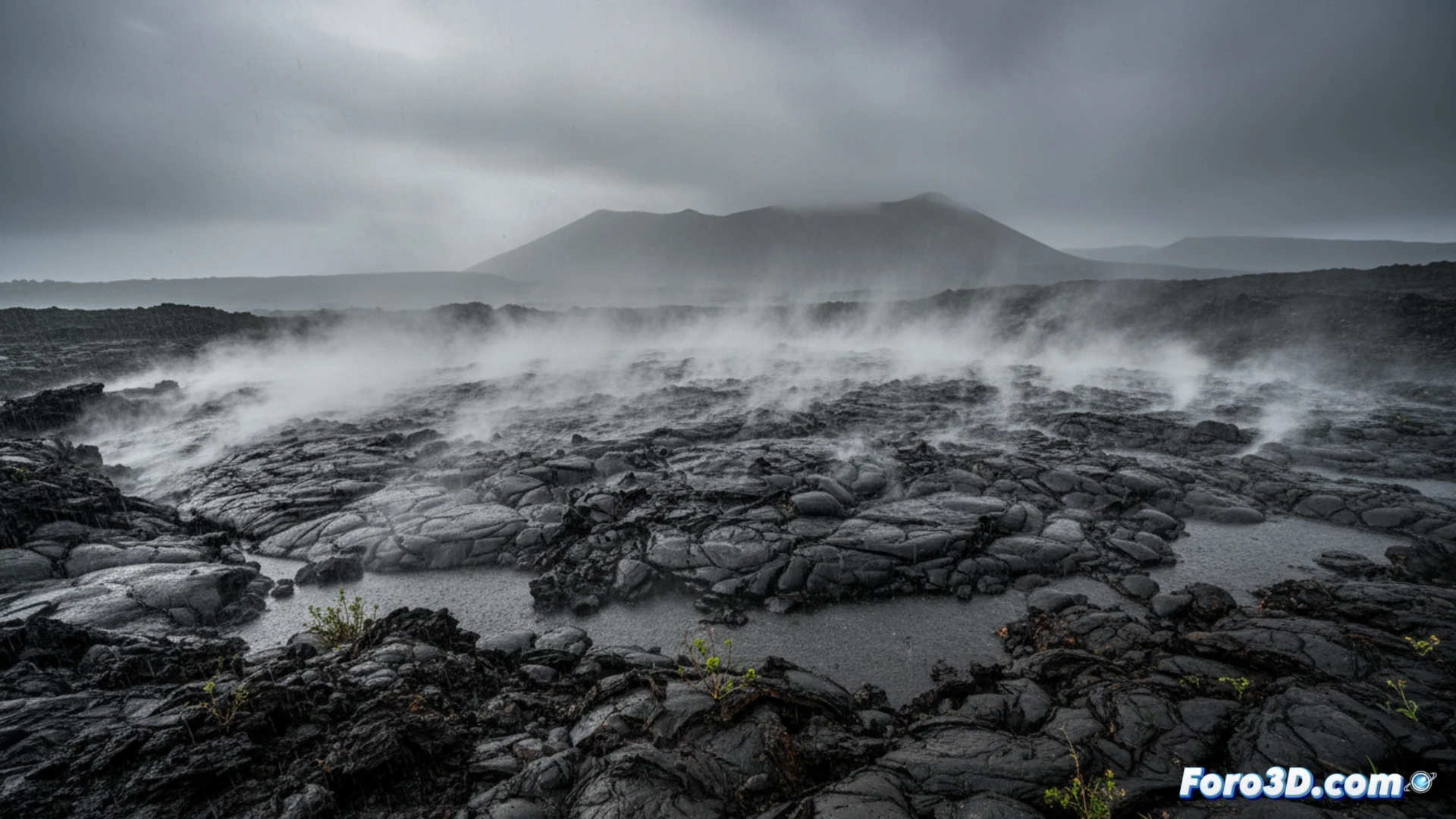
3D Thermal Modeling and Digital Twins: Mapping the Underground Hell 🔥
The complexity of this secular cooling demands advanced technologies. A georeferenced 3D model of the volcano, fed with data from deep temperature sensors, would allow building a thermal digital twin of the terrain. This model would visualize in detail the distribution of residual heat pockets and gas conduits. Through fluid simulation and heat transfer, the cooling rate could be calculated over decades, taking into account variables such as flow thickness and rock porosity. This transforms observation into scientific prediction.
From Catastrophe to Knowledge: 3D as a Resilience Tool 💡
Beyond scientific curiosity, this analysis is crucial for risk management. A predictive 3D model helps assess terrain stability and possible long-term residual gas emissions. Additionally, simulating geothermal and erosive evolution allows visualizing, before it happens, the landscape transformation. Thus, 3D technology turns a catastrophic event into a source of deep knowledge, laying the foundations for intelligent monitoring and safer territorial planning.
How can 3D simulation of heat transfer and fluid flows help us quantify and visualize the immense latent heat stored in the Tajogaite volcano flows, even months after its eruption?
(P.S.: Simulating catastrophes is fun until the computer melts and you become the catastrophe.)