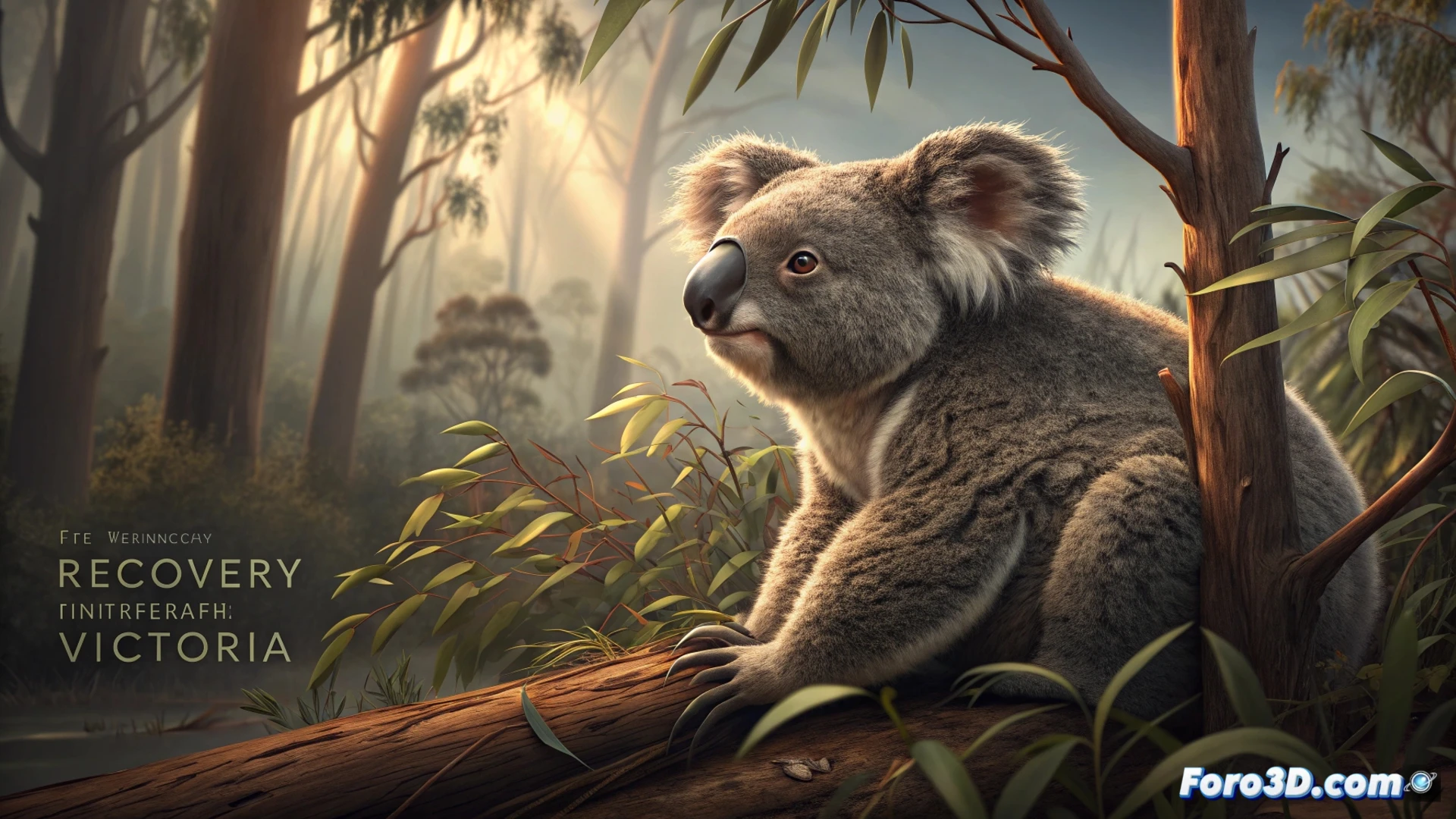
A recent study in Science reveals the surprising recovery of koalas in Victoria, Australia, going from 500 to half a million individuals. This demographic rebound not only increased their number, but, against all odds, improved their genetic health. This phenomenon, along with the decline of northern populations, constitutes a complex and ideal set of data to be transformed into a powerful visual narrative through 3D scientific visualization techniques.
3D Modeling to Unravel Genetic Dynamics 🧬
Research on koalas is a perfect example of how 3D visualization can illuminate abstract scientific processes. Interactive population models could be created that grow in accelerated time, accompanied by three-dimensional genomic maps showing the initial bottleneck and the subsequent beneficial recombination. A dynamic visual comparison, with two side-by-side models, would make tangible the contrast between Victoria's recovery and the genetic decline in the north, showing mutations and diversity as clear visual elements.
Beyond 2D Graphics: Making Conservation Tangible 🌿
This case demonstrates that 3D visualization is not just illustration; it is a tool for analysis and communication. Transforming genomic and demographic data into spatial and interactive models allows researchers and the public to intuitively understand complex relationships. Thus, it becomes an essential bridge between data science and conservation biology, making stories of resilience, like that of the koala, not just read, but experienced.
How can 3D visualization of genomic and demographic data help model and communicate successful conservation strategies, such as the koala recovery in Victoria?
(P.S.: if your manta ray animation doesn't excite, you can always add documentary music from Channel 2)