The second season of Fallout expands its desolate universe thanks to the fundamental work of Raynault VFX. This studio was in charge of digitally building the large-scale environments that define key locations such as New Vegas, Freeside, and Site-X. Their work was not limited to adding elements, but to creating complete scenarios that respect the essence of the video game, integrating visual effects with the practical sets in an imperceptible way. This process is crucial to achieve the immersion and epic scale that the series requires, demonstrating that the best VFX is the one that the viewer does not perceive as artificial.
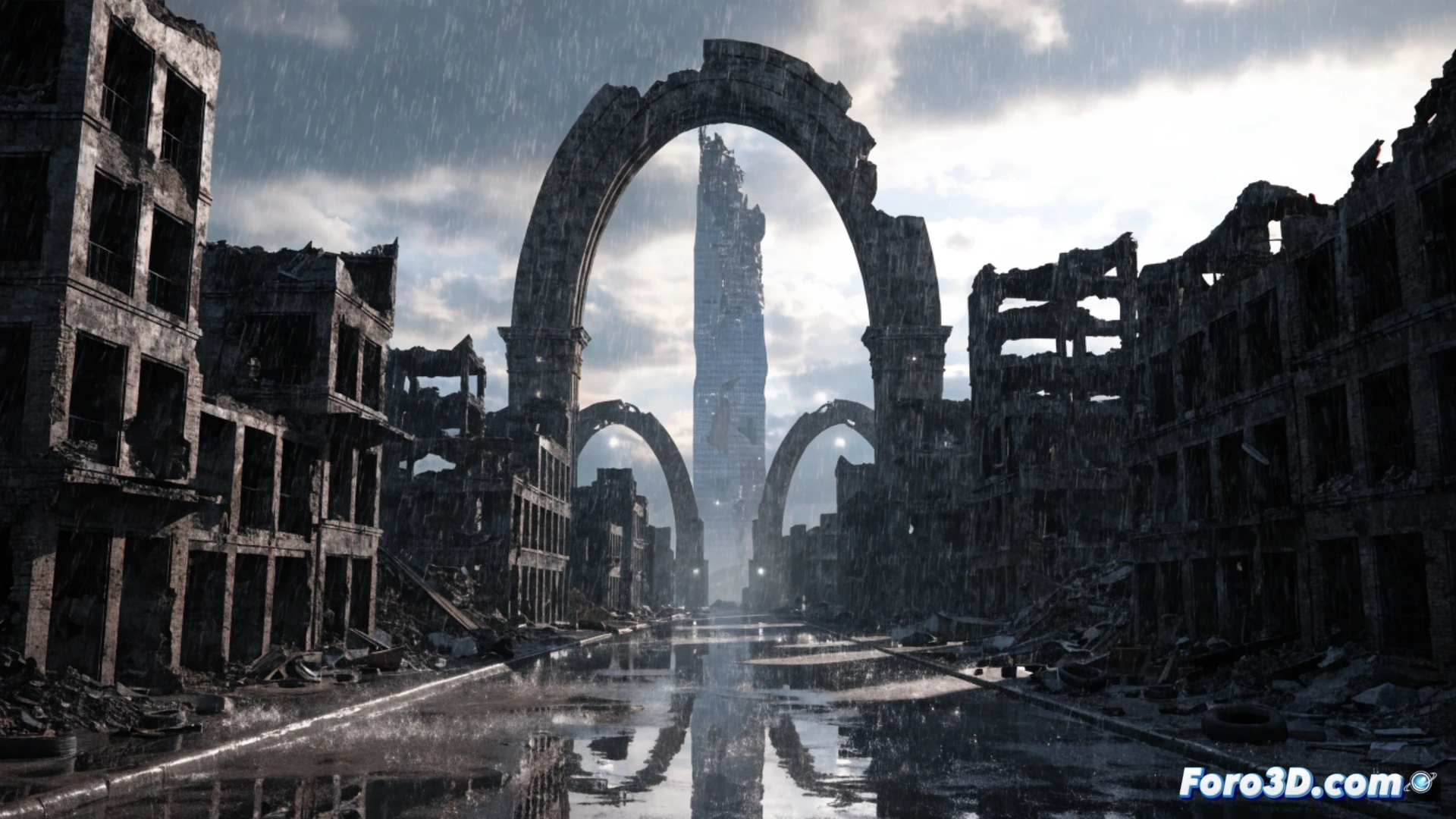
Technical pipeline: from matte paintings to digital extensions 🛠️
Raynault VFX's approach combined classic and modern techniques. For New Vegas, they developed general shots or matte paintings that established the urban profile and the city's distinctive atmosphere, serving as a base for wide shots. In Freeside, their work was digital extension: starting from the physical sets built on set, they expanded the environment with buildings, signs, and digital ambient elements, achieving perfect visual continuity. For Site-X, the challenge was greater, creating the complete environment from scratch and handling independent shots that required a specific and cohesive visual design. This entire workflow ensured that every digital element shared the same lighting, texture, and sense of degradation as the practical world.
Perfect integration as the ultimate goal 🎯
The case of Raynault VFX in Fallout underscores a fundamental principle in contemporary visual effects: success does not lie in isolated spectacle, but in organic integration. Their contribution was decisive for the post-apocalyptic world to feel tangible and expansive, without the audience questioning its veracity. This project exemplifies how high-level VFX act as a narrative and worldbuilding pillar, allowing large-scale stories to be told that would otherwise be impossible, always in service of the story and the viewer's immersion.
How did Raynault VFX integrate destructive and environmental visual effects so that Fallout's post-apocalyptic world felt tangible and believable without stealing the spotlight from the narrative?
(P.S.: VFX are like magic: when they work, no one asks how; when they fail, everyone sees it.)