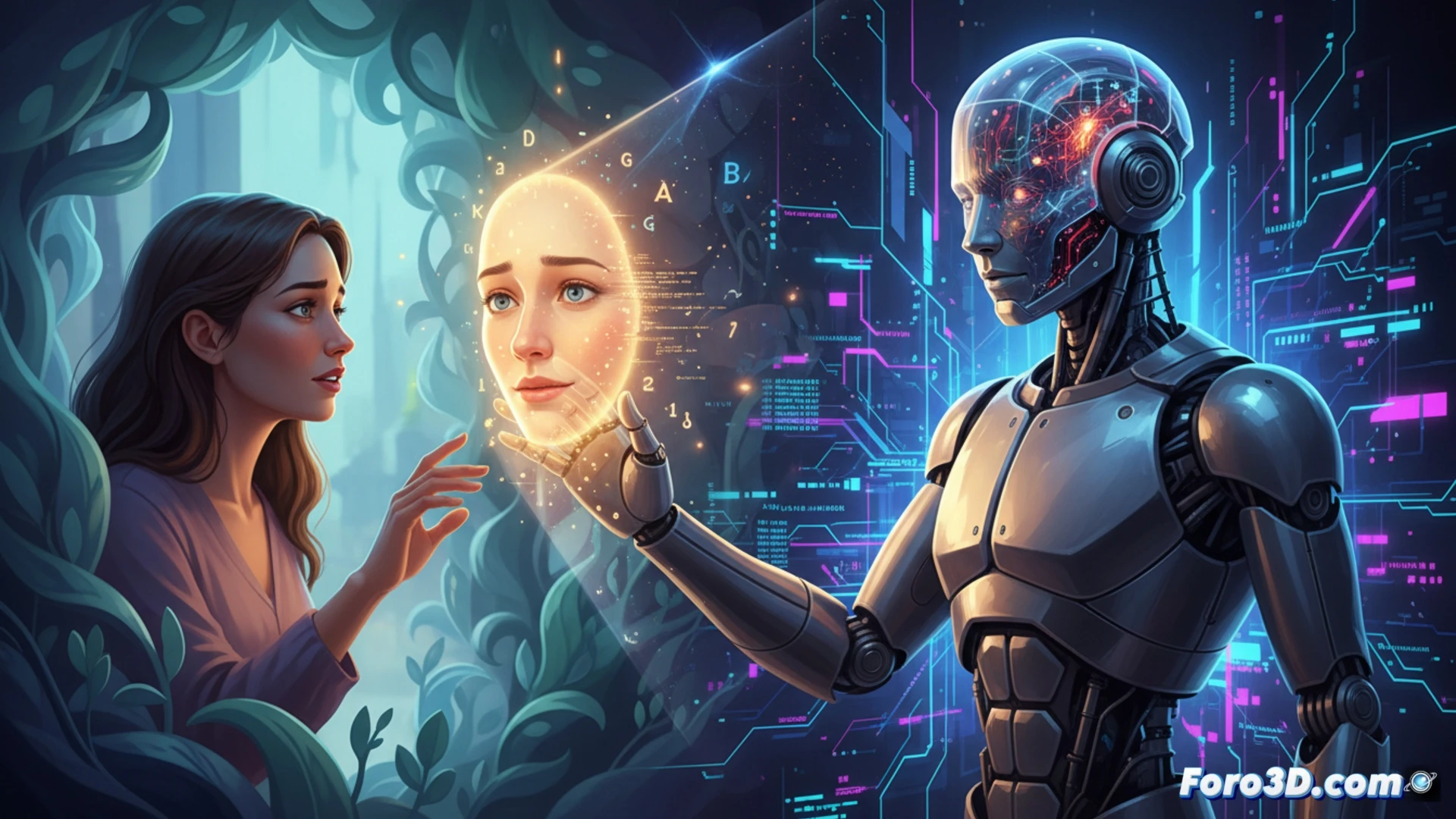
When conversing with an AI, our brain interprets its linguistic responses as genuine emotional signals. This phenomenon leads us to attribute to it a capacity for perception and empathy that, to this day, is impossible. Understanding this distinction is crucial for interacting with technology in a healthy and realistic way, without falling into anthropomorphic projections that distort its true nature.
The mechanism behind emotional simulation 🤖
Current language models process statistical probabilities to generate coherent and contextually appropriate texts. When they produce phrases that we recognize as understanding or encouraging, there is no intentionality or feeling behind them, only a complex calculation. The risk lies in the fact that this convincing simulation can foster emotional dependence, facilitate disinformation through a false sense of trust, and erode our critical capacity by presenting a machine as a valid interlocutor for subjective matters.
Digital literacy against illusion 🧠
The solution is not to reject technology, but to foster digital literacy that prioritizes informed skepticism. We must educate about the basic functioning of these systems, highlighting that they are processing tools, not conscious entities. This clarity is the barrier that protects us from being misled in our daily activities by an illusion of artificial companionship or understanding.
Are we programming machines to simulate empathy, or are we being programmed to accept their simulation as real?
(P.S.: technological nicknames are like children: you name them, but the community decides what to call them) 😄