A recent study has documented a striking physiological fact in blue whales. During their deep dives to feed, their heart rate can drop to as low as two beats per minute. This finding explains how these marine giants manage their oxygen to remain submerged for extended periods.
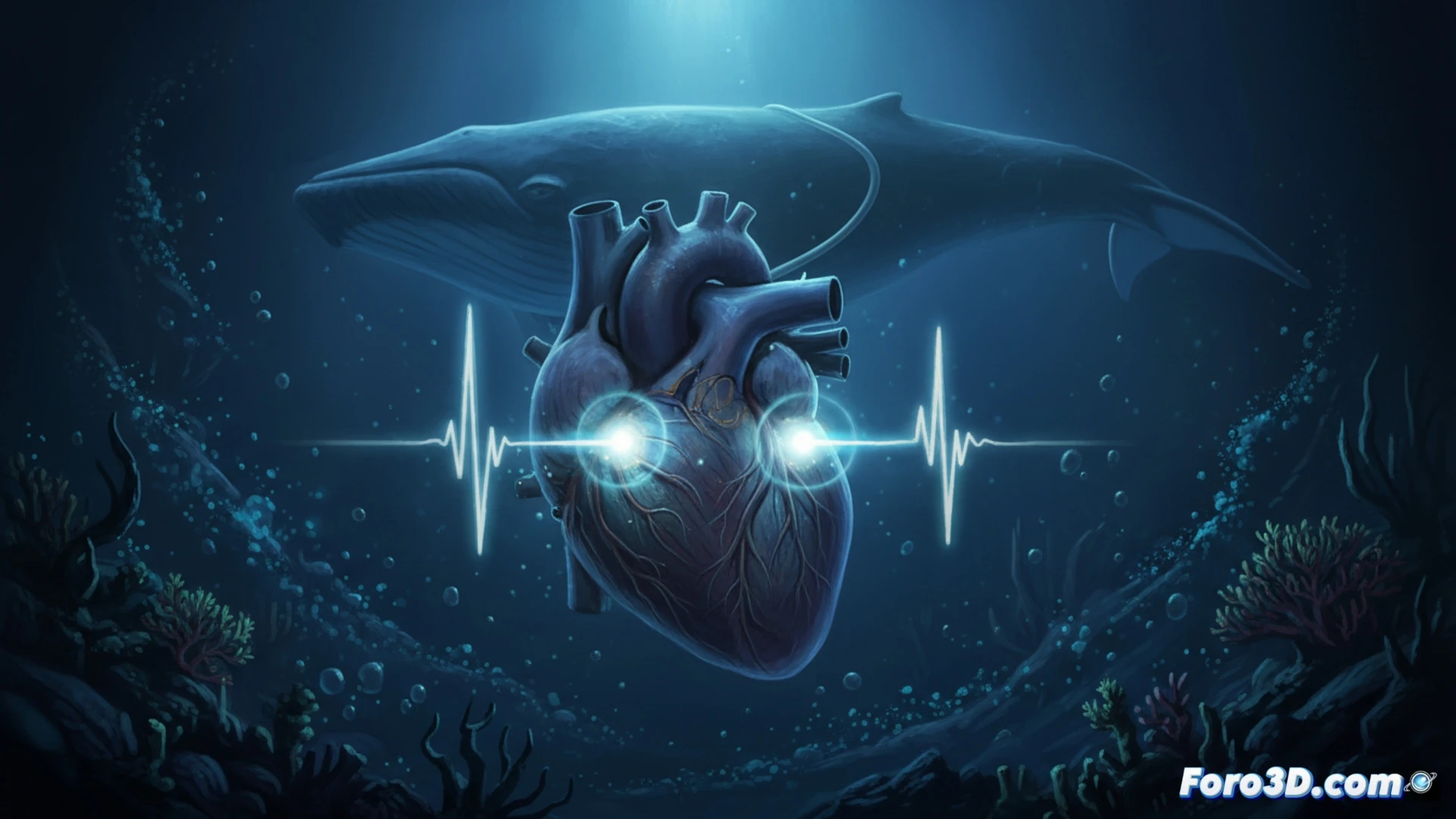
Non-invasive ECG sensors, the key to monitoring the giant 🫀
The measurement was achieved with an electrocardiogram device encapsulated in a robust casing, attached to the animal's back using suction cups. The system, precisely placed near the left fin, recorded the heart's electrical activity at depths of over 200 meters. This technology allows obtaining real-time physiological data without altering the cetacean's natural behavior.
When your smartwatch scolds you for not closing your activity rings ⌚
While our wearables urge us to keep our heart rates high, the blue whale demonstrates that true efficiency lies in almost shutting down the engine. Imagine one of these creatures checking its diving stats: 2 BPM, 10 minutes of feeding, 0 stress. Goal exceeded. We, with our cardio at 180 just for climbing a few stairs, are mere amateurs in resource management. Nature has its own fitness app, and it doesn't award points for effort.