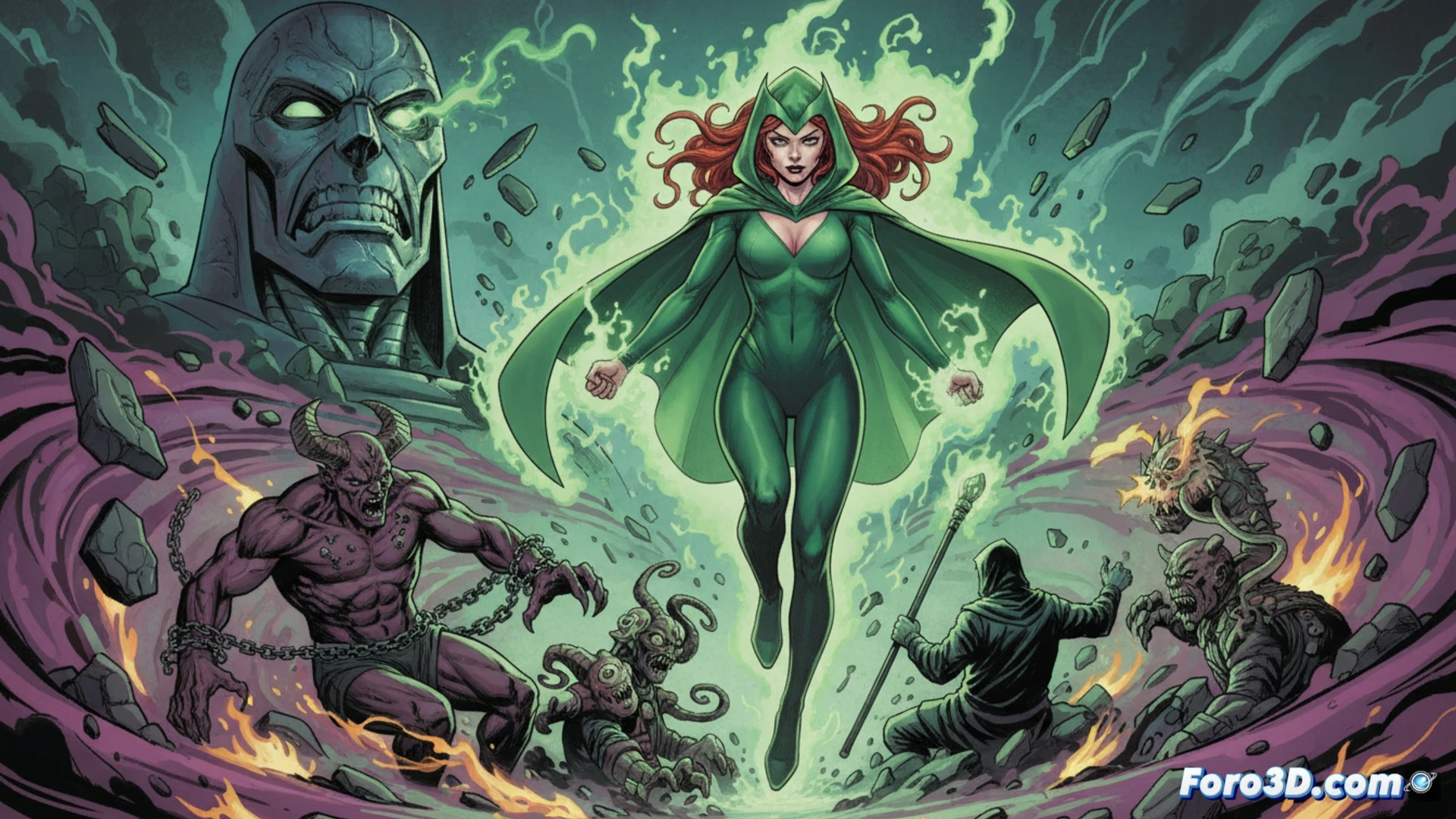
In digital art, every chromatic choice is a statement. Paulo Siqueira's recent variant cover for Sorcerer Supreme 4, where the Scarlet Witch recovers her forgotten original green costume, transcends mere nostalgic homage. This illustration is an act of visual reclamation that uses the color palette as narrative. The green, which in its 1964 debut was a compositional resource, today symbolizes her new status as Supreme Sorceress, showing her victorious. Sequential art demonstrates, once again, to be a powerful medium for visual activism.
From analog composition to digital symbolism: techniques behind the tribute 🎨
Siqueira's work operates on two technical and conceptual levels. First, it executes a formal tribute using digital illustration tools that master volume, light, and texture with a finish that honors the classic era but with contemporary three-dimensionality. Second, and more importantly, it subverts the original meaning. Stan Lee chose green for chromatic balance against a red Magneto. Now, green is the character's own color, reclaimed. The composition no longer balances her with an antagonist; it places her in the center, dominant over magical entities. The technical change in color is the vehicle for a message of empowerment and narrative evolution.
Color as a flag: iconographic rewriting in comics 🏳️🌈
This case exemplifies how digital art in comics allows rewriting iconographies. The scarlet red, associated with her chaos and pain, is temporarily displaced by the green of legitimate and reclaimed power. It is not a setback; it is progress. Visual activism here lies in using a historical reference to project a future of authority for the character. The illustration not only celebrates a new title in history but uses the language of design and color to fix in the viewer's mind a new image of power, consolidating her status through a deliberate and meaningful artistic decision.
How can the deliberate choice of green in the visual representation of Wanda Maximoff transcend aesthetics to become a tool for political critique and digital activism?
(P.S.: digital political art is like an NFT: everyone talks about it but no one really knows what it is)