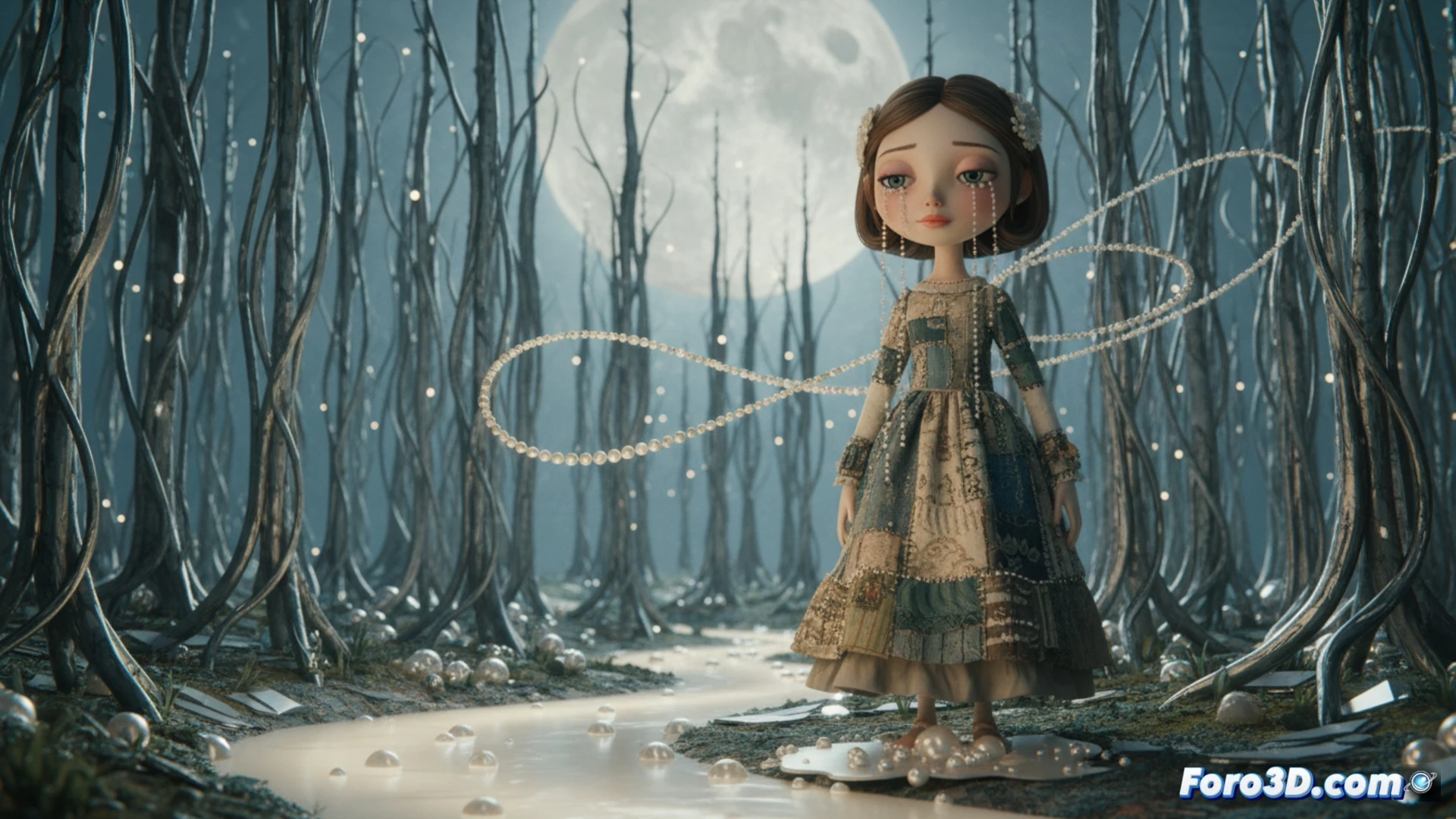
The National Film Board of Canada has digitally released The Girl Who Cried Pearls, an Oscar-winning stop-motion short film. Directed by Chris Lavis and Maciek Szczerbowski, this gem of independent animation is now available for free worldwide viewing. Its poetic narrative, about a young woman whose tears turn into pearls, combines deep emotionality with meticulous craftsmanship, offering a unique visual experience accessible to all.
The Craft of Frame-by-Frame and Its Previsualization 🎬
The short is a masterclass in traditional stop-motion, where every movement is physically manipulated and captured frame by frame. This technique demands exhaustive previsualization, where every gesture, lighting, and composition must be planned to the millimeter before filming. The tangible texture of the materials, the light, and the expressiveness of the characters evidence an obsessive artisanal work. For any 3D artist or animator, studying this film is understanding the fundamentals of movement, acting for inanimate characters, and the extreme patience required by frame-by-frame animation, principles transferable to digital animation.
Digital Distribution and the Future of Auteur Cinema 🌐
This free release marks a milestone in the distribution of independent animated cinema. Official online platforms, such as the Canadian cinemateque's, democratize access to auteur works that previously had circulation limited to festivals. This not only expands the reach of these works but also inspires new generations of creators, showing that animation cinema with a personal voice and artisanal techniques can achieve global recognition and be within everyone's reach with a single click.
How does The Girl Who Cried Pearls use the tangible texture of stop-motion to enhance the emotional charge of its visual narrative?
(P.S.: Previz in cinema is like the storyboard, but with more possibilities for the director to change their mind.)