The recent filming of the Stygiomedusa gigantea, an abyssal jellyfish with tentacles up to 10 meters long, in Antarctic waters is not just an exploration milestone. It is a testament to the power of visual capture technology to unveil the secrets of the deep ocean. These images, obtained with submersibles, provide a living reference model impossible to obtain in any other way, laying the foundations for a precise and dynamic digital scientific representation of a nearly mythical creature.
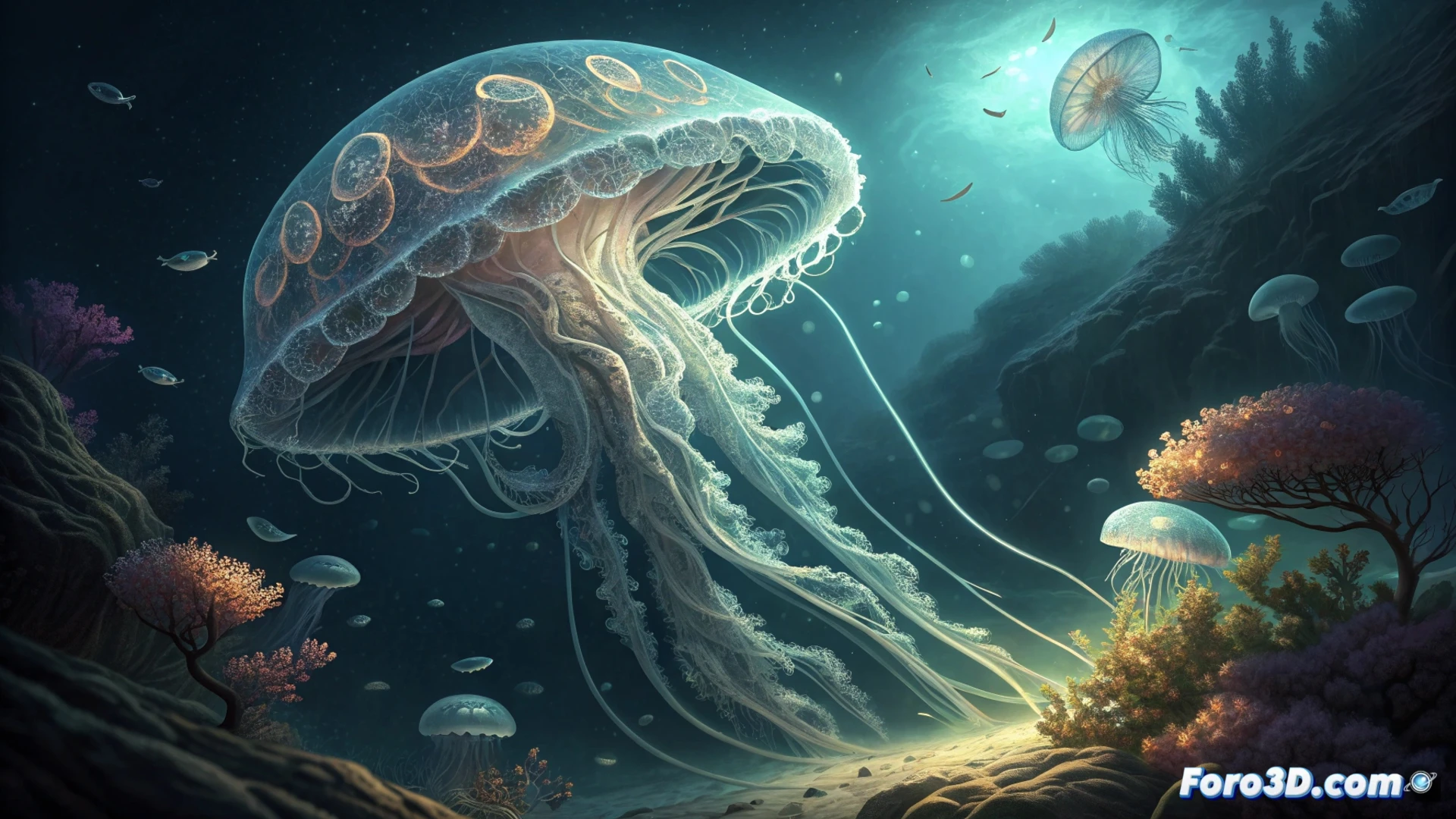
From Observation to 3D Model: A Leap for Science 🧬
The true value of this sighting goes beyond the video. The high-definition filming, and potentially with stereoscopic systems or light scanning from the submersibles, generates a critical set of volumetric data. Researchers can use this material to reconstruct anatomically precise 3D models of the jellyfish, analyzing its biomechanics, estimating its real volume, and understanding its interaction with the environment. This digital visualization allows measurements, virtual dissections, and motion studies without disturbing the fragile animal, accelerating research in abyssal marine biology.
Visualizing the Invisible to Protect It 🛡️
Scientific visualization turns data into understanding and awe. A detailed 3D model of the Stygiomedusa, derived from these expeditions, is a powerful tool for outreach. It allows the public to experience the scale and beauty of this species in immersive environments, fostering an emotional connection with a remote and threatened habitat. By making the invisible visible, 3D technology not only advances science but becomes an essential pillar for the conservation of the unknown biodiversity of the depths.
How can 3D scientific visualization techniques help us reconstruct and understand the movement and ecology of elusive abyssal creatures like the Stygiomedusa gigantea from limited data?
(P.S.: fluid physics to simulate the ocean is like the sea: unpredictable and you always run out of RAM)