The El Jardín de las Delicias festival announces its seventh edition for September 2026 at the Cantarranas venue in Madrid, with Dani Martín and Viva Suecia as headliners. Beyond the names, planning an event of this magnitude today relies on advanced digital tools. The scenography, space distribution, and visual experience are designed and tested first in 3D environments, ensuring an efficient and immersive show from the first chord.
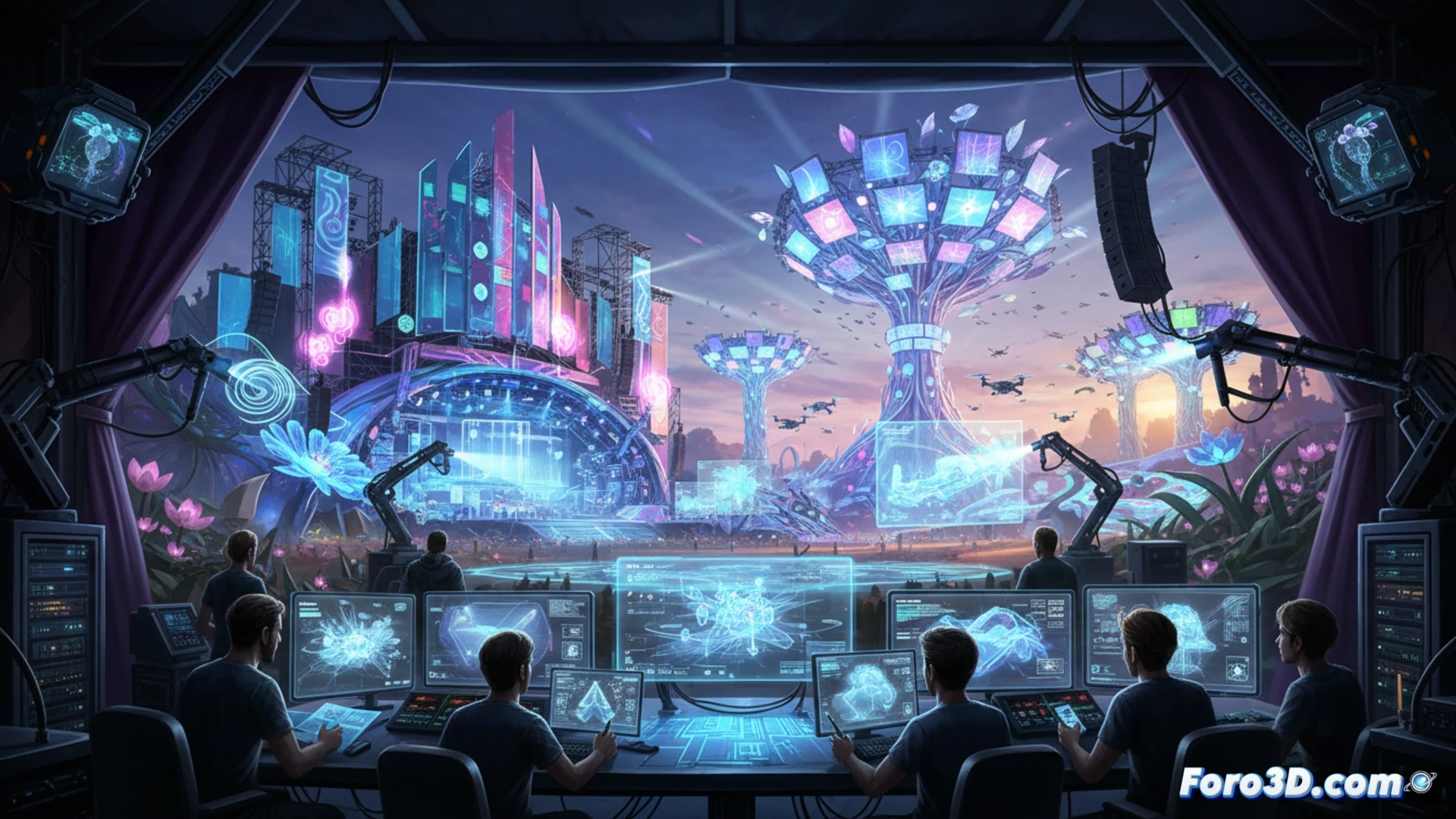
Modeling and Simulation: The Pillars of Preproduction 🛠️
Before setting up a single spotlight, the venue and its stages, such as the prominent Endesa Stage, are digitally reconstructed. Through 3D modeling and photorealistic rendering, designers can experiment with volumes, structures, and materials. Acoustic simulation allows optimizing speaker placement, while lighting simulation and video mapping define the atmosphere of each performance. These virtual tests are crucial for resolving logistical issues, calculating structural loads, and planning crowd flow, minimizing risks and overruns in the actual execution.
Visualization: The Common Language of Production 👁️
3D visualization acts as a universal language among artists, set designers, engineers, and sponsors. It allows presenting complex ideas in a tangible way, aligning expectations, and making creative decisions based on precise representations. For festivals like this, where visual identity is key, these tools not only plan but also sell the experience, creating hype through computer-generated images and videos that anticipate the impact of the real show.
How are 3D modeling technologies, crowd simulation, and architectural mapping being used to design and plan the immersive experience and ephemeral stages of the El Jardín de las Delicias 2026 festival?
(PS: modeling crowds in 3D is easier than the real ones: they don't complain, don't record with their phones, and always applaud)