By 2026, 3D printing post-processing will undergo a radical transformation, leaving behind its merely corrective role. It will become an integral design phase, where the hybridization of artisanal techniques and intelligent automation will define the final value of the piece. This evolution will enable creators and professionals to maximize the aesthetic and functional properties of their models, fusing art, technology, and efficiency in a cohesive and advanced workflow.
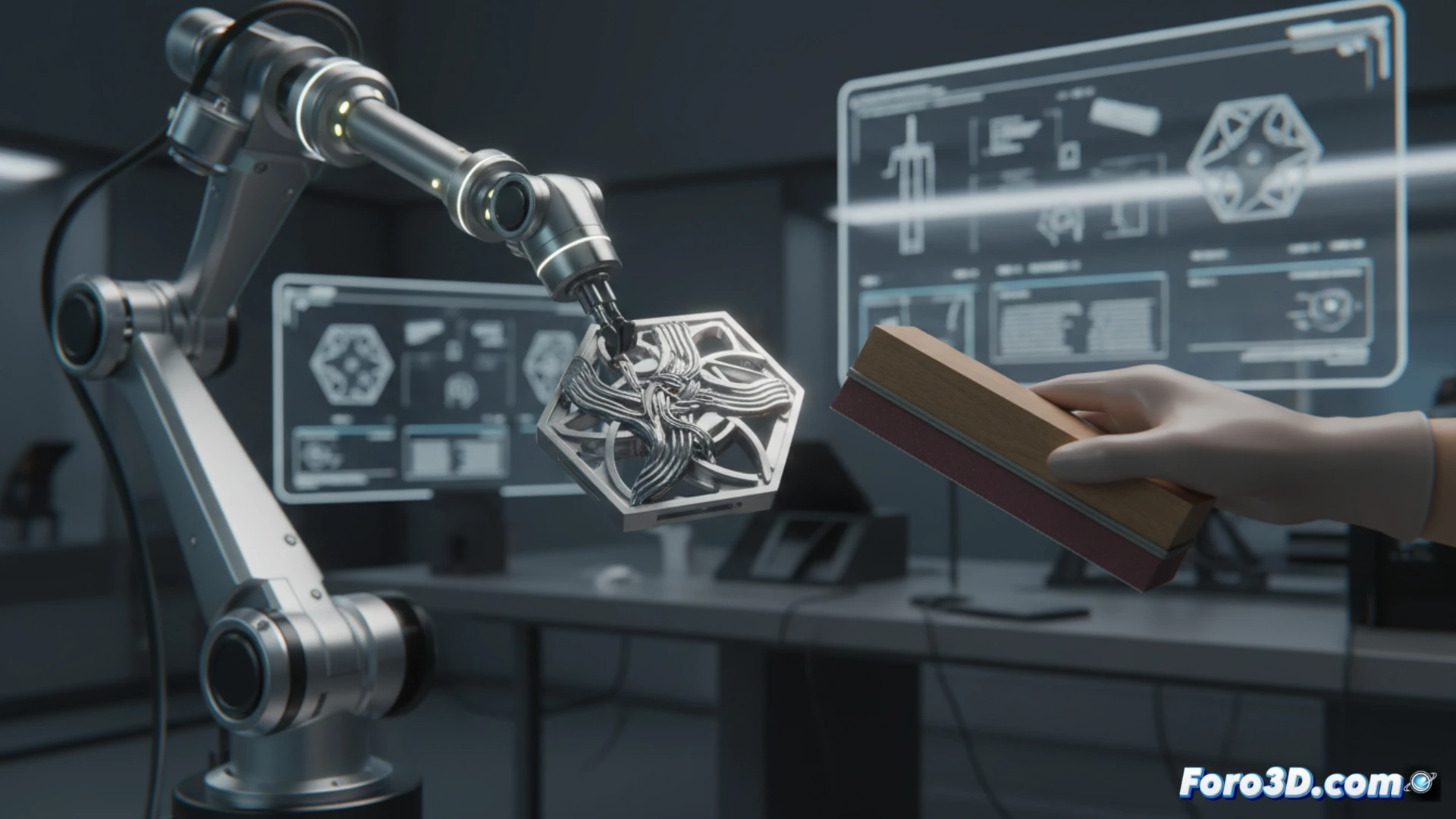
Hybridization, automation, and functional finishes 🤖
The key trend will be hybridization. Manual processes such as lacquering or carving will be combined with automated robotics systems and software-controlled chemical polishing, achieving artisanal quality in a repeatable and efficient manner. At the same time, functional finishes will gain prominence, endowing surfaces with specific properties such as electrical conductivity or antibacterial capacity. Sustainability will also be a pillar, with the development of more eco-friendly post-processing processes and materials, reducing the environmental impact of the final piece from conception to finishing.
AI as the brain of the post-production workshop 🧠
Artificial intelligence will act as the core of this transformation. AI systems will analyze the geometry, material, and purpose of the 3D model to predict outcomes and automatically recommend the optimal post-processing sequence. This will not only optimize times and resources but also open up unexplored creative possibilities, allowing designers to incorporate finishing as another variable within the design process, with the certainty of a predictable and high-quality result.
How will new automation technologies and smart materials integrate into the post-processing workflow to transform 3D parts into final functional and aesthetic products by 2026?
(P.S.: don't forget to level the bed, or your print will look like abstract art)