The Memoirs of the Cardinal de Retz, a first-person account of the conspiracies and rebellions of the Fronde in 17th-century France, are more than a historical document. They are a manual of political strategy, betrayal, and power struggles. In the niche of digital art and activism, this text becomes the perfect raw material. How can we use 3D modeling and virtual environments to unravel these intrigues and offer a critical reading applicable to our contemporary context? Technology emerges as the tool for an immersive political archaeology.
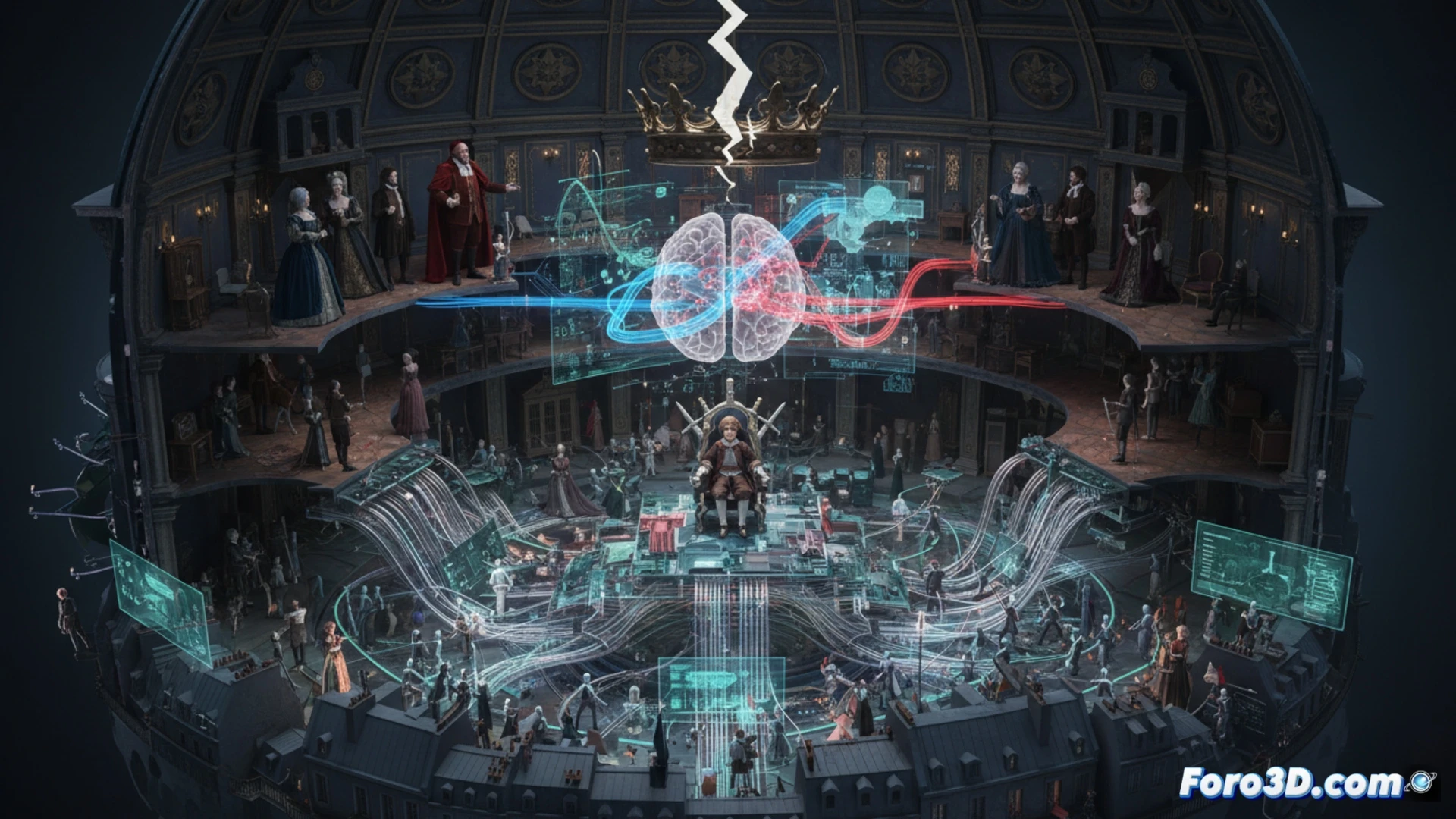
From pages to polygons: techniques for an immersive narrative 🎮
Transposing these memoirs into a digital space requires a multidisciplinary technical approach. Historical 3D modeling allows reconstructing key scenarios: the Royal Palace, the barricades of Paris, the chambers where betrayals were plotted. But the true layer of activism lies in data visualization and relationships. Particle systems could represent the flow of information or the gold that mobilized armies. Interactive nodal graphs would show the shifting alliances between nobles, parliamentarians, and the crown. A game engine experience, with dialogues extracted from the texts, would place the user in the role of a conspirator, forcing ethical decisions and showing the consequences of manipulation. Technology not only illustrates but argues and questions.
Polygonal memory: power critique from the graphics engine 💎
This project transcends archaeological reconstruction. By giving digital form to the machinations of the Cardinal de Retz, we create a mirror for current power structures. The Fronde, viewed through a VR headset or a web experience, ceases to be a remote event. It becomes a timeless case study on resistance to authority, the fragility of institutions, and the rhetoric of rebellion. Digital activism here is not pamphleteering, but epistemological: it uses 3D to make tangible the abstract mechanics of power, inviting deep reflection on who writes history and how we can critically reinterpret it today.
How could we use 3D modeling and animated infographics to unravel and visualize the complex networks of conspiracies and alliances described in the Memoirs of the Cardinal de Retz about the Fronde?
(P.S.: if your virtual reality setup doesn't change the world, at least don't lag)