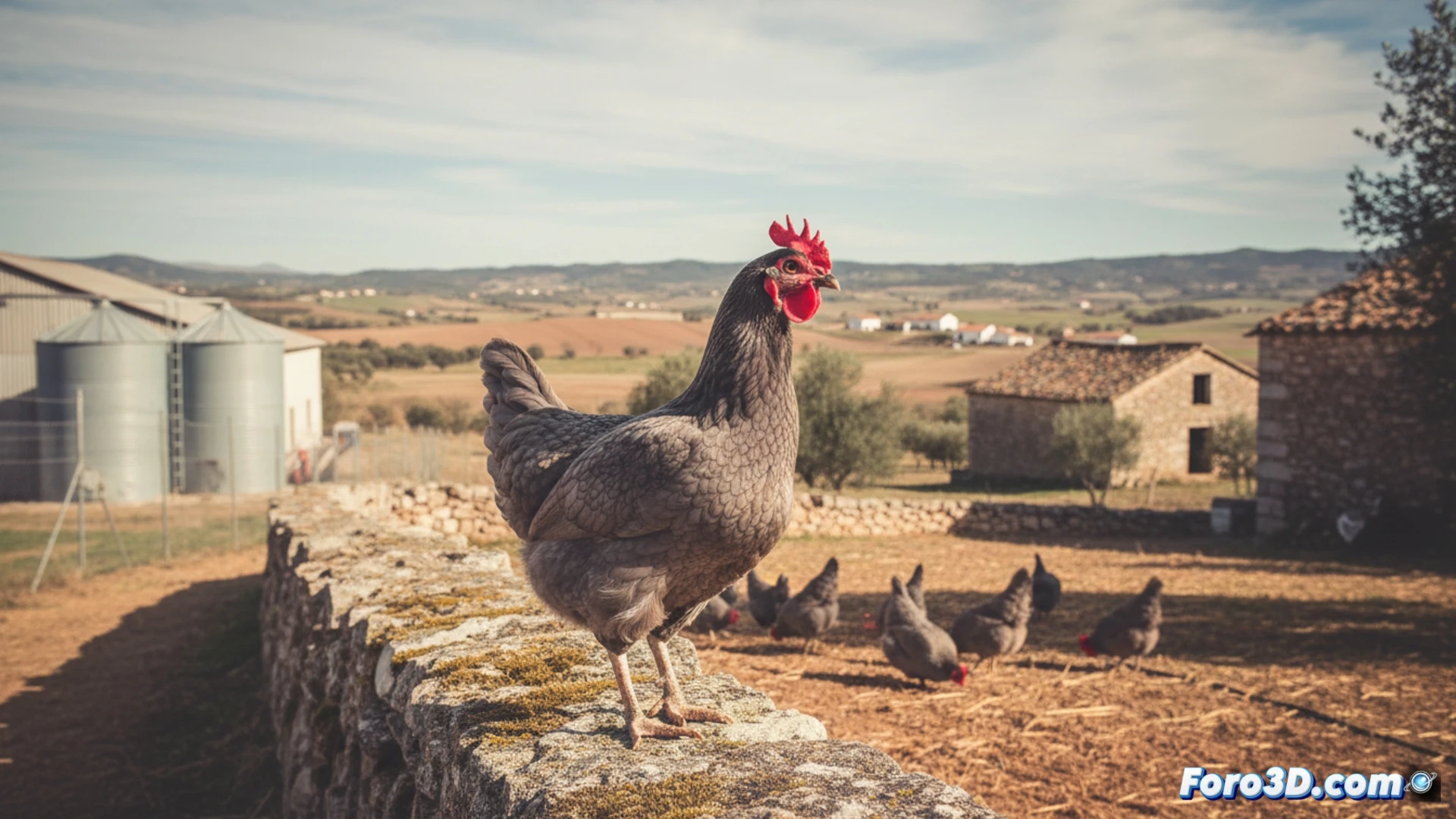
With about 2,000 specimens, the Extremeña blue hen is the scarcest poultry breed in Spain. Its situation, although improved since 1991, remains one of extinction risk. This case is an example of a general problem: 95% of the country's local poultry breeds are in decline. Industrial poultry farming, which took over from the 1950s, displaced these varieties. The survival of the blue hen raises questions about rural territory management and the loss of genetic heritage.
Technology and traceability: tools for differentiation 🛰️
One way to make these breeds viable is through technology. Blockchain traceability systems could certify the origin and purity of each specimen or egg, adding commercial value. The development of direct online sales platforms would shorten the distance between the small producer and the final consumer. Additionally, genetic data management with specific software helps breeding programs avoid inbreeding and maintain breed diversity with few individuals.
A golden egg for bureaucracy 🥚
The paradox is clear: to raise a hen legally, you need facilities almost equivalent to those of a large industrial shed. The small breeder, who maintains the breed as a hobby, faces sanitary and infrastructure requirements designed for massive operations. Thus, the regulations, designed to ensure safety, end up putting a higher barrier to conservation. It seems the system prefers an army of white hybrid hens in a shed over a small group of blue birds roaming the barnyard.