The EU's foreign policy chief, Kaja Kallas, has stated that the bloc will not expand its naval operation Aspides to the Strait of Hormuz. Kallas argued that the crisis in that area is not a European war and that the main focus must remain on supporting Ukraine. This decision marks a clear limit to European military projection, prioritizing one conflict theater over another.🚢
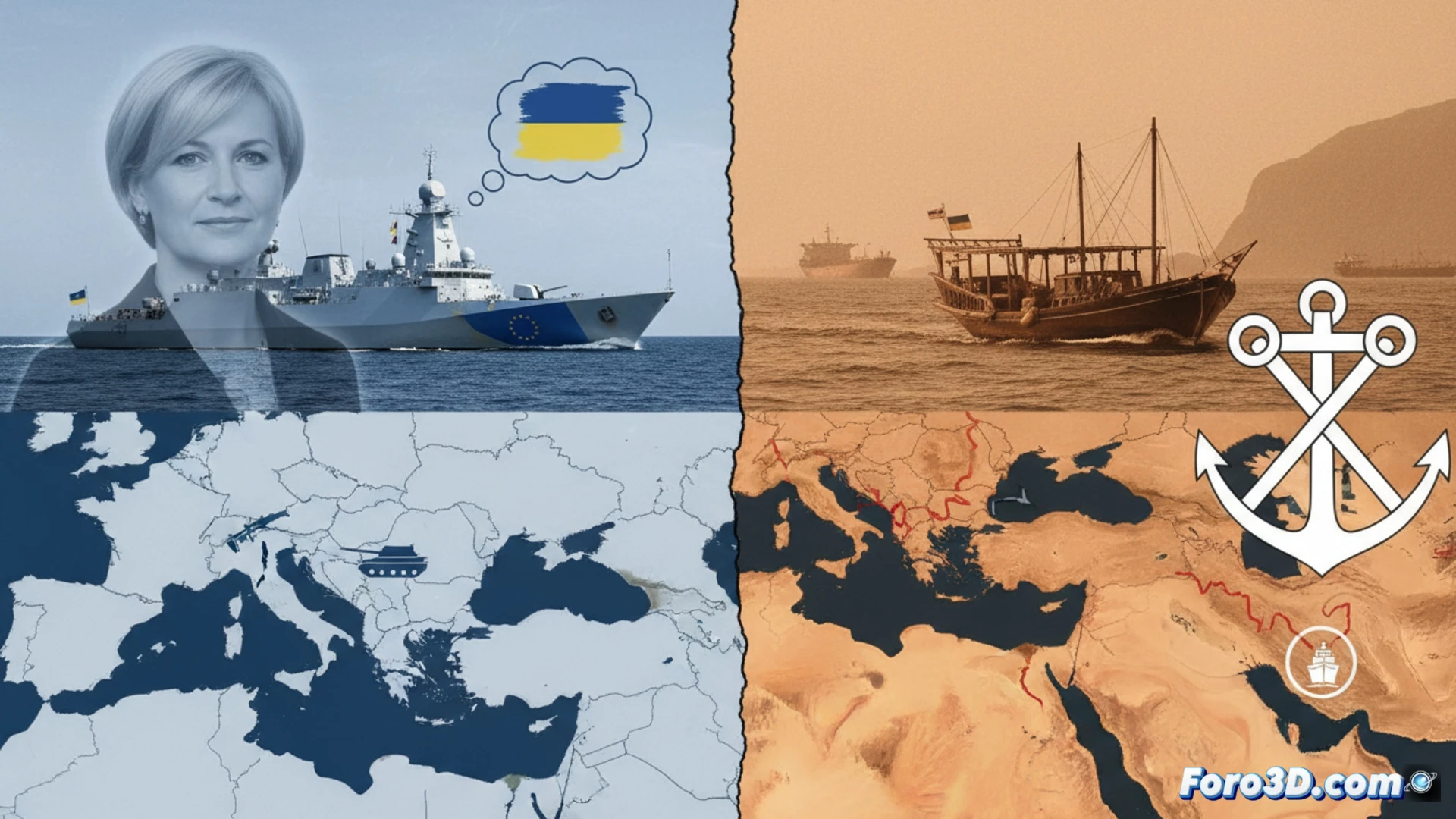
The technological and logistical limits of dual naval projection⚓
The Aspides mission, active in the Red Sea, relies on frigates with Aegis defense systems or similar, capable of intercepting drones and ballistic missiles. Extending it to Hormuz would require duplicating assets, reconnaissance satellites, and logistical supply chains in a high-tension area. The EU lacks the aircraft carriers and battle groups necessary to sustain two simultaneous high-intensity operations without affecting its commitment in the Black Sea.
Aspides: 'One Front at a Time' Mode, please🎮
It seems the EU has discovered the split-screen function in its defense command and has decided not to use it. It prefers to keep the Ukraine window maximized, while minimizing the Hormuz one to the taskbar. It's an understandable strategy: why monitor two straits crucial to the global economy when we can focus on just one? That said, let's hope the system doesn't crash if there's an alert in both places at the same time.