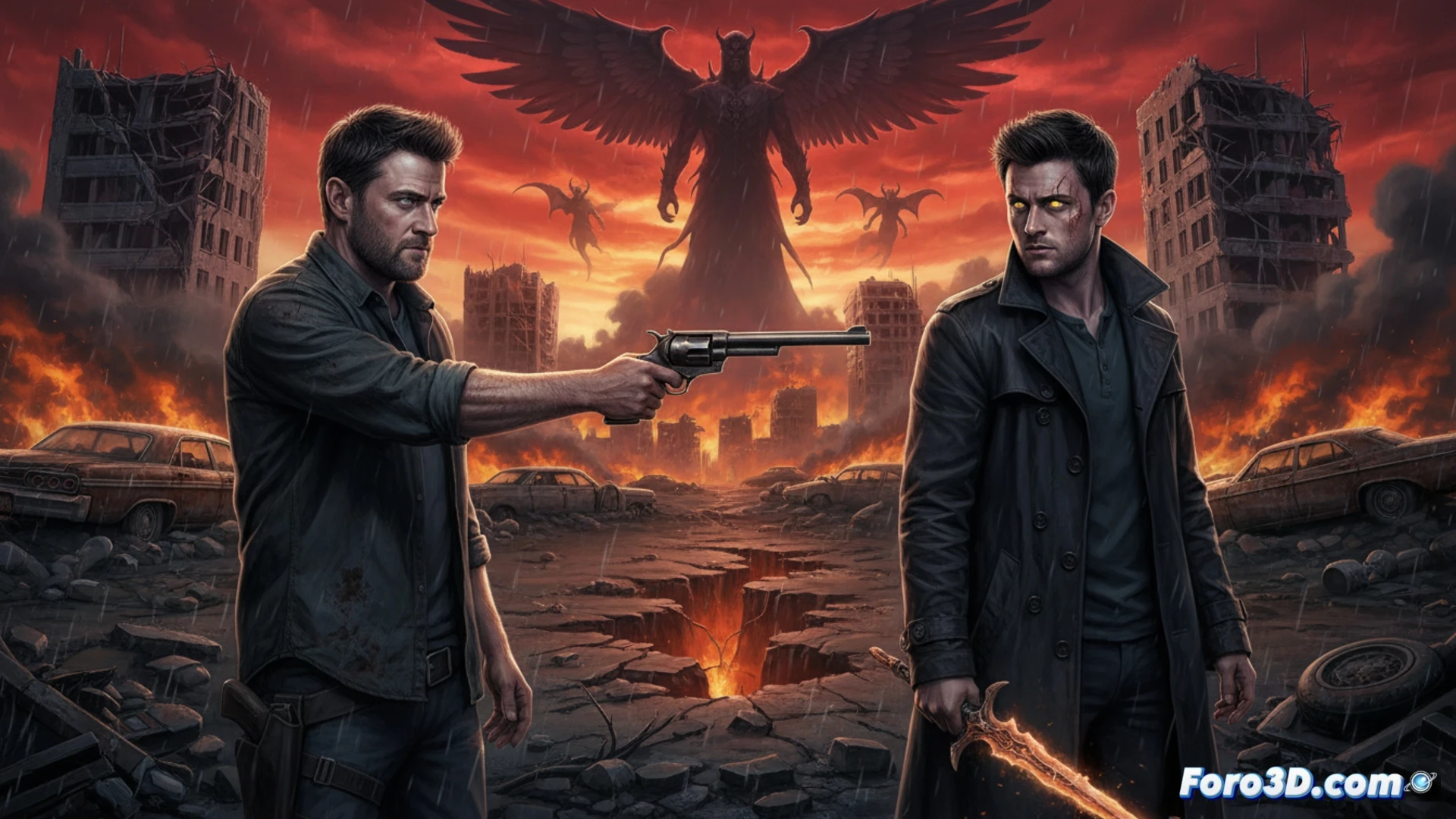
In the vast catalog of Supernatural, few episodes carry the narrative weight of The End from the fifth season. This chapter, part of Eric Kripke's original plan, transports Dean Winchester to a dystopian future in 2014 to confront the consequences of his decisions. More than a simple time travel, it functions as a masterful preview of the series' central conflict: the fracture between the Winchester brothers as the catalyst for the end of the world. Its execution made it a legendary benchmark.
Mechanisms of a Narrative Prophecy 🎬
The effectiveness of The End lies in its technical construction. The script uses the resource of a possible future not as a vague warning, but as a concrete and devastating revelation. The production design abandons the usual palette to show a desaturated and ruined world, visualizing the cost of the apocalypse. The direction emphasizes Dean's emotional isolation, confronting him with corrupted versions of his brother and his best friend, Castiel. Every element, from the Croatoan virus to the disillusioned future Dean, serves to establish the season's argumentative pillars, giving tangible weight to the abstract biblical prophecies.
The Dramatic Power of Certainty ⚖️
The true impact of the episode is psychological. By showing a future where Sam succumbs to his destiny and Dean gives up, the series burns any narrative shortcut. It eliminates the hope of an easy escape, forcing the characters and the viewer to accept the gravity of the situation. This creative decision, risky in a long-running series, permanently raises the stakes. The End is not a possibility, it is the logical consequence of the current trajectory, and that certainty is what defines the epic and tragic tone of the Kripke era's climax.
How does the episode The End from Supernatural use the preview of a dystopian future to explore and reinforce the central themes of its apocalyptic narrative arc?
(P.S.: Previz in cinema is like the storyboard, but with more chances for the director to change their mind.)