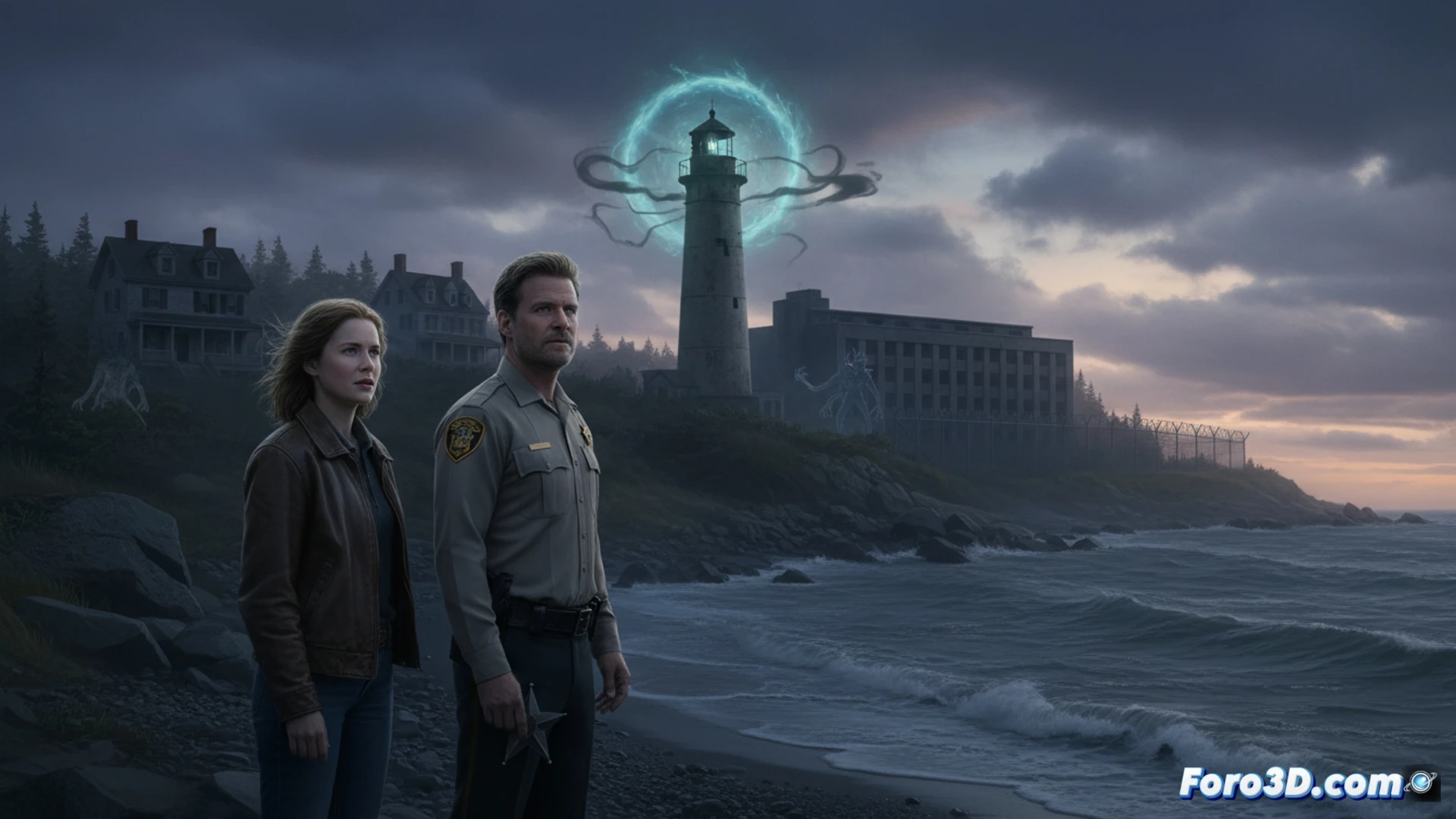
The ending of Stranger Things shows Joyce and Hopper planning a quiet future in Montauk. However, this geographic choice is a narrative irony loaded with meaning. Montauk is not just any place, but the original inspiration for the project, based on theories about secret experiments. This suggests that the supposed refuge could be another operations center similar to that of Hawkins, transforming a happy ending into a dark omen.
From pre-production to script: Montauk as structural 'Easter Egg' 🥚
The Duffer brothers initially titled the project Montauk, inspired by real conspiracies about alleged military experiments. By reintroducing this name in the ending, they execute a callback at the conceptual level. This scripting decision transcends homage; it integrates the series' foundational mythology into its diegesis. The location ceases to be an external reference and becomes an internal element, suggesting an organic expansion of the universe and establishing a narrative architecture for possible continuations.
Retirement plans in Ground Zero 🌋
Joyce and Hopper, after surviving a secret laboratory, a dimensional setback, and an army of monsters, decide that the ideal is to move to the epicenter of another possible conspiracy. It's the equivalent of escaping a fire and buying a house on a volcano. Their idea of starting over seems more like a request to join the frequent members club of the Upside Down. Perhaps the local sheriff is looking for a deputy with experience in interdimensional creatures.