Lincoln's preliminary draft of the Emancipation Proclamation is not just text; it is an artifact of political struggle. Every strikethrough and amendment tells the story of a social change forged with words. In digital art and activism, this document becomes a powerful symbol. Through 3D and digital technologies, we can transcend its museum display case to transform it into an interactive experience that activates reflection on human rights.
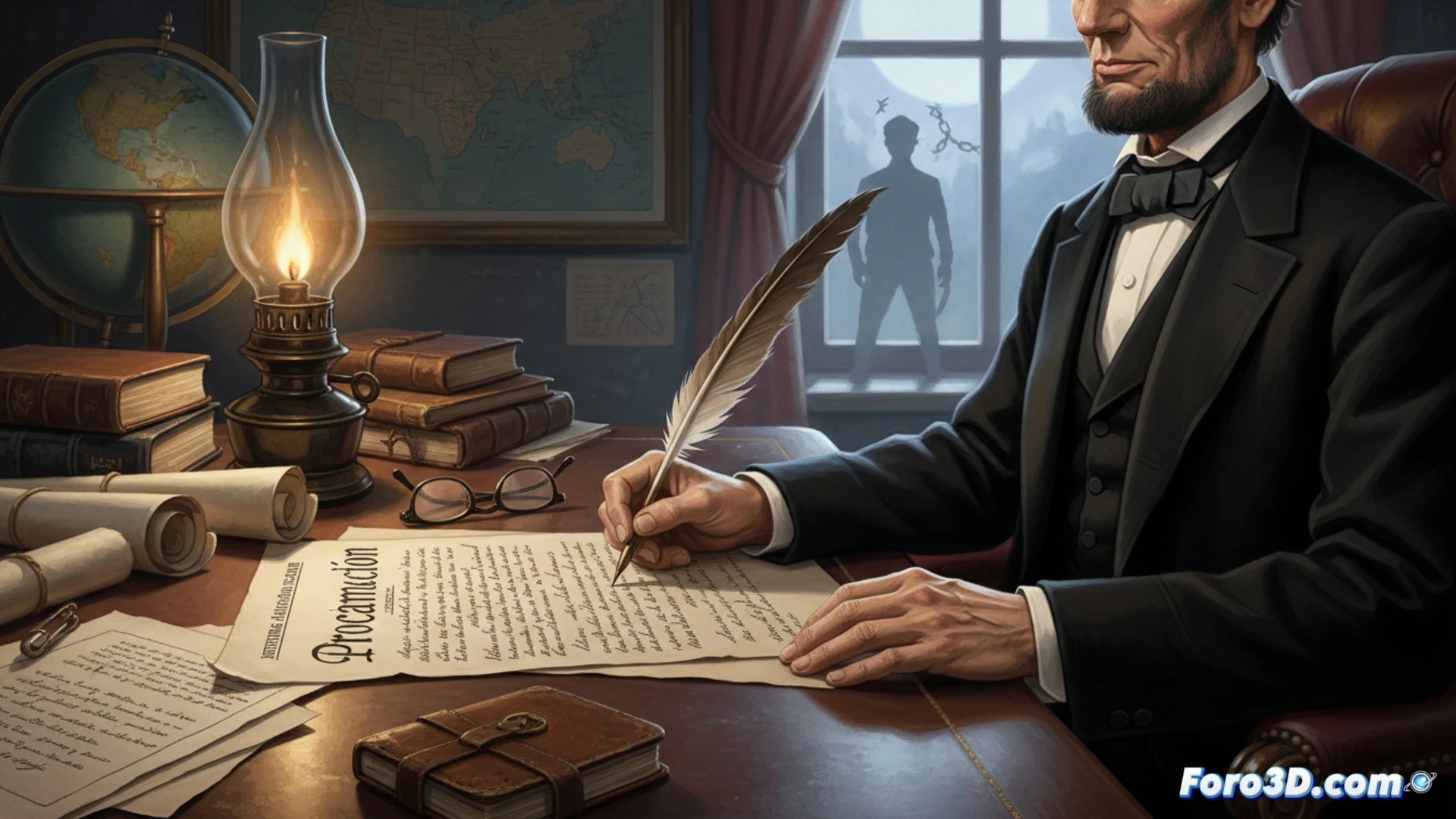
Technology for historical dissection: scanning and layers 🔍
The technical proposal consists of a high-resolution 3D scan of the physical document, capturing every imperfection of the paper and ink. This layer-sectionable model would allow isolating the different stages of writing, making Lincoln's corrections and doubts visible. By integrating augmented reality, users could overlay the draft on contemporary spaces or access contextual annotations. This digital dissection does not seek only to preserve, but to expose the creative and political process, inviting a critical and deep reading of each textual decision.
From the archive to action: spatial awareness ✊
This approach turns a historical document into a tool for digital activism. By giving volume and layers to the flat text, it fosters a more intense emotional and cognitive connection. Visualizing the amendments in a 3D space makes tangible the idea that justice is built with revisions and struggle. It is a call to use our digital tools not only to represent the past, but to critically model the present, using history as a living resource for social awareness.
How can 3D artists use the digital materiality of models, textures, and versioning to reveal the inherent political struggle in historical documents, such as the draft of the Emancipation Proclamation?
(P.S.: digital political art is like an NFT: everyone talks about it but no one really knows what it is)