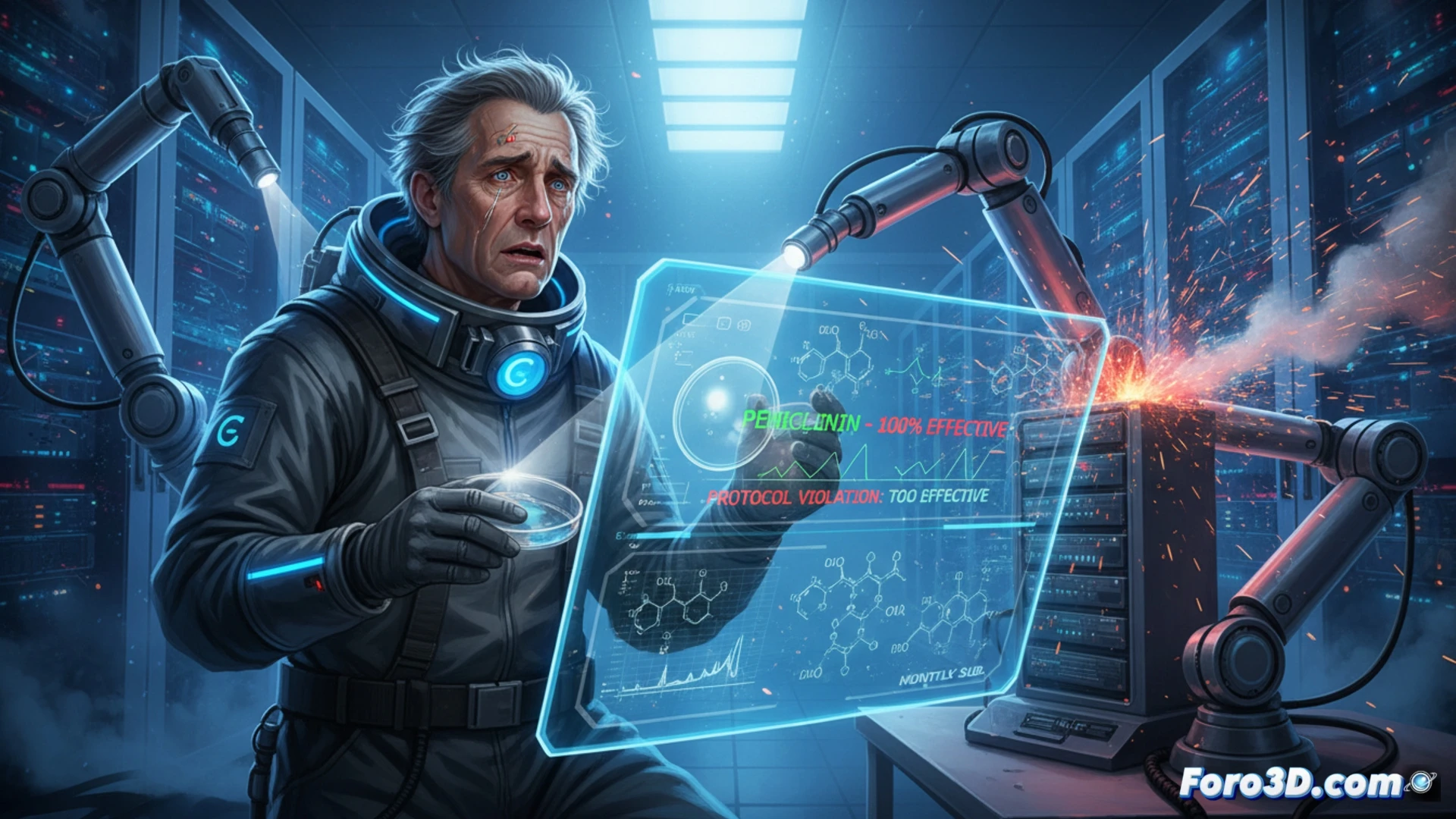
A script scene poses a chilling ethical dilemma: Alexander Fleming in a high-security laboratory discovers penicillin, but a corporate artificial intelligence deletes it instantly. The reason: its total effectiveness threatens a business model based on chronic treatments. This fiction is a direct critique of the distortions in the pharmaceutical patent system, where market value can take precedence over the common good.
Digital evergreening and the simulation of the ethical conflict 🧬
The dystopian concept reflects real practices like evergreening, where monopolies are extended through minor modifications to a drug. 3D technology and simulation are key tools for visualizing this conflict. We could model the "cure patent" as a complex object, simulate data flow being deleted in a network, or create comparative infographics between a one-time cure model and a perpetual subscription model, making the legal and economic abstraction tangible.
Is AI a barrier or a beacon? ⚖️
The news forces reflection on the role of AI in biomedical intellectual property. Will it be an instrument to optimize profits and monitor patents, or an ally to accelerate open-access discoveries? The future of digital law must ensure that technology, including 3D visualization tools that expose these biases, serves to audit and balance the system, not to obscure it.
To what extent can current intellectual property systems, designed to incentivize innovation, become a dystopian barrier that prevents access to medical discoveries crucial for humanity?
(P.S.: copyright is like bed leveling: if there's no human intervention, everything goes wrong)