A meta-analysis of 385 studies reveals a systemic failure in sea level rise projection: 99% underestimated it by 20 to 30 cm. This error, equivalent to one century of projection, affects even IPCC reports. The root is not in the raw data, but in its representation. The choice of visualization model, the geoid, has painted an inaccurate and less threatening picture of the coastal future.
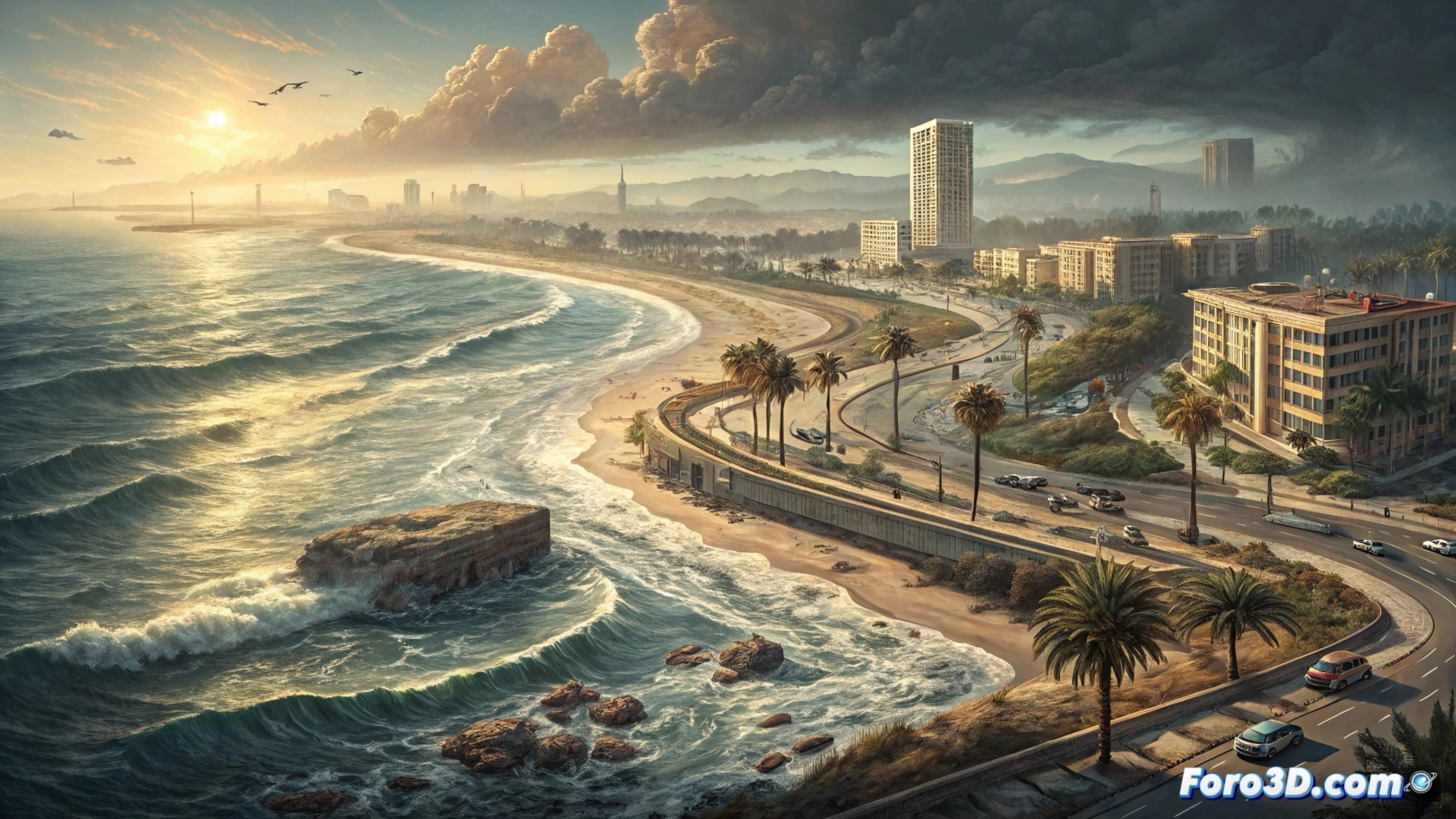
The geoid problem: a static model for a dynamic ocean 🌊
The massive discrepancy arises from prioritizing the geoid, a gravitational model that represents an idealized and at-rest ocean surface. Although useful for geodesy, it is an abstraction that ignores real dynamics: currents, tides, winds, and thermal variations that alter local water height. These factors, which can add up to meters of difference, are lost in the geoid visualization. Thus, direct measurement (altimetric satellites, tide gauges) is replaced by an elegant but misleading simplification, visually flattening the risk and compromising scientific accuracy.
Towards a 3D visualization that shows the true threat 🗺️
The solution lies in adopting scientific 3D visualizations that integrate multi-source data in quasi-real time. Geospatial models that fuse bathymetric topography, altimetric data, currents, and climate projections can generate immersive and accurate simulations. Transforming the cold centimeters of error into virtual floods over real maps is crucial. Only a faithful and tangible representation of the risk will spur action, showing that the crisis is more severe and closer than a flat model led us to believe.
Would you use photogrammetry of real specimens or modeling based on studies?