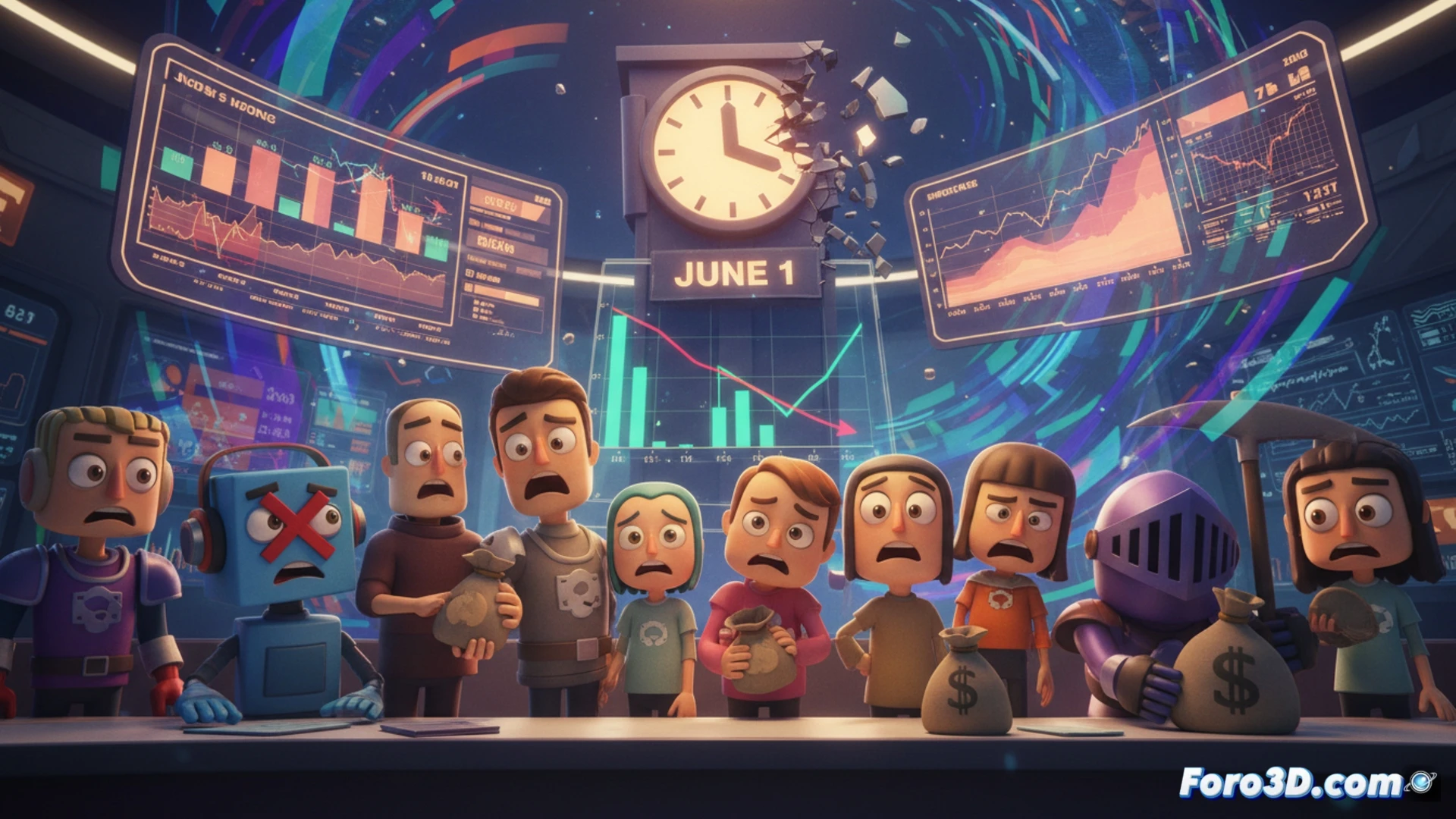
On June 1st, Rec Room, a popular social creation and gaming platform with over 150 million users and a valuation that nearly reached 3.5 billion dollars, will shut down. This announcement surprises due to its bluntness, revealing a harsh reality: even a product with massive adoption can fail economically. The company has admitted that its operating costs always exceeded revenues, an imbalance that neither its large user base nor multimillion-dollar funding rounds could correct. Its disappearance is a symptom of the strong pressures facing the live service games sector. 😮
Beyond users: the business model mismatch 💸
The Rec Room case is a paradigmatic study of how traditional success metrics, such as total users or valuation in investment rounds, can mask an unsustainable business model. Maintaining a cross-platform social platform, with support for VR, consoles, and mobiles, involves enormous infrastructure, content moderation, and continuous development costs. If monetization streams, often based on microtransactions and optional subscriptions, fail to cover them, collapse is only a matter of time. This problem is exacerbated in the volatile virtual reality niche, where Meta has also scaled back its ambitions with Horizon Worlds, and in a general market where, as Epic Games saw, even successes like Fortnite can face sudden financial headwinds.
Lessons for developers: viability before scale ⚖️
The main lesson for studios, especially independents, is the need to prioritize economic sustainability from the project design itself. A large number of players is not synonymous with profitability. It is crucial to calculate a realistic revenue model that covers the recurring costs of a live service, which are high and constant. The story of Rec Room warns of the dangers of scaling with venture capital without a clear path to profit, and underscores that in the current economic climate, operational efficiency and a solid monetization core loop are more vital than ever.
How can social video game developers balance innovation and operating costs to ensure the long-term sustainability of their platforms?
(PS: shaders are like mayonnaise: if they break, you start all over again)