In the world of 3D hardware, all the attention falls on the CPU and GPU. However, there is a silent and decisive component: the motherboard chipset. It acts as the orchestra conductor, coordinating communication between the processor and the rest of the components. Its choice is not a mere formality, but a technical decision that determines the available technologies, expansion capacity, and ultimately, the real performance of your workstation. Ignoring it can lead to unexpected bottlenecks.
Bandwidth and resource management: the impact on 3D workflows 🚦
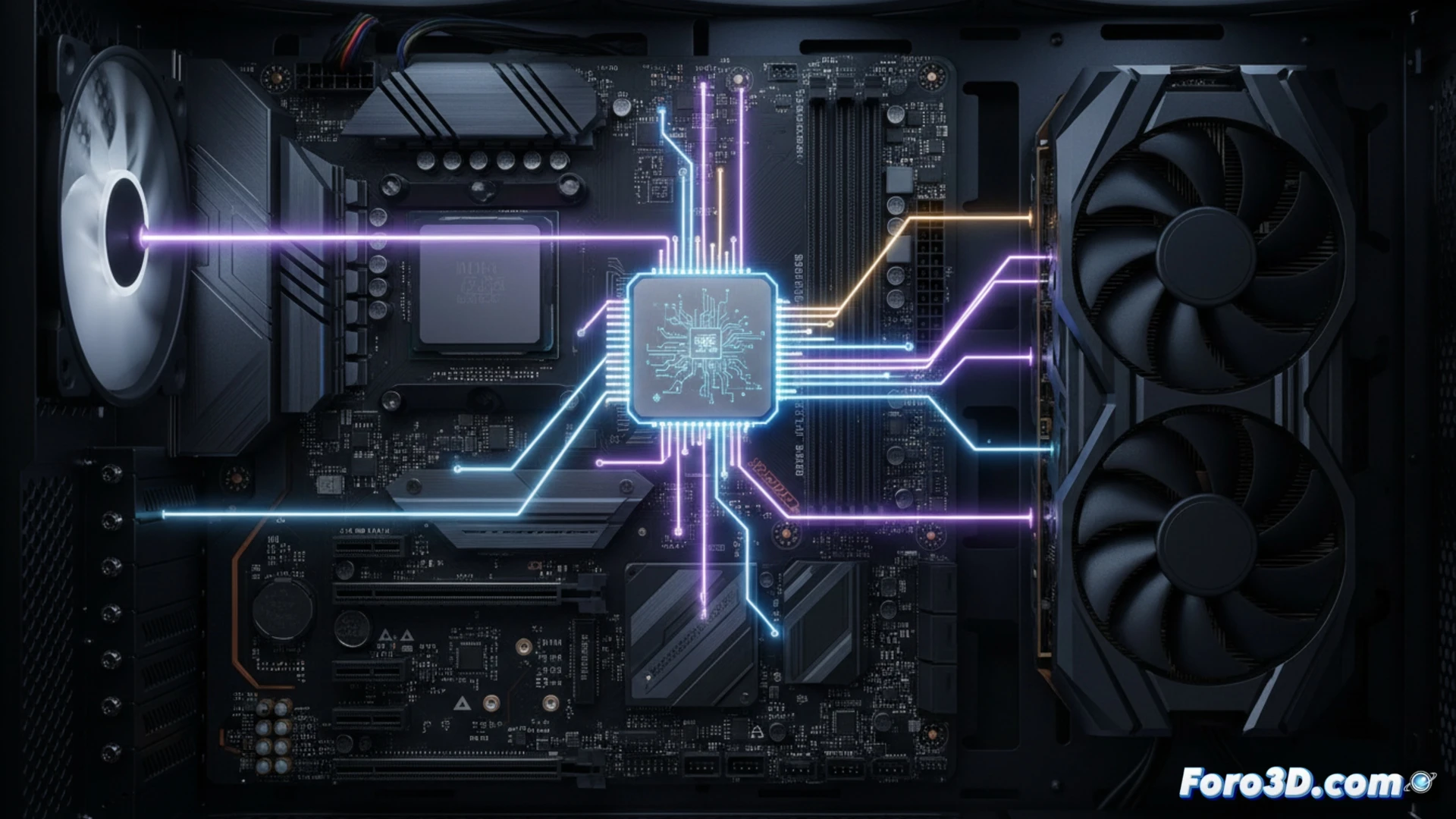
A high-end chipset stands out by offering more PCIe lanes managed and at higher speeds. This is critical for 3D professionals. It allows connecting multiple GPUs for rendering without strangling their bandwidth, adding capture cards or 10GbE network cards, and above all, enabling multiple NVMe PCIe 4.0 or 5.0 slots for ultra-fast storage. Meanwhile, a basic chipset shares a handful of slow lanes among all devices. The result: if you render with two GPUs while accessing assets from an NVMe SSD, the bandwidth will collapse, slowing down the entire process. High-speed USB port management also depends on the chipset, vital for VR peripherals or controllers.
More than specifications: stability and latency ⚡
The importance of the chipset goes beyond a list of features. A robust design ensures superior electrical stability, crucial for CPU and RAM overclocking in intensive render stations. Additionally, an efficient architecture reduces latency in device communication, a factor often underestimated. In tasks where every millisecond counts, such as digital sculpting or real-time interaction in game engines, a quality chipset ensures that all components work synchronously and respond with maximum agility, without delays in data transfer.
How does the choice of your motherboard chipset influence the performance and stability of intensive 3D applications like Blender or Unreal Engine?
(P.S.: remember that a powerful GPU won't make you a better modeler, but at least you'll render your mistakes faster)