In the most rugged cliffs of Gáldar, Gran Canaria, hides one of the archipelago's most intriguing archaeological legends: the Cave of the Thousand Mummies. It is described as a secret necropolis of the ancient Canarians, with hundreds of bodies preserved in an unsettling circle. Its access is almost impossible and it is surrounded by supernatural tales that deter profaners. This is the perfect case where digital archaeology must take the initiative to study and virtually preserve what geography and mystery protect.
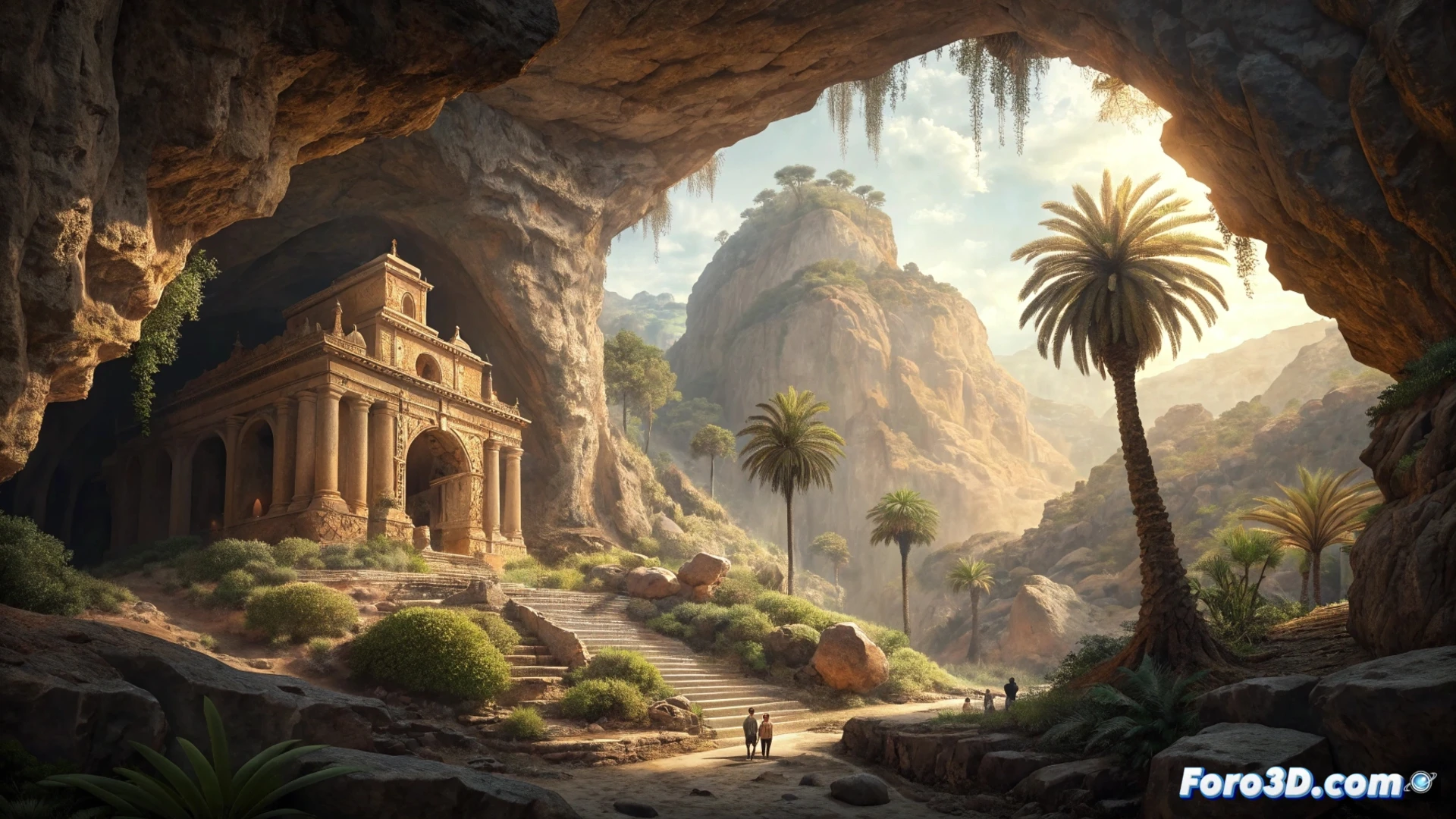
Photogrammetry and LiDAR: documenting the intangible 🚁
For a site like this, 3D documentation techniques are not a luxury, but a necessity. A drone equipped with a high-resolution camera could perform aerial photogrammetry of the cave mouth and its surroundings, creating a precise model of the cliff. Inside, if access is achieved, terrestrial laser scanning (LiDAR) would be ideal to capture the exact geometry of the chamber and the position of the remains without touching them, even in complete darkness. This digital replica would allow researchers to measure, analyze, and study the arrangement of the bodies and associated objects indefinitely, without risks of deterioration to the real site.
Beyond the myth: preservation and scientific verification 🔍
The true power of this approach goes beyond documentation. A precise 3D model allows separating fact from legend. Are there really hundreds of individuals? Are they seated in a circle? Technology offers verifiable data. Additionally, this digital copy becomes a perpetual legacy, accessible for study and dissemination even if the original site degrades. Digital archaeology, in cases like this, does not strip away the mystery, but builds upon it a solid bridge to knowledge.
How can 3D digitization and virtual reality enable the research and dissemination of physically inaccessible or extremely fragile archaeological sites, such as the alleged Cave of the Thousand Mummies?
(P.S.: and remember: if you don't find a bone, you can always model it yourself)