The Bauhaus University of Weimar presents a project that investigates the union between digital manufacturing and manual crafts. This initiative explores how artisanal techniques can be applied in the post-production of 3D printed parts, creating objects where the industrial and the manual complement each other. The theme invites reflection on the evolution of our creative processes and the added value of physical finishing. 🎨
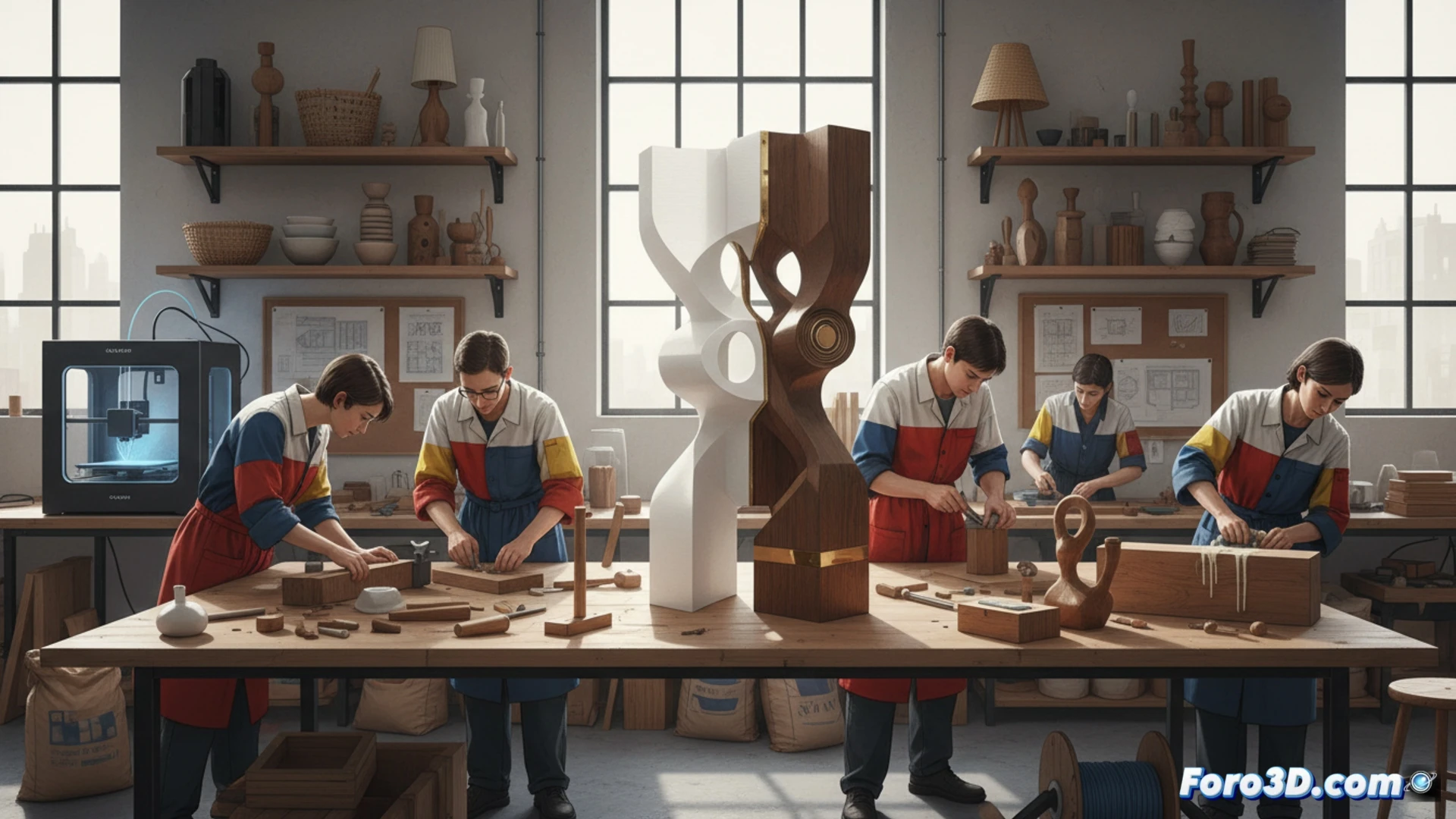
Hybrid methodology: from G-code to workshop tools 🔧
The process begins with the design and 3D printing of a base volume, which serves as a support or internal structure. On this digital core, techniques such as manual carving, lacquering, assembly with natural materials, or texturing with traditional tools are applied. The goal is not to mask the digital origin, but to integrate it with the irregularity and warmth of manual processes, generating a result with a complex material narrative.
Your FDM printer now wants a ceramics apprentice 🫖
It's time for your Ender 3 to stop being a mere plastic extruder and take on an apprentice to teach it the secrets of varnish. Imagine the dialogue: the machine suggests an optimal geometry and the craftsman responds with a it'll look better if I give it a few hits here with the hammer. In the end, your workflow will include a new step between slicing and post-processing: consult with the cabinetmaker. The fusion is served.